


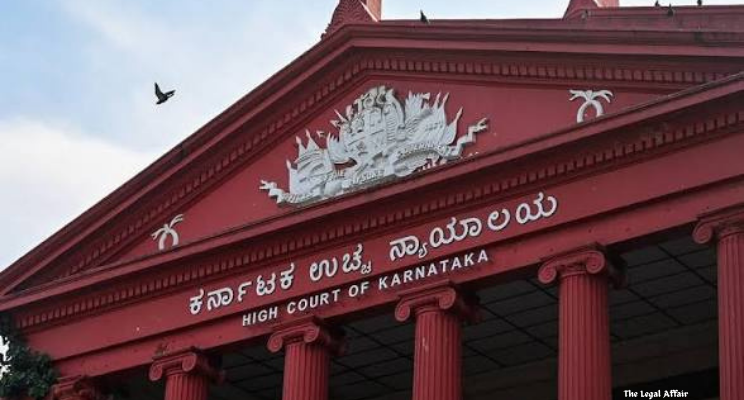
Introduction:
The Karnataka High Court has ruled that the State Government cannot bypass the statutory procedure for revising minimum wages once it has chosen to act under Section 5(1)(b) of the Minimum Wages Act, 1948. The Court held that publication of the wage revision proposal in the Official Gazette and the opportunity for affected stakeholders to submit objections are mandatory requirements that cannot be substituted by subsequent meetings or consultations.
A Division Bench comprising Justice D.K. Singh and Justice H. Shanthi Bhushan delivered the ruling while dismissing an appeal filed by two industry associations challenging a Single Judge’s order that had quashed the Karnataka Government’s minimum wage notification dated January 17, 2023, concerning the garment industry. The Single Judge had found that the State had failed to comply with the statutory procedure prescribed under Section 5(1)(b) and directed it to complete a fresh wage revision exercise on the basis of the revived 2018 draft notification within six months.
The judgment also addressed a separate but significant legal issue: whether the State could calculate a fresh wage increase by relying on an earlier notification that had already been declared inoperative by the High Court. The Division Bench held that a notification which had ceased to have operative effect following a judicial decision could not be adopted as the foundation or benchmark for a subsequent wage revision.
The dispute originated in the State Government’s attempt to revise minimum wages for employees in Karnataka’s garment sector. On February 22, 2018, the Government issued a draft notification proposing revised wage rates for the industry. However, the draft was withdrawn on March 22, 2018. The Garment and Textile Workers Union (GATWU) challenged the withdrawal, resulting in a Division Bench judgment dated April 13, 2020, which set aside the withdrawal order, revived the draft notification and directed the Government to proceed further under Section 5 of the Minimum Wages Act.
Instead of completing the statutory process through publication of the proposal and consideration of objections, the State subsequently conducted stakeholder meetings on January 11, 2022, and September 6, 2022. It also considered a study prepared by the Technical Consultancy Services Organisation Karnataka (TECSOK). The Government ultimately issued the notification dated January 17, 2023, granting a 14 per cent increase over the rates specified in an earlier notification dated October 31, 2019.
That approach raised two major concerns. First, the 2019 notification had already been held inoperative by the High Court in its judgment dated April 13, 2020. Second, the State had not completed the publication and objection procedure contemplated under Section 5(1)(b) before issuing the 2023 notification.
GATWU challenged the notification, contending that the statutory process had not been followed. The Union also submitted that the basic wage rate of ₹401.07 per day under the 2023 notification was lower than the rates proposed in the 2018 draft and lower than those prescribed for certain other scheduled employments.
On June 3, 2026, the Single Judge partly allowed the Union’s challenge, quashed the 2023 notification for procedural non-compliance and directed the Government to complete the wage revision exercise pursuant to the revived 2018 draft within six months. Two industry associations subsequently appealed against that decision.
The Division Bench upheld the Single Judge’s order, emphasising that statutory requirements cannot be treated as optional merely because the Government has undertaken consultations through other means. The ruling reinforces the principle that administrative authorities must exercise their statutory powers in accordance with the procedure prescribed by law and cannot disregard the legal consequences of an earlier binding judicial decision.
Arguments of the Parties:
The dispute before the Division Bench arose from the appeal filed by two industry associations against the Single Judge’s decision to quash the 2023 minimum wage notification. The underlying challenge had been brought by GATWU, which questioned both the procedure adopted by the Government and the legal basis on which the revised wage rates had been calculated.
The available case summary does not reproduce the complete grounds advanced by the industry associations in their appeal or the entirety of the State Government’s submissions. Accordingly, the arguments must be understood from the issues recorded in the judgment and the history of the proceedings, without attributing specific submissions to any party that are not supported by the available material.
The Industry Associations’ Challenge to the Single Judge’s Decision
The two industry associations approached the Division Bench after the Single Judge invalidated the January 17, 2023 notification and directed the Government to complete the wage revision exercise pursuant to the revived 2018 draft notification within six months.
The appeal placed the legality of the Single Judge’s decision in issue. At its core was the question of whether the State Government’s actions, including stakeholder meetings and consideration of the TECSOK study, could support the 2023 wage notification despite the absence of a completed statutory publication and objection process.
The dispute was important for the garment industry because minimum wage notifications determine the minimum remuneration employers must pay workers covered by the relevant scheduled employment. Changes in those rates affect wage obligations across the sector. Consequently, the cancellation of a notification and a direction to undertake a fresh revision exercise have practical implications for both employers and workers.
However, the legal validity of a wage notification cannot be determined solely by reference to its economic consequences. The Government must exercise its statutory authority in the manner required by the legislation. If a particular statutory route has been chosen, the question is whether the steps taken by the authority satisfy the requirements attached to that route.
The associations’ appeal also arose against the background of the Government’s decision to calculate the 2023 increase by reference to the October 31, 2019 notification. The 2023 notification granted a 14 per cent increase over the rates specified in that earlier instrument. Yet the 2019 notification had already been declared inoperative by the High Court in April 2020.
This raised a question about whether the State could lawfully use that notification as the benchmark for a fresh wage revision. The legal issue was not simply whether a 14 per cent increase was appropriate, but whether the starting point selected by the Government remained legally available after the earlier judicial decision.
Ultimately, the Division Bench examined the statutory requirements and the effect of the earlier judgment and found no reason to interfere with the Single Judge’s order.
The Garment and Textile Workers Union’s Objections
GATWU challenged the Government’s withdrawal of the 2018 draft notification and secured relief from the High Court in April 2020. The Division Bench set aside the withdrawal order, revived the draft notification and directed the State to proceed further under Section 5 of the Minimum Wages Act.
The subsequent challenge to the 2023 notification centred on the Government’s failure to complete the statutory procedure associated with the revived draft. According to the case summary, the State held meetings with stakeholders in January and September 2022 and considered the TECSOK study before issuing the final notification. However, it did not undertake the publication process required under Section 5(1)(b) in the manner contemplated by the statute.
The Union’s objection was that participation in meetings could not replace the statutory opportunity to submit objections to a proposal published in the Official Gazette. A formal publication enables affected persons to understand the proposed wage rates and make representations before the Government finalises its decision. It also ensures that the wage revision proceeds through a transparent and legally recognised process.
The Union’s challenge further concerned the use of the 2019 notification as the basis for the 2023 increase. Since the earlier notification had already been held inoperative, GATWU questioned the legality of using it to calculate the revised rates.
The Union also submitted that the basic rate of ₹401.07 per day notified in January 2023 was lower than the rates proposed in the 2018 draft and lower than the rates applicable to other scheduled employments. This submission raised concerns about the substantive outcome of the revision, although the central issue ultimately decided by the Division Bench was the legality of the procedure and the use of the inoperative notification.
The Single Judge accepted the challenge to the extent of holding that the 2023 notification could not stand because the statutory process had not been followed. The Court quashed the notification and directed the Government to complete the revision exercise pursuant to the revived 2018 draft within six months.
The State Government’s Procedure Under Section 5(1)(b)
The Government’s own position before the Single Judge played an important role in the appeal. As recorded by the Division Bench, the State had stated that the wage revision exercise was being conducted under Section 5(1)(b) of the Minimum Wages Act, 1948.
That provision provides for publication of a proposal in the Official Gazette and consideration of suggestions and objections received from affected persons. It also requires consultation with the advisory board. Once the State selected this statutory mechanism, the legality of its actions had to be assessed against the procedure prescribed by that provision.
The Government had conducted stakeholder meetings on January 11, 2022, and September 6, 2022, and considered a TECSOK study before issuing the 2023 notification. These activities could provide information relevant to wage fixation, but the question was whether they could take the place of formal publication and the opportunity to object.
The Division Bench concluded that they could not. The statutory process was not optional, and the State could not treat participation in meetings as equivalent to compliance with the requirements of Section 5(1)(b).
The State’s reliance on the 2019 notification also required scrutiny. Because the earlier instrument had been declared inoperative in 2020, it could not lawfully serve as the foundation for the new wage revision in the manner adopted by the Government.
The central legal questions before the Division Bench were therefore whether the State had complied with the mandatory procedure under Section 5(1)(b) and whether it could calculate a new wage increase on the basis of a notification that had already been held inoperative. The Court answered both questions against the validity of the 2023 notification.
Court’s Judgment:
Statutory Publication and the Opportunity to Object Are Mandatory
The Division Bench of Justice D.K. Singh and Justice H. Shanthi Bhushan dismissed the industry associations’ appeal and upheld the Single Judge’s order quashing the January 17, 2023 minimum wage notification.
The Court’s reasoning began with the statutory provision under which the State Government had chosen to proceed. The State had expressly stated before the Single Judge that the wage revision exercise was being undertaken under Section 5(1)(b) of the Minimum Wages Act, 1948.
Section 5 provides the procedure for fixing and revising minimum wages. Under Section 5(1)(a), the appropriate Government may appoint committees to conduct inquiries and advise it on the fixation or revision of wages. Section 5(1)(b) provides a different mechanism involving publication of the Government’s proposals in the Official Gazette and consideration of suggestions or objections received from affected persons. The latter procedure also requires consultation with the advisory board.
The distinction between the two mechanisms matters because the statutory process chosen by the Government determines the steps it must follow. Where the State proceeds under Section 5(1)(b), it cannot disregard the publication and objection requirements simply because it has obtained information through meetings or other consultations.
The Bench observed that publication of the proposal in the Official Gazette and providing the statutory opportunity to submit objections could not be dispensed with merely because stakeholders had subsequently participated in meetings. This finding was central to the dismissal of the appeal.
The ruling reinforces an established principle of administrative law: when legislation prescribes the manner in which a statutory power must be exercised, the authority must follow that procedure. Administrative convenience or the availability of alternative consultation methods cannot, by themselves, justify departure from a mandatory statutory requirement.
The publication requirement is not simply a technical formality. It creates a formal opportunity for affected persons to examine the proposed wage rates and place their views before the Government. This is particularly important in minimum wage matters, where a decision can have a direct impact on workers’ earnings and employers’ financial obligations.
The Court’s conclusion was therefore that the Government could not treat stakeholder participation in meetings as a substitute for the process expressly required under Section 5(1)(b). Once the State invoked that provision, it was required to complete the procedure in accordance with the law.
Revival of the 2018 Draft Notification Required Compliance With the Statute
The Court next examined the legal significance of the 2018 draft notification and the earlier Division Bench judgment dated April 13, 2020.
The State Government had issued the draft notification on February 22, 2018, proposing a revision of minimum wages in the garment industry. It withdrew the draft on March 22, 2018, prompting GATWU to challenge the withdrawal before the High Court.
On April 13, 2020, the Division Bench set aside the withdrawal order, revived the draft notification and directed the Government to take further steps on its basis under Section 5 of the Act.
The revived draft therefore remained the starting point for the wage revision exercise that the Government was required to complete in accordance with the statutory framework. The subsequent process could not disregard the legal consequences of the earlier judgment.
The State held meetings with stakeholders on January 11, 2022, and September 6, 2022, before issuing the 2023 notification. However, the publication procedure contemplated by Section 5(1)(b) had not been completed as required.
The Division Bench agreed with the Single Judge that the meetings could not replace the publication required by the statute. It specifically noted that the 2018 draft notification had been issued under Section 5(1)(b) and that, after its revival, the statutory procedure had to be completed in accordance with that provision.
The Court’s reasoning made clear that the earlier judgment was not merely a historical event. It established the legal position that governed the Government’s subsequent actions. Once the draft notification had been revived, the State was required to proceed consistently with the applicable statutory procedure.
This part of the judgment highlights the relationship between administrative decision-making and judicial directions. Government authorities must respect the legal consequences of a binding judgment when taking subsequent action in the same matter. They cannot treat the revival of a draft notification as permission to bypass the procedure governing its finalisation.
Stakeholder Meetings Cannot Replace the Official Gazette Process
A significant aspect of the judgment is its distinction between consultation and statutory compliance.
Stakeholder meetings can be valuable in policy-making. They allow the Government to gather information, hear the concerns of affected groups and consider the likely consequences of proposed changes. A study such as the one prepared by TECSOK may also assist the Government in understanding the economic circumstances of an industry.
However, those activities do not automatically satisfy a statutory requirement to publish a proposal in the Official Gazette and invite objections. The legislature has prescribed a particular procedure, and an administrative authority cannot assume that a different process is legally equivalent merely because it serves a similar general purpose.
Publication provides a formal and transparent mechanism through which the proposed wage revision is communicated. The objection process gives affected persons an opportunity to present their views before the Government finalises the rates. These safeguards help ensure that the decision is made after the statutory process has been completed.
The distinction is especially relevant to minimum wage revision. Workers and their representatives may seek higher wages to address living costs, while employers may wish to explain the financial and operational implications of a proposed increase. The Government must consider the matter within the framework established by law.
The Division Bench did not hold that stakeholder meetings or studies were impermissible. Rather, it ruled that these steps could not substitute for the publication and objection requirements that Section 5(1)(b) made necessary in the circumstances of the case.
The judgment thus rejects the idea that substantial consultation, by itself, can cure the omission of a mandatory statutory step. Where the legislature has provided a defined process, the authority must comply with it even if it has undertaken other forms of engagement.
An Inoperative Notification Cannot Be Used as the Benchmark for a Fresh Revision
The Division Bench identified another legal defect in the January 17, 2023 notification. The State had calculated the 14 per cent wage increase by taking the rates specified in the October 31, 2019 notification as its basis.
However, the 2019 notification had already been held inoperative by the Division Bench in its judgment dated April 13, 2020. The Court held that the Government could not adopt that notification as the foundation or yardstick for a fresh revision of wages after its operative effect had been displaced by the earlier judgment.
The Bench agreed with the Single Judge that the State could not proceed as though the 2019 notification remained an effective legal basis for calculating the new rates. The fact that the Government had used it as a reference point did not overcome the legal consequence of the earlier judicial decision.
This finding concerns the principle that administrative authorities must act consistently with binding judicial determinations. Once a court has declared a notification inoperative, the Government cannot simply rely on it as an operative instrument for a subsequent decision without regard to that ruling.
The problem was not merely whether the Government had chosen the most suitable percentage increase. The legal difficulty was that the benchmark itself had already been declared inoperative. The validity of the 2023 notification was therefore undermined by the use of a foundation that could no longer be treated as operative.
The judgment makes clear that a fresh wage revision must rest on a legally sustainable basis. Compliance with the statutory procedure and respect for earlier judicial ecisions are separate requirements, and satisfying one does not excus