


Introduction
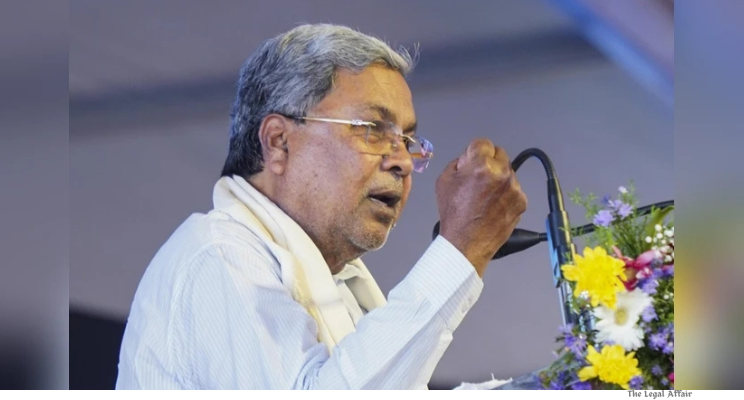
In the case titled Siddaramaiah v. State of Karnataka & Anr (Criminal Petition No. 9760/2025), the Karnataka High Court has granted interim relief to the sitting Chief Minister by staying criminal defamation proceedings initiated against him by the State unit of the Bharatiya Janata Party (BJP). The single-judge bench of Justice S.R. Krishna Kumar passed the interim order on Friday, issuing notice to the respondents and halting the trial proceedings before the lower court. The petition challenges the cognizance taken by the trial court over a criminal defamation complaint arising out of a series of pre-election political advertisements allegedly published by the Karnataka Pradesh Congress Committee (KPCC) during the run-up to the 2023 state assembly elections. These advertisements, including the controversial “Corruption Rate Card” and the phrase “trouble engine Sarkar,” form the core of BJP’s grievance, which it claims was defamatory and aimed at tarnishing its public image. Advocate General Shashi Kiran Shetty, appearing for the petitioner, informed the Court that similar relief had already been granted in related cases to Deputy Chief Minister DK Shivakumar, KPCC, and Congress leader Rahul Gandhi.
Arguments from the Petitioner:
The Chief Minister’s legal team, led by Advocate General Shashi Kiran Shetty and Advocate Surya Mukundaraj, submitted that the criminal defamation proceedings are politically motivated and infringe upon the freedom of speech and expression, especially in the context of electoral campaigns. It was asserted that the trial court erred in taking cognizance of a complaint that lacked the essential elements required to establish a case of defamation under Sections 499 and 500 of the Indian Penal Code (IPC). The petitioner emphasized that the advertisements in question were part of legitimate political discourse and critique and that hyperbole and satire are commonly used political tools during election periods.
Further, the petitioner contended that political advertisements, including terms such as “Corruption Rate Card” and references to “trouble engine Sarkar,” are subjective expressions of opinion aimed at highlighting perceived governance failures and public grievances, not deliberate falsehoods intended to defame. They pointed out that no specific instances or identifiable individuals were accused directly in the advertisements. The use of such expressions must be evaluated in the context of free speech and political accountability. It was further emphasized that no personal animosity was involved and that the advertisements targeted the BJP as a political entity, not any particular person individually.
The petitioner also highlighted the precedents wherein the High Court had already granted interim relief to other prominent Congress leaders in identical cases arising from the same set of advertisements. These included Deputy Chief Minister D.K. Shivakumar and the Karnataka Pradesh Congress Committee, against whom proceedings had been stayed on similar grounds. In January 2025, the High Court had also stayed proceedings against Leader of Opposition Rahul Gandhi in the same matter, further affirming the consistency of relief sought and granted across the board.
Arguments from the Respondent (BJP):
The State unit of the Bharatiya Janata Party, which is the complainant in this case, argued that the advertisements published by the Congress party were not merely rhetorical but constituted false and malicious statements aimed at damaging the reputation of the BJP. It was submitted that the publication of the so-called “Corruption Rate Card” in local newspapers before the 2023 assembly elections was a deliberate act of defamation, portraying BJP leaders and functionaries as corrupt individuals who levy bribes for appointments, transfers, and clearances in various government departments.
The BJP’s counsel asserted that such statements go beyond permissible political speech and amount to slander intended to mislead the electorate and affect the party’s electoral prospects. They argued that the advertisement amounted to imputations and assertions of fact that could not be justified under the protection of political speech. Specifically, the use of the phrase “trouble engine Sarkar” in place of the popular moniker “double engine Sarkar” was contended to be a deliberate and strategic choice made to denigrate the party’s governance model, thereby making it a calculated attack.
The complainant contended that the public dissemination of such content, particularly in leading local dailies with wide circulation, caused serious harm to the party’s public image and credibility. It was claimed that the information was entirely based on “fanciful imagination” and bore no relation to objective truth. The complaint emphasized that political competition must remain within the bounds of decency and legality and that free speech is not an unrestricted license to malign the reputation of opponents through baseless allegations.
The BJP also asserted that the trial court had correctly taken cognizance of the matter in 2023 and that the evidence on record, including the advertisements and their publication details, made out a prima facie case under Sections 499 and 500 IPC. Hence, there was no justification for staying the proceedings at this stage.
Court’s Observations and Interim Judgment:
Justice S.R. Krishna Kumar, while hearing the matter, granted interim relief to the petitioner by staying the criminal proceedings before the trial court. The Court issued notice to the respondents, including the State of Karnataka and the complainant BJP unit, calling for their response. Although the Court did not delve deeply into the merits of the case at this stage, the stay order is consistent with the interim relief already extended to other similarly placed political leaders and entities.
The Court appeared to consider the precedent set in related matters arising from the same complaint. By acknowledging that the facts, legal contentions, and accused persons are common to multiple criminal petitions stemming from the BJP’s defamation complaint, the Court opted for uniformity in its interim approach. It recognized the need for a comprehensive and consolidated adjudication of all matters rather than fragmented trials or parallel proceedings that could result in conflicting outcomes.
The Court did not make any conclusive observations on whether the advertisements amounted to defamation in the legal sense but emphasized that the matter required a careful and detailed examination, particularly in light of constitutional protections under Article 19(1)(a). It highlighted that the balance between free political expression and defamation must be struck carefully, and that such determination could not be rushed without full consideration of both legal and factual aspects.
The Court noted the importance of ensuring that criminal proceedings are not misused to silence political dissent or criticism and that courts must guard against potential misuse of defamation laws to stifle democratic dialogue. At the same time, it reiterated that freedom of speech is not absolute and must be exercised with responsibility.
Accordingly, by way of the interim order, the High Court stayed further proceedings in the criminal case pending before the trial court until further notice. The matter is expected to be heard in detail upon filing of responses by the complainant and the State. The High Court’s ruling reinforces the role of constitutional courts in scrutinizing politically sensitive criminal prosecutions to ensure that electoral discourse remains within the constitutional framework.