


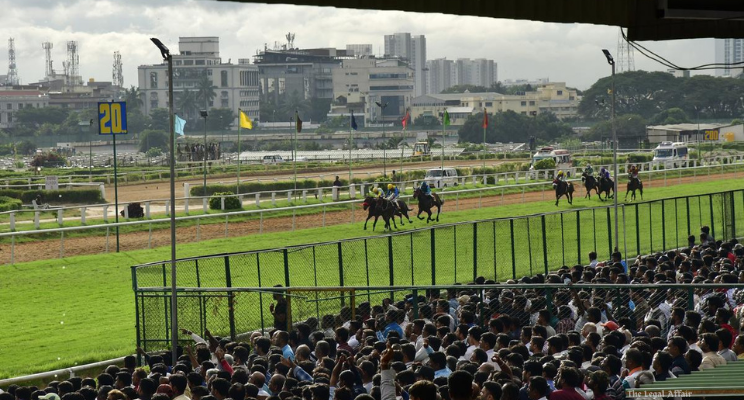
Introduction:
A recent ruling by the Karnataka High Court has allowed the Bangalore Turf Club (BTC) to continue its horse racing and betting activities, overturning a government decision to deny the necessary licenses. The court’s interim order came in response to petitions filed by BTC and others challenging the State’s refusal, emphasizing the club’s compliance with the Mysore Race Course Licensing Act and associated regulations.
Arguments of Both Sides:
Petitioner’s Arguments:
Represented by Senior Counsel SS Naganand and other advocates, BTC argued that the State’s rejection of their license applications was arbitrary and unlawful. They contended that the club’s operations were crucial for livelihoods, particularly of employees and racehorses, and any interruption caused severe financial loss. BTC pledged to adhere strictly to all regulatory requirements and pointed out that previous licenses were granted despite ongoing legal actions against some bookmakers.
State’s Arguments:
The State, through the Home and Finance Departments, defended its decision by alleging various irregularities within BTC premises, including illegal betting activities and financial misconduct. They argued that these issues warranted the refusal of licenses under discretionary powers provided by the Licensing Act. The government highlighted instances of non-compliance with tax and regulatory norms as reasons for their stance.
Court’s Judgment:
Justice S R Krishna Kumar, after reviewing the arguments, found merit in BTC’s plea for interim relief. The court emphasized that horse racing involves skill and is governed by established legal principles that cannot be arbitrarily overridden. It noted that the State’s reasons for denial, including pending criminal proceedings against individuals unconnected to BTC management, lacked legal justification.
The Karnataka High Court stayed the State’s orders refusing licenses to BTC, citing them as illegal, arbitrary, and violative of natural justice. It underlined the club’s uninterrupted operation for decades and the absence of direct legal culpability in recent legal actions. The court’s interim order sought to balance the interests of justice with the economic and operational needs of BTC, allowing them to resume racing activities pending further legal proceedings.