


Introduction:
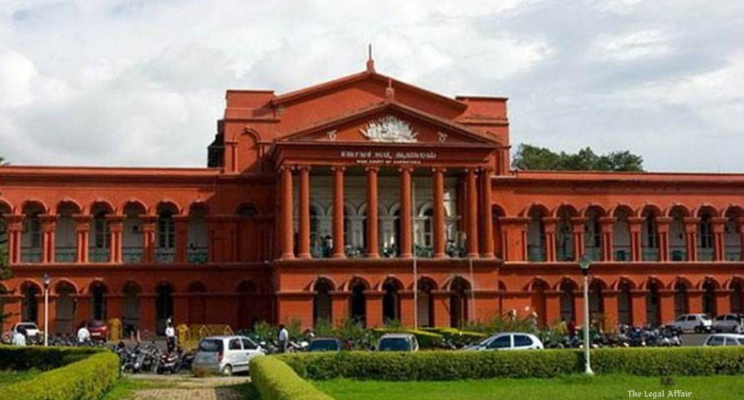
The case of Brahmatantra Swatantra Parakala Swamy Mutt v. State of Karnataka & Others came before the Karnataka High Court, raising significant questions about administrative overreach, protection of religious institutions, and the limits of repeated governmental enquiries. The matter was heard by Justice Sachin Shankar Magadum, who passed an interim order granting relief to the petitioner-Mutt against coercive action initiated by revenue authorities.
The petitioner, Brahmantantra Swatantra Parakala Mutt, is a well-known religious institution entrusted with the management of the historic Bhoo Varahaswamy Temple located in Kallahalli. The Mutt approached the High Court seeking to quash fresh proceedings initiated by revenue authorities, including the Regional Commissioner (Revenue), Mysuru Division, and the Deputy Commissioner (Revenue), Mandya, who had once again ordered enquiries into allegations of government land encroachment.
The dispute revolves around claims that the Mutt had encroached upon government land. However, the petitioner contended that these allegations had already been investigated and dismissed in earlier proceedings, including findings by the Tehsildar and orders of the High Court itself. Despite these findings, the authorities allegedly continued to initiate fresh enquiries, causing harassment and disruption to the Mutt’s functioning.
The High Court was thus called upon to determine whether such repeated enquiries were legally sustainable, and whether interim protection was warranted to prevent undue interference in the administration of the temple and the peaceful enjoyment of its property.
Arguments by the Petitioner:
The petitioner-Mutt advanced a detailed and historically grounded argument, asserting that the actions of the revenue authorities were arbitrary, repetitive, and legally untenable.
At the outset, the petitioner emphasized the historical roots of its management over the Bhoo Varahaswamy Temple. It was submitted that the temple’s administration had been entrusted to the Mutt as early as 1817 by the royal Wadiyar dynasty. This long-standing association, according to the petitioner, demonstrated not only lawful possession but also uninterrupted management spanning over two centuries.
The petitioner further relied on documentary evidence, including a gift deed from 1938, which was duly recorded in the records of the Archaeological Survey of India. This document, it was argued, clearly established the Mutt’s rights over approximately 11 acres of temple land categorized as “Gramatana” (village land). The petitioner contended that such long-standing possession, coupled with documentary proof, left no room for allegations of encroachment.
A central pillar of the petitioner’s case was the Tehsildar’s report, which had categorically found that there was no encroachment by the Mutt. This report had formed the basis for closure of earlier proceedings by the Assistant Revenue Commissioner. The petitioner argued that this finding had attained finality and could not be disregarded without any new material evidence.
The petitioner also highlighted that in 2025, when a committee was constituted by the Regional Commissioner to investigate similar allegations, the High Court had intervened and quashed the formation of the committee on the ground that the Commissioner lacked statutory authority to constitute such a body. Despite this clear judicial pronouncement, the authorities allegedly continued to initiate fresh enquiries on the same issue.
The petitioner strongly contended that the repeated initiation of enquiries amounted to harassment and abuse of process. It was argued that the authorities were acting at the behest of certain private complainants, who had repeatedly filed grievances despite the absence of any substantiating evidence.
Furthermore, the petitioner pointed out that even in subsequent proceedings, the Deputy Commissioner had once again submitted a report confirming that there was no encroachment. Despite this, the Regional Commissioner allegedly insisted on constituting another committee, demonstrating a disregard for both factual findings and judicial orders.
The petitioner also raised concerns regarding interference with the day-to-day functioning of the temple. It was submitted that the continuous threat of enquiry and coercive action disrupted religious activities and infringed upon the Mutt’s right to peacefully manage its affairs.
In light of these submissions, the petitioner sought quashing of the impugned notices and prayed for interim protection against further coercive action.
Arguments by the Respondents (State and Revenue Authorities):
The State of Karnataka and the concerned revenue authorities defended their actions by emphasizing their duty to protect government land and investigate allegations of encroachment.
At the outset, the respondents contended that the complaints received from private individuals warranted examination, and that the authorities were merely discharging their statutory responsibilities by initiating enquiries. It was argued that the protection of public land is a matter of public interest, and the authorities cannot remain passive in the face of allegations.
The respondents attempted to justify the constitution of committees and the issuance of fresh notices by asserting that each complaint required independent consideration. They argued that earlier findings or reports do not preclude the authorities from conducting further enquiries if new complaints or concerns arise.
It was also submitted that the nature of the land and the extent of the Mutt’s possession required detailed verification, which could only be achieved through a comprehensive enquiry. The respondents maintained that such enquiries were procedural in nature and did not, by themselves, cause prejudice to the petitioner.
The State further argued that the petitioner’s reliance on historical documents and past reports should be examined in detail during the course of enquiry, rather than forming the basis for quashing proceedings at the threshold.
However, the respondents were unable to effectively counter the petitioner’s claim that multiple reports, including those by the Tehsildar and Deputy Commissioner, had already found no evidence of encroachment. Nor could they convincingly justify the repeated constitution of committees in light of the earlier High Court order.
Court’s Judgment:
The Karnataka High Court, after considering the submissions of both sides, found merit in the petitioner’s case and granted interim relief.
At the outset, the Court took note of the Tehsildar’s report, which had clearly stated that no encroachment by the Mutt was substantiated. The Court observed that despite this finding, the authorities had proceeded to initiate further enquiries, raising concerns about the necessity and legality of such actions.
The Court also considered the petitioner’s submission that the formation of an earlier committee had already been quashed by the High Court. It observed that the initiation of similar enquiries, despite this judicial pronouncement, indicated a pattern of repeated and potentially unwarranted action by the authorities.
Importantly, the Court noted that the matter required deeper examination, particularly in light of the historical documents and prior findings presented by the petitioner. However, pending such examination, it found it necessary to protect the petitioner from immediate harm.
Accordingly, the Court stayed the operation of the fresh enquiry notices (Annexures M and N) issued by the authorities. It also restrained the respondents from taking any coercive action against the petitioner.
In a significant direction, the Court further restrained the authorities from interfering in the day-to-day activities and peaceful enjoyment of the temple by the Mutt. This aspect of the order underscores the Court’s recognition of the importance of safeguarding religious institutions from undue administrative interference.
The Court also directed the Advocate General to file objections, indicating that the matter would be examined in greater detail at a later stage. The interim order thus serves as a protective measure, ensuring that the petitioner’s rights are preserved pending final adjudication.
Overall, the judgment reflects a balanced approach, wherein the Court acknowledged the State’s duty to investigate allegations while simultaneously protecting the petitioner from repetitive and potentially abusive proceedings.