


Introduction:
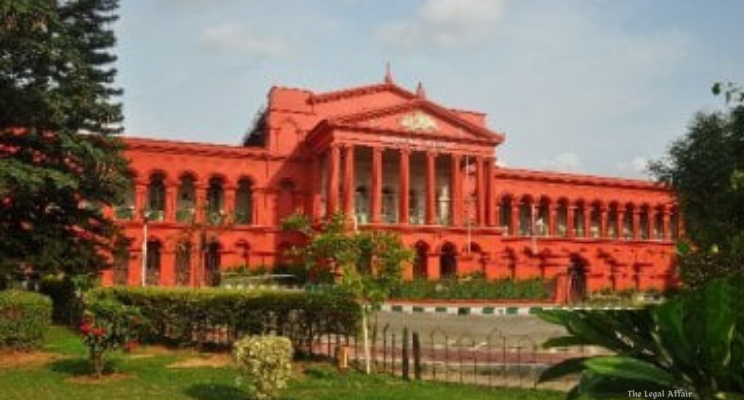
In Murali Krishna Brahmandam v. Chief Secretary & Others [WP 23824/2025; 2025 LiveLaw (Kar) 268], the Karnataka High Court, on August 12, 2025, dealt firmly with a petition that it found to be a clear misuse of Public Interest Litigation (PIL) jurisdiction. A Division Bench of Chief Justice Vibhu Bakhru and Justice Ramchandra D. Huddar dismissed a PIL filed by Murali Krishna Brahmandam, a self-proclaimed political economist, seeking directions to various government departments to deliberate upon and propose the Karnataka Government Transformation Bill, 2025, which he had personally drafted. The petitioner also wanted the State’s political leadership, including ministers and legislators, to be directed to take steps to introduce the Bill. The Court found no legal foundation for such a petition, observed that PILs cannot be used as a platform to advance personal legislative agendas, and imposed a cost of ₹1 lakh on the petitioner for the frivolous nature of the case.
Arguments on Behalf of the Petitioner:
The petitioner contended that he had drafted the Karnataka Government Transformation Bill, 2025 with the intention of bringing about far-reaching reforms in governance across the State. Claiming to act in the public interest, he sought judicial intervention to ensure that all principal secretaries, secretaries, and special secretaries of the 34 ministries and their 44 departments in Karnataka convene to discuss and propose the Bill. Further, he requested the Court to direct the Additional Chief Secretary to the Chief Minister to bring the matter before the Chief Minister and to request him to direct his Council of Ministers to initiate the Bill. He also sought directions to respondents to instruct political party MLAs, MLCs, and MPs to press the State Government to introduce the Bill in the legislature. The petitioner asserted that his proposal was in the interest of good governance and policy transformation, framing it as a matter of statewide importance rather than a personal or partisan agenda.
Arguments on Behalf of the Respondents:
The State, represented through its legal counsel, opposed the petition at the threshold. It was submitted that the petitioner’s prayer did not disclose any infringement of statutory or fundamental rights and that the nature of relief sought was purely political and policy-driven, falling entirely outside the scope of judicial adjudication. The respondents argued that the judiciary has no jurisdiction to compel the executive or legislature to adopt a particular policy or enact legislation, particularly when such an initiative originates from a private citizen without any statutory backing. The State further emphasized that PILs are meant to address genuine public interest issues—such as violations of rights or gross administrative failures—not to provide a forum for individuals to promote their own legislative ideas, however well-intentioned. Allowing such petitions, the respondents contended, would open floodgates to frivolous litigation and dilute the purpose of PIL jurisdiction.
Court’s Judgment:
After hearing the parties, the Division Bench categorically dismissed the petition, describing it as “misconceived” and noting the absence of any statutory or constitutional violation. The Court stated that Public Interest Litigation is not a medium for litigants to showcase or promote their personal policy proposals, no matter how innovative or “bright” such ideas might appear. It emphasized that the judiciary cannot be drawn into directing the executive to frame or adopt specific legislation based on an individual’s draft. The bench observed that there must be a demonstrable public injury or violation of rights for a PIL to be entertained, and mere belief in the superiority of one’s policy vision does not constitute such a ground.
The Court also made important oral observations on the scope of PILs, stressing that only matters of substantial gravity that affect the public at large warrant judicial intervention in PIL format. It warned that misuse of PILs for personal publicity or political activism undermines the very purpose of the jurisdiction. In light of the frivolous and untenable nature of the petition, the bench imposed a cost of ₹1 lakh on the petitioner, sending a clear message that courts will not hesitate to penalize litigants who misuse PILs to advance personal agendas.
The judgment reaffirms the settled principle that while citizens are free to voice opinions, propose policy changes, or even draft legislative bills, the proper forum for such initiatives is through democratic and political processes—not through the extraordinary jurisdiction of PILs under Article 226 of the Constitution. By imposing costs, the Karnataka High Court signaled its determination to preserve the sanctity of PIL as a tool for redressing genuine public grievances rather than serving as a vehicle for individual ambitions.