


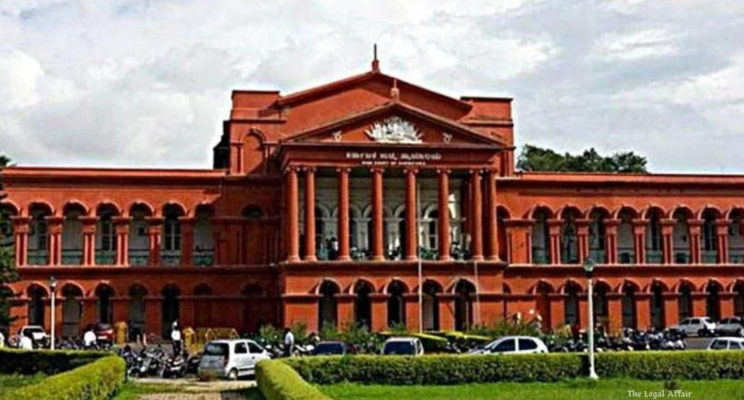
Introduction:
The Karnataka High Court, presided over by Justice M. Nagaprasanna, recently disposed of a plea filed by Spunklane Media Pvt. Ltd., the parent company of the news portal The News Minute, after the petition became infructuous due to the trial court’s refusal to extend its earlier ex-parte interim gag order. The dispute stemmed from reporting on the controversial Dharmasthala Burial case, involving allegations surrounding the death of a 17-year-old girl and the subsequent public and media attention. The original gag order, dated July 18, restrained several media houses and YouTube channels from publishing any allegedly defamatory content against respondent Harshendra Kumar D—brother of Dharmasthala Dharmadhikari Veerendra Heggade—as well as his family members, affiliated institutions, and the Sri Manjunathaswamy Temple, Dharmasthala. Following the issuance of this order, The News Minute approached the High Court challenging the restrictions, arguing that the order was overly broad, stifled press freedom, and violated the right to report on matters of significant public interest. The case took further turns when the presiding trial judge recused himself, transferring the matter to Judge Anitha M, who on August 6 rejected the plaintiff’s plea to extend the gag order, thereby rendering the High Court petition irrelevant.
Arguments of the Petitioner (The News Minute / Spunklane Media Pvt. Ltd.):
The petitioner argued that the July 18 ex-parte gag order amounted to a prior restraint on free speech and undermined the role of the press in a democratic society. It was contended that such orders, especially when granted without hearing the affected parties, violated principles of natural justice and ran contrary to established Supreme Court jurisprudence that protects journalistic reporting in the public interest. The petitioner stressed that its coverage on the Dharmasthala Burial case was based on verifiable information, public records, and eyewitness accounts, and thus could not be classified as defamatory without a judicial finding. It was further submitted that the gag order was overly broad, covering not only specific defamatory allegations but any content related to the respondent and his family, which amounted to an unjustified blanket restriction. The petitioner also questioned the procedural propriety of the trial court’s decision, emphasizing that the absence of a detailed examination before passing such sweeping restraints violated Article 19(1)(a) of the Constitution. The company noted that public interest was exceptionally high in this matter, involving serious allegations about the handling of a teenager’s death, and that restricting factual reportage risked eroding public trust and transparency.
Arguments of the Respondent (Harshendra Kumar D and Associates):
The respondent argued that the publications and videos in question contained unverified allegations that harmed the reputation of not just the respondent but also his family members, charitable institutions, and the historic Sri Manjunathaswamy Temple in Dharmasthala. It was asserted that the nature of the allegations was deeply defamatory and capable of causing irreparable damage to their standing in society. The respondent emphasized that the family’s involvement in religious and charitable activities made them especially vulnerable to public perception, and negative media coverage—whether substantiated or not—could undermine decades of community service and cultural heritage preservation. The respondent further argued that freedom of the press, while constitutionally protected, is not absolute, and does not extend to publishing content that is reckless, speculative, or malicious. They relied on precedents where courts have upheld limited prior restraints to prevent irreversible harm to personal reputation. Additionally, the respondent submitted that the March 22, 2025 ad-interim ex-parte order in O.S. No. 2145/2025 had already recognized the need to restrain defamatory publications in this matter, thereby justifying continuation of the July 18 gag order. However, despite these arguments, the trial court ultimately refused to extend the interim restraint.
Court’s Judgment:
When the matter came up before the Karnataka High Court on August 11, counsel for The News Minute informed Justice M. Nagaprasanna that the trial court had declined to extend the July 18 gag order, rendering the High Court petition infructuous. The respondent’s counsel also confirmed that Judge Anitha M had rejected their application for extension of the interim order. In light of these developments, the High Court recorded the petitioner’s memo acknowledging that no live controversy remained to be adjudicated and formally disposed of the case as infructuous. The Court refrained from making substantive comments on the merits of the gag order challenge, noting that the trial court’s decision effectively resolved the immediate dispute. However, it was significant that the High Court acknowledged the pending challenge to the broader John Doe order dated March 22, 2025, which had been passed in connection with the alleged murder case and the portal’s related reporting. This petition is scheduled for hearing next week and may provide further judicial clarity on the balance between protecting reputations and safeguarding media freedoms in high-profile criminal cases. Interestingly, Justice Nagaprasanna had only recently, on August 1, quashed a similar ex-parte gag order against the YouTube channel ‘Kudla Rampage’ in connection with the Dharmasthala Burial case, signaling the Court’s apparent skepticism toward sweeping prior restraints in matters of public concern.
The outcome of the present case reflects the interplay between interim reliefs in defamation proceedings and constitutional protections for the press. The trial court’s refusal to extend the July 18 gag order implicitly recognized that the circumstances did not justify continued restriction on reportage, particularly when the allegations formed part of an ongoing public debate over a highly sensitive incident. While the High Court’s role here was limited to disposing of the petition as infructuous, the pending John Doe order challenge promises to keep the larger legal questions alive, potentially shaping future judicial approaches to gag orders and prior restraints in media law.