


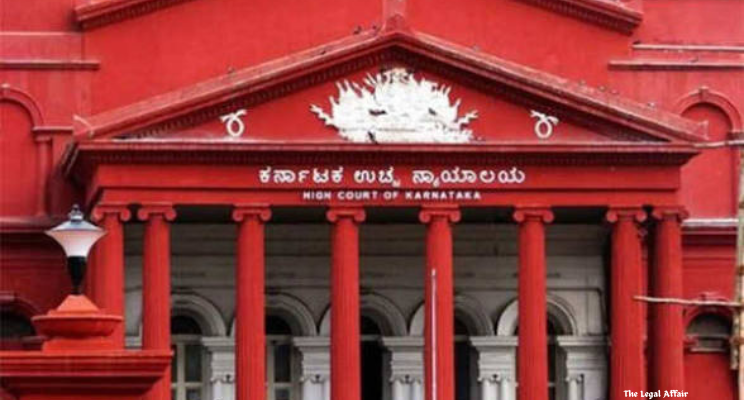
Introduction:
In a significant development concerning the functioning of the Karnataka State Administrative Tribunal (KSAT), the Karnataka High Court declined to grant interim relief in a Public Interest Litigation seeking the continuation of an Administrative Member beyond the expiry of his tenure. The matter raised important questions regarding vacancies in judicial tribunals, continuity of adjudicatory institutions, and the extent to which courts can intervene in matters involving appointments and extensions of tenure.
The case, Shri A. Venkataswamy v. Union of India & Others (WP No. 16168/2026), came before a Division Bench comprising Chief Justice Vibhu Bakhru and Justice K.S. Hemalekha. The petition sought comprehensive directions for filling vacant positions of Chairperson, Judicial Members, and Administrative Members across KSAT benches functioning at Bengaluru, Belagavi, and Kalaburagi. In addition to seeking long-term measures to address vacancies, the petitioner requested immediate intervention to ensure that existing members whose tenure was nearing completion could continue in office until fresh appointments were made.
The immediate concern before the Court related to Administrative Member Raghavendra Auradkar, whose tenure was scheduled to expire on June 13, 2026. The petitioner argued that permitting the member to demit office without a replacement would adversely affect the functioning of the Tribunal, especially when the institution was already facing challenges arising from vacancies and impending retirements of other members.
Administrative tribunals occupy a vital place within India’s justice delivery system. Established to adjudicate service-related disputes involving government employees, tribunals are intended to provide specialized, efficient, and speedy resolution of disputes. Their effectiveness, however, depends significantly on the availability of an adequate number of judicial and administrative members. Vacancies often result in increased pendency, delays in disposal of cases, and difficulties in constituting benches.
Against this backdrop, the PIL highlighted concerns regarding the functioning of KSAT and sought judicial intervention to prevent disruption in the Tribunal’s operations. The case also brought into focus the distinction between retirement and expiry of tenure, as well as the procedural framework governing extension of terms of tribunal members.
While the petitioner urged the Court to issue immediate directions ensuring continuity, the Bench appeared cautious in exercising judicial power in an area where statutory procedures and executive decisions continue to play a central role. The proceedings therefore raised broader constitutional questions concerning separation of powers, judicial restraint, and the limits of mandamus in matters involving appointments and tenure extensions.
Arguments of the Parties:
The petitioner approached the High Court through a Public Interest Litigation highlighting what was described as an urgent institutional concern affecting the functioning of the Karnataka State Administrative Tribunal. It was argued that several positions within KSAT remained vacant and that failure to promptly fill these posts could impair the Tribunal’s ability to effectively discharge its adjudicatory responsibilities.
According to the petitioner, the situation was particularly pressing because multiple members were either due to retire or complete their tenure during the current year. The petitioner contended that unless immediate measures were adopted, litigants appearing before the Tribunal would face delays and difficulties resulting from inadequate bench strength.
A significant component of the relief sought involved a direction to fill all vacant posts of Chairperson, Judicial Members, and Administrative Members across the KSAT benches situated in Bengaluru, Belagavi, and Kalaburagi within a stipulated period of six months. The petitioner argued that maintaining adequate staffing levels in tribunals is essential for preserving access to justice and ensuring timely adjudication of service matters affecting government employees.
The petitioner also sought a direction that existing judicial and administrative members be permitted to continue functioning even after expiry of their respective tenures until successors assumed office. Such a measure, it was argued, would prevent any administrative vacuum and ensure continuity in the Tribunal’s operations.
Particular emphasis was placed on the case of Administrative Member Raghavendra Auradkar, whose tenure was due to expire on June 13, 2026. The petitioner submitted that permitting him to continue until a replacement was appointed would be in the larger public interest and would safeguard the uninterrupted functioning of the Tribunal.
Counsel appearing for the petitioner informed the Court that the Department of Personnel and Administrative Reforms (DPAR) possessed the authority to initiate proposals concerning extension of tenure. It was argued that the Court could direct continuation of the concerned member in the interim period to ensure that institutional functioning did not suffer.
The petitioner further submitted that such directions would not amount to creating a new appointment but would merely preserve the status quo until the executive completed the process of appointment or extension. The plea was framed as a practical solution aimed at avoiding disruption in judicial administration.
On the other hand, the Court examined the legal framework governing tenure and extension of tribunal members. During the hearing, it was noted that the petitioner himself relied upon the existence of a governmental mechanism under which extension could potentially be granted through an appropriate notification or memorandum.
The Bench observed that the process was not automatic and required action on the part of the government. The Court indicated that an appointment letter ordinarily specifies the tenure of a member and that any extension beyond such tenure would require compliance with the prescribed procedure.
The State’s position was not fully elaborated in the proceedings reported at this stage. However, the Court directed the State’s counsel to obtain instructions regarding the issue of extending the tenure of members after completion of their existing term. This direction suggested that the Court considered the matter to be one primarily requiring clarification from the executive authorities rather than immediate judicial intervention.
The Bench appeared to proceed on the understanding that the relevant governmental authorities were competent to consider the issue and that the process contemplated by law should be allowed to operate before judicial directions were issued.
Court’s Judgment:
The Karnataka High Court declined to grant interim relief and refrained from issuing any direction permitting the concerned Administrative Member to continue in office beyond the expiry of his tenure. The Court’s approach reflected a cautious exercise of judicial power in an area involving executive decision-making and statutory procedures.
At the outset, the Bench examined the nature of the relief sought by the petitioner. The Court noted that the petitioner himself had referred to the existence of a memorandum or governmental mechanism under which extension of tenure could be considered. This observation became central to the Court’s reasoning.
Chief Justice Vibhu Bakhru observed that if there already existed a procedure enabling extension through governmental action, there was no immediate necessity for issuance of a writ of mandamus. The Court emphasized that extension of tenure is not an automatic consequence arising upon expiry of a member’s term. Rather, it is a matter governed by specific procedural requirements and executive consideration.
The Bench orally remarked that an appointment letter fixes the tenure of a member and that any continuation beyond such period generally requires a separate governmental notification. The Court thereby highlighted the distinction between a fixed-term appointment and an extension granted through a fresh administrative decision.
A significant aspect of the Court’s reasoning was its recognition of the limited role of judicial intervention at an interlocutory stage. The Bench appeared unwilling to pre-empt executive decision-making when the competent authorities had not yet completed the process of considering extension.
The Court also addressed the characterization of the situation by observing that the issue involved expiry of tenure rather than retirement. This distinction was important because retirement generally occurs upon reaching a prescribed age, whereas expiry of tenure results from completion of a fixed term of appointment.
By drawing attention to this distinction, the Court suggested that the legal consequences flowing from expiry of tenure are governed by the terms of appointment and applicable statutory provisions. Therefore, continuation in office could not be assumed in the absence of a valid extension order.
Another notable aspect of the proceedings was the Court’s reference to what it described as a possible “deemed extension” argument advanced by the petitioner. The Bench pointed out that if the petitioner believed a mechanism already existed under which continuation could occur, then the necessity for judicial intervention became even less apparent.
The Court’s refusal to grant interim relief appears to be rooted in established principles governing issuance of writs of mandamus. Traditionally, courts issue mandamus when there is a clear legal duty coupled with failure or refusal by an authority to perform that duty. Where statutory authorities are still in the process of considering a matter, courts often exercise restraint and avoid issuing premature directions.
The judgment also reflects broader constitutional principles relating to separation of powers. Appointments, extensions, and tenure-related decisions concerning tribunal members ordinarily fall within the executive domain, subject to statutory safeguards and judicial review where appropriate. The Court’s observations indicate a reluctance to substitute judicial directions for executive decision-making in the absence of exceptional circumstances.
Importantly, the Bench did not dismiss the larger concerns raised in the PIL regarding vacancies within KSAT. Instead, the Court directed the State’s counsel to obtain instructions regarding extension of tenure and listed the matter for further consideration on June 30, 2026.
This approach demonstrates that while the Court was unwilling to grant immediate interim relief, it remained conscious of the institutional issues highlighted by the petitioner. The matter therefore continues to remain under judicial scrutiny, particularly concerning vacancies and the functioning of the Tribunal.
The order serves as a reminder that courts generally prefer allowing statutory and administrative mechanisms to function before exercising extraordinary constitutional powers. Even where concerns regarding institutional continuity are genuine, judicial intervention must be balanced against the need to respect procedural frameworks established by law.
From a broader perspective, the case highlights recurring concerns regarding vacancies in tribunals across the country. Administrative tribunals play a crucial role in adjudicating service disputes and reducing the burden on constitutional courts. Delays in appointments and uncertainty regarding tenure often affect their efficiency and capacity to deliver timely justice.
While the Karnataka High Court did not grant the interim relief sought by the petitioner, the proceedings have brought attention to the importance of ensuring adequate staffing and continuity within adjudicatory institutions. The eventual outcome of the PIL may have significant implications for the administration of KSAT and similar tribunals facing challenges arising from vacancies and delayed appointments.
For the present, however, the Court has chosen a path of judicial restraint, leaving the matter of extension to the competent governmental authorities while keeping the larger issue of tribunal vacancies under consideration. The decision underscores the principle that judicial intervention must remain consistent with statutory procedures and constitutional boundaries, even when concerns regarding institutional functioning are raised in public interest litigation.