


Introduction:
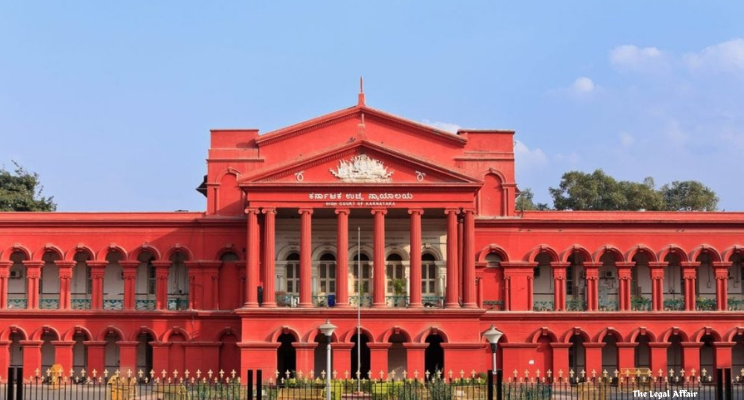
In a recent ruling underscoring the importance of administrative discipline while preserving the right to individual redress, the Karnataka High Court, in N. Shreyas v. State of Karnataka & Others (W.P. No. 32517/2025; 2025 LiveLaw (Kar) 377), refused to extend the last date for submission of online applications under the State Government’s “Laptop and Braille Kit Scheme 2025.” The division bench comprising Chief Justice Vibhu Bakhru and Justice C.M. Poonacha observed that since the government had already extended the deadline twice, there was no valid ground for directing another extension. However, the bench cautiously added that any individual who faced genuine difficulty in filing the application could still approach the court separately for specific relief. The decision came in response to a Public Interest Litigation (PIL) filed by Advocate N. Shreyas, a visually impaired person, who sought a 60-day extension of the application deadline, citing challenges faced by visually impaired students in obtaining necessary documents on time. The judgment reflects a balanced judicial stance—acknowledging the administrative constraints of policy implementation while ensuring that equity and fairness remain available to those genuinely disadvantaged.
Arguments of Both Sides:
The petitioner, Advocate N. Shreyas, who is visually impaired and appeared in person, filed a PIL seeking a direction to the State of Karnataka and concerned authorities to extend the final date for submitting online applications under the “Laptop and Braille Kit Scheme 2025” by 60 more days. He argued that the scheme, designed to promote digital inclusion and educational empowerment among visually impaired students, should be implemented with due sensitivity and flexibility. The petitioner contended that the rigid adherence to deadlines, without reasonable accommodation for persons with disabilities, contradicted the welfare objectives of the initiative. He submitted that the visually impaired community often faces logistical challenges in accessing, preparing, and submitting required documents—such as disability certificates, educational proof, and bank details—which take more time to collect and upload. Therefore, the current deadline (October 31) would likely exclude many eligible beneficiaries, defeating the purpose of the scheme.
The petitioner emphasized that his PIL was not motivated by personal benefit but was a genuine attempt to protect the interests of similarly placed individuals across Karnataka. He pointed out that many potential applicants lacked adequate information about the scheme or assistance in navigating the online process, especially in rural and semi-urban regions. He also sought directions to the government to establish district and taluk-level facilitation centres to assist visually impaired students in applying for welfare schemes and to enhance public awareness of such programs through targeted outreach. In his view, such systemic support was essential to ensure that visually impaired learners could truly benefit from government initiatives intended for their upliftment.
On the other hand, the State authorities opposed the plea, arguing that sufficient opportunities had already been provided to all eligible applicants. Represented by the State Counsel, the government submitted that the application portal for the scheme had been initially opened on September 26, 2025, with a closing date of September 30. Upon receiving multiple representations from concerned individuals and organizations, the authorities had already extended the deadline twice—first to October 15, and then again to October 31. The government argued that further extension of time would not only disrupt administrative timelines but also delay the implementation of the scheme, thereby affecting the overall efficiency of resource distribution.
The State’s counsel stressed that the scheme was being implemented across Karnataka with uniform deadlines to ensure fairness and consistency. If the Court were to intervene and repeatedly extend submission dates, it could create a precedent leading to uncertainty and administrative disorder. The counsel further pointed out that the scheme’s online format was accessible to applicants through assistance from local institutions, NGOs, and district offices, and that several visually impaired persons had already successfully completed their applications within the prescribed time. Therefore, the petitioner’s concerns, though sympathetic, did not warrant a judicial direction to alter government timelines. The State maintained that adequate opportunity had already been provided, and the deadlines had been extended more than reasonably expected under administrative norms.
Court’s Judgment:
After hearing the submissions of both parties, the division bench of Chief Justice Vibhu Bakhru and Justice C.M. Poonacha delivered its order, refusing to grant a further 60-day extension as sought by the petitioner. The Court noted that the government had demonstrated flexibility by extending the deadline twice before—first from September 30 to October 15, and then again to October 31—following public representations. Observing that the administrative authorities had acted reasonably in accommodating requests for extensions on two separate occasions, the bench found no compelling reason to mandate yet another extension through judicial intervention.
The Court emphasized that while it fully appreciated the challenges faced by visually impaired individuals, such schemes operate within administrative frameworks that must maintain timelines for efficiency and accountability. It pointed out that the PIL mechanism cannot be used to supplant or override the administrative functions of the executive. The judges remarked that the court’s jurisdiction in public interest matters is meant to ensure fairness and prevent injustice, not to micromanage government processes that have already been reasonably executed.
In its oral remarks, the bench stated, “The application is to be submitted online. The portal has been opened twice. We do not know if anybody has been affected by non-application; if somebody comes before us with an impediment, we will consider it. PIL petition is not to supplant over the authorities.” This observation reflected the Court’s approach to balance administrative practicality with compassion for individual hardship. The bench made it clear that while the larger public deadline could not be altered again, individuals who could not apply due to genuine difficulties retained the right to approach the Court separately for appropriate relief.
In its final order, the Court stated, “Since the deadline is extended twice before, we do not find any reason to direct a further extension of the deadline for filing an application. However, we clarify that this order will not preclude any affected individuals who have been unable to file his application on account of any difficulty to approach this Court for seeking appropriate relief. Petition is disposed of.”
The judgment subtly reaffirmed the principle that judicial interference in administrative decisions should be limited to instances of manifest arbitrariness or injustice. In this case, the Court found that the government’s actions had been reasonable, responsive, and fair, having already extended deadlines twice to accommodate applicants. However, it also preserved an essential safeguard for individual justice—ensuring that persons genuinely disadvantaged by systemic or technical barriers could still seek judicial intervention on a case-by-case basis.
In addressing the broader social context, the bench acknowledged the noble intent behind the “Laptop and Braille Kit Scheme 2025,” which aims to empower visually impaired students through access to digital tools and learning aids. It noted that while procedural timelines are important for orderly governance, welfare schemes designed for marginalized groups should also incorporate reasonable flexibility and accessibility features. The Court implicitly urged the government to ensure that communication about such schemes reaches all intended beneficiaries and that administrative mechanisms remain inclusive and sensitive to the special needs of differently-abled persons.
The Court refrained from issuing directions on the petitioner’s other requests—such as setting up district-level facilitation mechanisms and awareness campaigns—stating that such policy measures fall within the purview of the executive. Nevertheless, the judgment serves as a reminder that the spirit of welfare schemes must align with the constitutional vision of equality, accessibility, and inclusiveness for persons with disabilities. The High Court’s decision, while technically dismissing the petition, underscores a delicate balance between administrative efficacy and human sensitivity, ensuring that neither is compromised in the pursuit of public welfare.
In sum, the Karnataka High Court’s order in N. Shreyas v. State of Karnataka demonstrates judicial restraint coupled with moral clarity. By refusing to extend the deadline again, the Court upheld the integrity of administrative timelines. At the same time, by allowing individually affected persons to approach the Court for relief, it ensured that justice remains accessible to those genuinely impeded by circumstances beyond their control.