


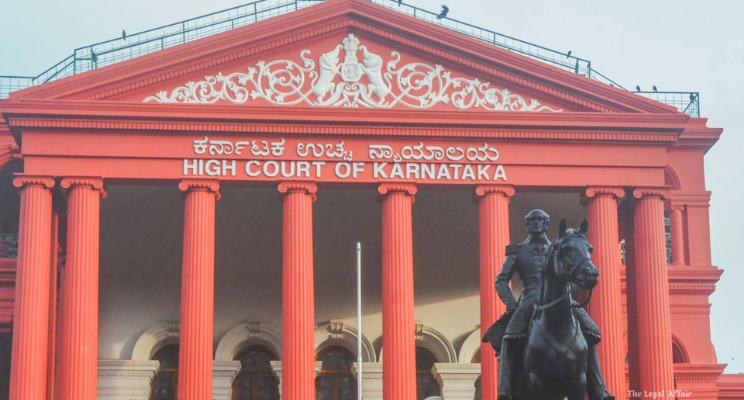
Introduction:
In the matter titled Basvaraj and K M Altaf Hussain & Others (Miscellaneous First Appeal Nos. 101342, 101341, 101568 & 101569 of 2017), the Karnataka High Court addressed a critical question regarding the scope of insurance liability in motor vehicle accidents involving deviation from the permitted route. The case arose from a road traffic accident in which a biker and the pillion rider sustained grievous injuries after being hit by a private bus. The Motor Accident Claims Tribunal (MACT), while adjudicating the claims filed by the injured victims, accepted their version that the accident was caused due to the rash and negligent driving of the bus and accordingly awarded compensation. However, instead of directing the insurance company to shoulder the liability, the Tribunal fastened the burden of compensation upon the bus owner on the ground that the vehicle was operating on a route beyond the limit of its valid permit under Section 66 of the Motor Vehicles Act, 1988. Specifically, it was held that the bus had no permit to ply up to Haveri where the accident took place, and this act amounted to a violation of permit conditions, constituting a fundamental breach of policy terms sufficient to exonerate the insurer from liability.
Arguments:
Aggrieved by this decision, the bus owner approached the Karnataka High Court, through Advocate B.M. Patil, contending that the bus was not misused but rather dispatched as a “relief vehicle” to pick up stranded passengers from another company bus that had broken down mid-route. The appellant relied on Rule 57 of the Karnataka Motor Vehicles Rules, 1989, which specifically provides an exemption from Section 66 of the Motor Vehicles Act for vehicles being used as relief carriers. Rule 57 reads: “The provisions of sub-section (1) of Section 66 shall not apply to any transport vehicle used as a relief vehicle for carrying passengers and their luggage from a disabled stage carriage to the place of destination.” On this premise, the appellant argued that the deviation from the regular route was not a willful violation but a permissible exception under law that must be recognized to prevent miscarriage of justice and unwarranted penalization of the vehicle owner.
On the other hand, the respondent No.1 and No.2 represented by Advocates Sanjay S. Katageri and S.S. Koliwad respectively, sought to sustain the Tribunal’s decision by asserting that deviation from the route constituted breach of the terms of the permit and consequently, the insurance policy. They emphasized that the insurance company cannot be compelled to indemnify liabilities arising from unauthorized usage of the vehicle. According to the respondents, the permit conditions form the very basis of the insurance contract, and any deviation undermines the legal and contractual obligations under the Motor Vehicles Act. They contended that mere labeling of the vehicle as a “relief bus” post-facto should not entitle the vehicle owner to claim immunity from statutory violations. Additionally, the respondents questioned the absence of any documentary evidence to establish the vehicle’s assignment as a relief bus on the date of the accident and argued that such claims were afterthoughts introduced only to shift liability away from the insured.
Judgement:
Justice Hanchate Sanjeevkumar, presiding over the appeal, delved into the legal framework governing transport permits and exemptions. The Court meticulously examined the purpose and interpretation of Section 66 of the Motor Vehicles Act, which mandates that no transport vehicle can be operated in a public place without a valid permit. However, Rule 57 of the Karnataka Motor Vehicles Rules carves out a clear exception for vehicles used in a bona fide capacity as relief carriers. Applying this provision, the Court noted that the object of Rule 57 is to allow logistical flexibility for passenger welfare, particularly in emergency or breakdown situations, without subjecting transporters to undue penal consequences. The Court held that when a vehicle is used to rescue passengers stranded due to mechanical failure of a stage carriage, it qualifies as a relief vehicle exempt from regular permit conditions. Thus, the usage of the bus in question at the relevant time was covered by the exemption, and no fundamental breach of permit conditions had occurred.
The bench also took note of the insurance policy and concluded that there was no specific exclusion clause that could be attracted in the present scenario. Importantly, the High Court emphasized that not every technical deviation from permit conditions amounts to a fundamental breach sufficient to exonerate the insurance company from its liability to indemnify. The Court clarified that a “fundamental breach” refers to a willful and substantial deviation that changes the very risk insured against, which was not the case here. As the bus was used to render aid and not for any profit-making purpose or unauthorized route expansion, the insurer remained liable. Justice Sanjeevkumar commented that “the offending vehicle was used as a relief vehicle. Therefore, there is no fundamental breach proved so as to exonerate the Insurance Company. The Tribunal, in this regard, has committed an error…mere deviation of rules in the circumstances as above discussed is not amounting to fundamental breach so as to exonerate the Insurance Company to pay compensation to the owner.” By upholding the vehicle owner’s appeal, the High Court corrected the Tribunal’s interpretation and directed the insurance company to bear the compensation liability as originally envisaged under the policy.
This judgment is a vital development in motor accident claims jurisprudence as it provides clarity on how statutory exemptions apply to vehicles temporarily repurposed for relief. It prevents mechanical interpretation of permit conditions from leading to harsh consequences, especially in situations where the deviation is justified by humanitarian or operational necessity. The ruling also reinforces the doctrine that insurance contracts must be interpreted contextually, keeping in mind the facts of each case and the spirit of the law, particularly when dealing with claims that involve public safety or emergent circumstances. By recognizing the relief operation as a legitimate exception, the Court upheld the insurance company’s continuing obligation to indemnify the insured and restored the principle of equitable liability in accident compensation. Moreover, it sends a strong signal to Claims Tribunals to avoid rigid interpretations that ignore statutory exemptions clearly recognized under Rules framed by State Governments. It also offers comfort to vehicle operators who may have to occasionally deviate from set routes to address passenger emergencies and perform rescue functions. The High Court’s reasoned approach ensures justice to both the accident victims, who receive their entitled compensation, and to the vehicle owners, who are shielded from unfair financial burdens in exceptional situations beyond their control. Overall, the judgment stands as an exemplar of purposive interpretation of transport laws in alignment with equity and public interest.