


Introduction:
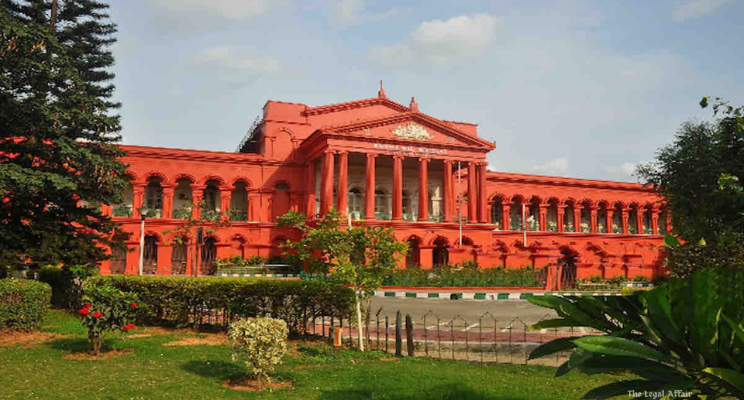
The Karnataka High Court recently addressed a crucial issue surrounding the Maintenance and Welfare of Parents and Senior Citizens Act, 2007, ruling that the right to appeal under Section 16 of the Act is exclusively reserved for senior citizens and parents. The division bench of Chief Justice N V Anjaria and Justice K V Aravind delivered this judgment while partly allowing a writ appeal filed by K. Lokesh, challenging the maintainability of an appeal filed by a transferee, Ayyappa, under Section 16 of the Act. The case arose from a property dispute involving a gift deed executed by Lokesh’s late father, P. Krishna, which was later challenged on grounds of fraud and denial of basic amenities.
Arguments of Both Sides:
The appellant, represented by Senior Advocate Puttige R Ramesh and Advocate A. Srikanth, argued that the appeal filed by Ayyappa before the Deputy Commissioner under Section 16 of the Act was not maintainable, as the statutory provision expressly limits the right of appeal to senior citizens or parents. They contended that extending this right to other parties, including transferees, would contradict the legislative intent and dilute the Act’s purpose of providing immediate relief to senior citizens. Furthermore, the appellant asserted that the Deputy Commissioner’s order, which set aside the Assistant Commissioner’s directive to cancel the gift deed, was unsustainable and without jurisdiction.
The respondent, represented by Advocate Ranganath Reddy, countered that the gift deed executed by P. Krishna in favor of Ayyappa was unconditional, and there was no evidence of failure to provide basic amenities or physical needs. They argued that the father’s petition under Section 23 of the Act was influenced by familial disputes and was therefore not genuine. Additionally, they submitted that the rights under the Act are personal to senior citizens and do not survive their death. Consequently, the proceedings initiated by P. Krishna should abate upon his demise, and the appellant’s claim to the property under the registered will had no bearing on the appeal’s maintainability.
Court’s Judgement:
The Karnataka High Court meticulously examined the statutory framework of the Act, the legislative intent behind its enactment, and the scope of Sections 16 and 23. The bench emphasized that Section 16 of the Act unequivocally grants the right of appeal exclusively to senior citizens and parents aggrieved by an order of the Tribunal. It held that extending this right to other individuals, including transferees or children, would amount to judicial overreach and rewrite the statutory provision, which is impermissible. The Court underscored that the Act aims to provide speedy and inexpensive remedies to senior citizens for ensuring their welfare and basic needs, and this objective must guide the interpretation of its provisions.
The bench further clarified that while children or transferees aggrieved by an order under Section 23 of the Act do not have a statutory right to appeal, they are not without recourse. They can challenge such orders by invoking Article 226 of the Constitution, but this cannot be used to justify extending the appeal rights under Section 16. The Court reasoned that creating such an alternative interpretation would lead to absurd outcomes and undermine the legislative intent behind the Act.
Applying these principles to the present case, the Court concluded that Ayyappa’s appeal before the Deputy Commissioner under Section 16 of the Act was not maintainable. It quashed the Deputy Commissioner’s order that had set aside the Assistant Commissioner’s directive to cancel the gift deed. The Court also disapproved of the single judge’s order to the extent that it set aside the Assistant Commissioner’s order, stating that it lacked justifiable reasoning and suffered from legal infirmities.
At the same time, the Court refrained from delving into the validity of the gift deed, the Assistant Commissioner’s order, or the registered will executed by P. Krishna, observing that these issues were beyond the scope of the present writ appeal. It clarified that the rights and obligations under the Act are personal to senior citizens and cannot be extended or continued by their legal heirs after their death. As such, the proceedings under the Act abated with the death of P. Krishna.
In conclusion, the Karnataka High Court upheld the statutory limitation on appeal rights under Section 16 of the Act, ensuring that the remedy remains exclusive to senior citizens and parents, as envisaged by the legislature.