


Introduction:
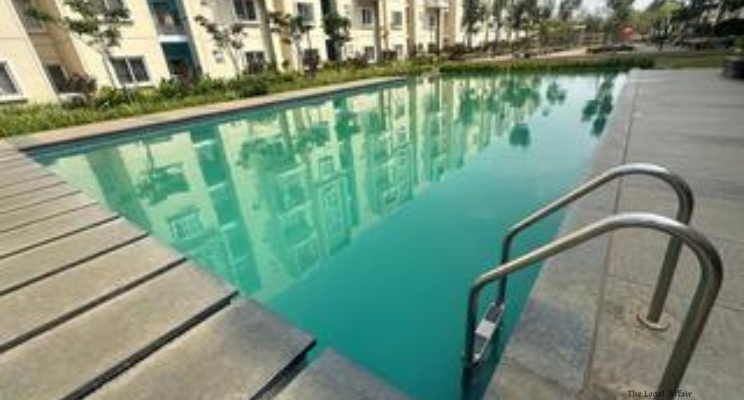
In a significant ruling, the Karnataka High Court addressed a tragic case involving the drowning of a minor child in a swimming pool at Prestige LakeSide Habitat, an apartment complex in Bangalore. The court, led by Justice M. Nagaprasanna, partly allowed a petition filed by Debashish Sinha, the President of the Home Owners Association, and other association members. The petitioners sought to quash criminal proceedings against them. However, the court upheld charges against them under Section 304A of the Indian Penal Code, which pertains to causing death by negligence.
Arguments of Both Sides:
Petitioners’ Arguments:
The petitioners contended that the charges under Section 304 (culpable homicide not amounting to murder) and Section 149 (unlawful assembly) of the Indian Penal Code were inappropriate. They argued that Section 304 necessitates an intention to commit homicide, which was absent in their case. They claimed that the charges were based on negligence rather than intent, and further proceedings would be an abuse of legal process. The petitioners emphasized that no apartment complex typically employs guards at swimming pools, suggesting that imposing such a requirement would be unrealistic and unfair.
Prosecution’s Arguments:
The prosecution argued that the petitioners, responsible for the management of the apartment complex, were liable for the child’s death due to their negligence. They contended that the absence of adequate safety measures around the swimming pool, such as a lifeguard or proper supervision, constituted a significant lapse in duty. The prosecution maintained that the petitioners’ negligence directly led to the drowning and that they should be held accountable under the appropriate legal provisions for causing death by negligence.
Court’s Judgment:
Justice M. Nagaprasanna, reviewing the case under Section 482 of the CrPC, decided to amend the charges against the petitioners. The court acknowledged that while the petitioners were responsible for the management of the apartment complex, the charges under Section 304 (culpable homicide) were inappropriate as they implied intent to kill, which was not evident. Instead, the court found that the situation more accurately fell under Section 304A, which addresses causing death by negligence.
The court’s judgment highlighted that the petitioners were negligent in their duties by not ensuring proper supervision and safety measures around the swimming pool. Although the petitioners argued that no standard practice required guards at swimming pools, the court emphasized that leaving such facilities unguarded posed a severe risk to residents, especially young children.
The court concluded that the petitioners’ negligence was clear and significant, and thus they should face charges under Section 304A for their failure to provide adequate safety measures. The judgment clarified that the legal responsibility for the child’s death rested on the association’s office bearers, who failed to act in a manner that ensured the safety of the residents.
Justice Nagaprasanna noted that while the charges under Section 304 were not suitable due to the lack of intent, the charge under Section 304A was appropriate given the evident negligence. The court ordered that the petitioners face a full trial for this charge, emphasizing the need for apartment associations to implement rigorous safety measures to prevent such tragic incidents.