


Introduction:
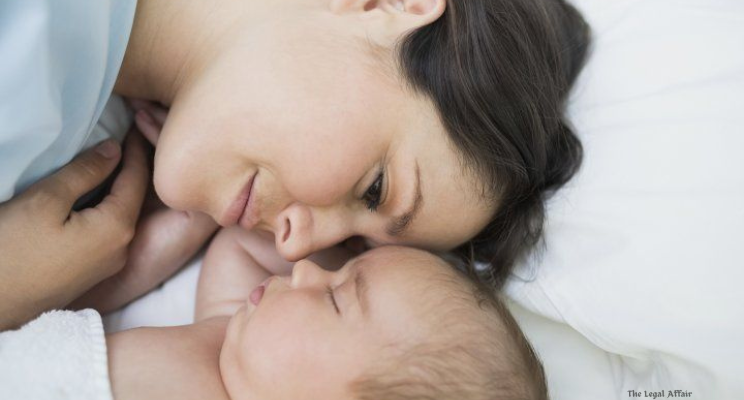
In a landmark decision emphasizing the rights of lactating mothers and their children, the Karnataka High Court upheld an order by the Central Administrative Tribunal (CAT), directing the National Institute of Mental Health and Neurosciences (NIMHANS) to grant Child Care Leave (CCL) for 120 days to a nurse, S. Anitha Joseph. A division bench comprising Justice Krishna S. Dixit and Justice C. M. Joshi dismissed NIMHANS’ challenge to the CAT’s order, reaffirming that a lactating mother has a Fundamental Right to breastfeed her baby and that the baby too has a Fundamental Right to be breastfed. The court emphasized that these rights form a singularity protected under Article 21 of the Constitution. It also called upon NIMHANS, as an instrumentality of the State, to act as a model employer and exhibit empathy towards women employees requesting maternity and child care leave.
Arguments by the Petitioner (NIMHANS):
NIMHANS contended that the grant of any leave, including Child Care Leave, is not a matter of right. It argued that approving such a lengthy leave for a nurse working in the ICU would lead to operational difficulties. It was emphasized that the term “may be granted,” as used in Rule 43C of the Central Civil Services (Leave) Rules, 1972, provided employers discretion to either accept or deny such requests. NIMHANS maintained that granting 120 days of leave would severely impact the functioning of the critical care unit.
The petitioner further argued that the decision to approve or deny leave is not judicially determinable and involves consideration of numerous factors that fall within the employer’s domain. It contended that the tribunal erred in treating CCL as an automatic right while disregarding the organizational challenges posed by staff shortages. NIMHANS asserted that granting CCL in this instance would disrupt ICU operations, potentially jeopardizing patient care.
Arguments by the Respondent (S. Anitha Joseph):
Anitha Joseph, a nurse with a spotless record since joining NIMHANS in 2016, argued that her request for Child Care Leave was based on legitimate needs as a lactating mother and primary caregiver to her child. She emphasized that Rule 43C of the Central Civil Services (Leave) Rules allows a maximum of 120 days of CCL, combined with other types of leave, and that her request complied with these provisions.
She pointed out that her representation dated August 12, 2022, clearly outlined the reasons for her extended leave request, emphasizing her need to care for her child during its formative years. Joseph argued that NIMHANS failed to demonstrate how her absence would create insurmountable operational difficulties, especially given that the institution employs over 700 nurses, 70% of whom are women. She asserted that the refusal to grant CCL violated her Fundamental Rights under Article 21, which guarantees the right to life and dignity, including her right to breastfeed her child.
Relying on the CAT’s order, Joseph maintained that her leave request was consistent with established norms and that denying it was unjust and arbitrary. She further argued that as an instrumentality of the State, NIMHANS was obligated to act as a model employer and accommodate the needs of its employees, particularly women in critical caregiving roles.
Court’s Judgment:
The Karnataka High Court upheld the CAT’s order, dismissing NIMHANS’ petition and directing the institution to implement the tribunal’s decision without delay. The court found that NIMHANS, as an instrumentality of the State under Article 12 of the Constitution, had an obligation to treat its employees, particularly women, with consideration and compassion. It highlighted the importance of Child Care Leave (CCL) and maternity benefits for lactating mothers, recognizing these as essential for the physical and emotional well-being of both the mother and the child. The bench noted that NIMHANS had failed to provide any valid justification to deny the leave requested by S. Anitha Joseph, particularly in light of the fact that there was no evidence showing how her absence would disrupt the ICU operations. The court pointed out that the institution’s arguments about potential operational difficulties lacked specificity and were based more on assumptions than on concrete data.
The bench underscored that the issue at hand involved not only the right of a mother to breastfeed her child but also the child’s right to be breastfed during the early stages of life. Citing the Constitution’s protection of Fundamental Rights under Article 21, the court stressed that the need for a mother to be with her child and care for it was part of the right to life and personal liberty. The court also pointed out that such rights were not just confined to the mother but extended to the child, thus creating a combined right for both. It emphasized that the refusal to grant such leave was a denial of these fundamental rights, which the State and its instrumentalities, like NIMHANS, had a duty to protect.
The court also cited global standards, referencing United Nations (UN) experts who had stated that breastfeeding is a human rights issue for both babies and mothers. The bench referred to the famous quote, “The greatness of a civilization can be measured inter alia by observing how women and children are treated,” and reminded NIMHANS that, as an institution upholding public values, it must be exemplary in its treatment of its women employees, particularly in matters related to maternity and child care.
Furthermore, the court noted that the employee, S. Anitha Joseph, had been employed at NIMHANS since 2016 with a flawless service record. This reinforced the idea that the request for Child Care Leave was a genuine one and not an attempt to evade work. The court also took into account that her leave request had been made within the legal framework established by the Central Civil Services (Leave) Rules, specifically Rule 43C, which permits a maximum of 120 days of Child Care Leave.
In light of these considerations, the court found that there was no legal or factual basis for NIMHANS’ refusal to grant the leave, especially as the petitioner had clearly explained her reasons for the extended leave in her representation. The judgment further noted that such a refusal could not be justified based on general assumptions about operational difficulties but should have been weighed against the personal rights of the employee and the needs of the child.
The High Court also dismissed the argument put forth by NIMHANS regarding the discretionary nature of granting leave. It clarified that the wording of the relevant provisions does not give employers unfettered discretion to deny leave requests without valid reasons, especially when such requests are made in compliance with the law and with a clear explanation of the need. In this case, the court concluded that the refusal to grant Child Care Leave was not only unreasonable but also unlawful.
Finally, the bench ordered that NIMHANS comply with the CAT’s ruling within eight weeks and grant S. Anitha Joseph the Child Care Leave she had requested. The court’s decision emphasized that such matters should be handled with sensitivity, particularly when it concerns the health and welfare of both mothers and children. The bench also stressed that the State and its instrumentalities should act as role models in promoting gender equality, recognizing the critical importance of supporting women’s rights in the workplace, especially in matters related to maternity and child care.