


Introduction:
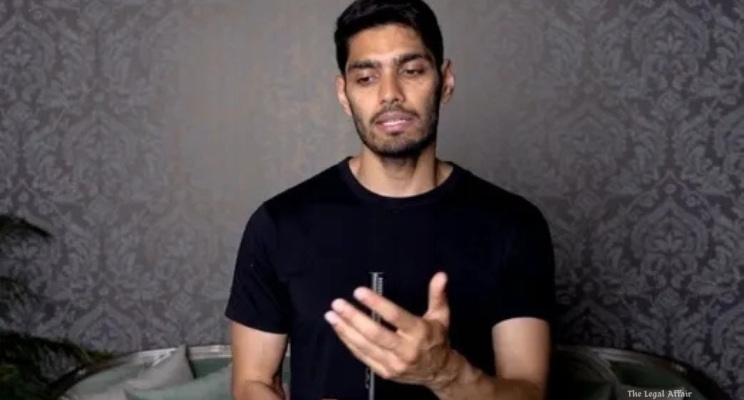
In the case titled Mohak Mangal v. ANI Media Pvt. Ltd. and Anr, currently before the Delhi High Court, prominent YouTuber Mohak Mangal has sought the transfer of a copyright and trademark infringement suit filed by Asian News International (ANI) from the Patiala House District Court to the Delhi High Court. The case has stirred considerable attention due to its overlap with ongoing defamation proceedings before the High Court, and also due to the involvement of other public figures like Kunal Kamra and Mohammed Zubair. Justice Anup Jairam Bhambhani, who heard the transfer plea on July 11, 2025, raised a fundamental question about whether such a transfer application could be entertained by a single judge bench under the Commercial Courts Act. The arguments revolved primarily around jurisdictional interpretations, cause of action overlap, and procedural constraints dictated by the statute.
Arguments on Behalf of ANI:
Advocate Siddhant Kumar, appearing for ANI, challenged the maintainability of Mangal’s transfer petition before a single judge. He relied on Section 15(5) of the Commercial Courts Act, which stipulates that all appeals or applications involving commercial disputes pending in subordinate courts must be brought before the Commercial Appellate Division of the High Court. Kumar emphasized that the suit filed before the Patiala House Court is grounded in a distinct cause of action—copyright and trademark infringement arising from ten YouTube videos. He argued that the subject matter of the defamation suit before the High Court is materially different from that before the district court, and hence, the two suits cannot be clubbed or transferred without proper jurisdictional authority.
Kumar further asserted that ANI’s grievances before the High Court relate solely to the allegedly defamatory content of a particular YouTube video titled “Dear ANI,” whereas the district court suit pertains to copyright and trademark violations across ten separate videos. Therefore, he maintained, the matters are not legally or factually interconnected to warrant transfer. He also pointed out that ANI had not raised the same claims before both courts and that Mangal’s plea to transfer the case was legally unsustainable. Kumar concluded by stating that if Mangal wishes to press for a transfer, he must approach the Commercial Appellate Division, not a single-judge bench, as per the explicit statutory mandate.
Arguments on Behalf of Mohak Mangal:
Advocate Nakul Gandhi, representing Mohak Mangal, countered ANI’s arguments by asserting that the trademark issues raised in both suits were inherently connected. He stated that six out of the ten videos impugned before the Patiala House Court were already part of the record in the defamation suit before the High Court. Gandhi contended that maintaining two parallel proceedings on substantially the same content would amount to duplication, unnecessary judicial burden, and a risk of contradictory judgments. He emphasized the practicality and procedural fairness of transferring the Patiala House suit to the High Court, where related issues were already being adjudicated.
Gandhi also suggested that the essence of both cases—alleged injury to ANI’s brand and reputation—stemmed from the same root: Mangal’s content and its public dissemination. Thus, while the legal theories (defamation versus copyright infringement) may differ, the factual substratum and alleged harm were substantially similar. Addressing the jurisdictional objection, Gandhi argued that certain precedents support the idea that transfer applications in overlapping matters could be heard by the same court already seized of one of the cases. He requested time to place relevant judicial decisions and orders on record to demonstrate that the single judge bench did have the authority to hear the matter.
Court’s Observations and Procedural Posture:
Justice Bhambhani, after hearing both sides, expressed doubt as to whether he could entertain the transfer plea under the current statutory scheme. He specifically questioned whether a single bench of the High Court had the power to order such a transfer, given Section 15 of the Commercial Courts Act. He remarked, “Jurisdiction issue. Can I even entertain this?… You (Mangal) are asking that the Patiala House suit be brought here but you’ve to go before a DB [Division Bench].” The judge was clearly cautious about proceeding without clarity on jurisdictional propriety and statutory constraints.
Nevertheless, the Court did not summarily dismiss the plea. Instead, Justice Bhambhani granted Mangal’s counsel liberty to place on record relevant decisions or orders to support the maintainability of the application. The matter has now been renotified for further hearing on July 16, 2025. Until then, the question remains open as to whether a single judge can exercise transfer jurisdiction in matters governed by the Commercial Courts Act.
Background and Ongoing Proceedings:
The backdrop to this litigation is ANI’s aggressive legal response to a YouTube video published by Mohak Mangal titled “Dear ANI,” which has drawn criticism and sharp reactions. On May 29, 2025, Mangal had agreed to take down certain offending parts of the video as per ANI’s demand in a separate defamation suit pending before the Delhi High Court. However, ANI subsequently filed another suit before the Patiala House District Court on June 2, 2025, alleging that Mangal’s ten different videos had infringed their copyright and trademarks.
The second suit, unlike the first which involves defamation and reputational harm, focuses on intellectual property rights violations. Interestingly, the district court suit also names several other public figures, including comedian Kunal Kamra and fact-checker Mohammed Zubair, for allegedly sharing Mangal’s video on social media platforms like X (formerly Twitter). The dual suits by ANI have raised procedural and strategic complexities—particularly whether two suits can proceed independently when they deal with overlapping material and parties.
Legal Implications and Emerging Questions:
This case raises critical issues about judicial efficiency, jurisdiction, and procedural coherence in multi-pronged litigation involving online content and digital speech. The Commercial Courts Act, 2015, was enacted to streamline and fast-track commercial litigation in India. Section 15 of the Act, in particular, addresses the transfer of suits and mandates that matters involving commercial disputes be moved to commercial courts or divisions depending on their monetary value and subject matter.
The legal tug-of-war in the current matter exemplifies the statutory tension between procedural rules and practical litigation management. While statutory mandates must be observed, courts must also ensure that the same set of facts does not become the subject of fragmented adjudication, leading to inefficient or conflicting outcomes. This case also underscores the legal challenges faced by content creators in the digital age, who may find themselves simultaneously battling multiple legal theories—defamation, copyright infringement, trademark dilution—often arising from a single piece of content.
The outcome of this transfer petition could shape how courts handle such interconnected cases going forward. If the High Court determines that the single bench lacks jurisdiction, Mangal may need to approach the Division Bench or even seek consolidation of proceedings through a separate application. On the other hand, if the transfer is allowed, it would offer a streamlined mechanism for adjudicating complex digital speech cases with overlapping causes of action.