


Introduction:
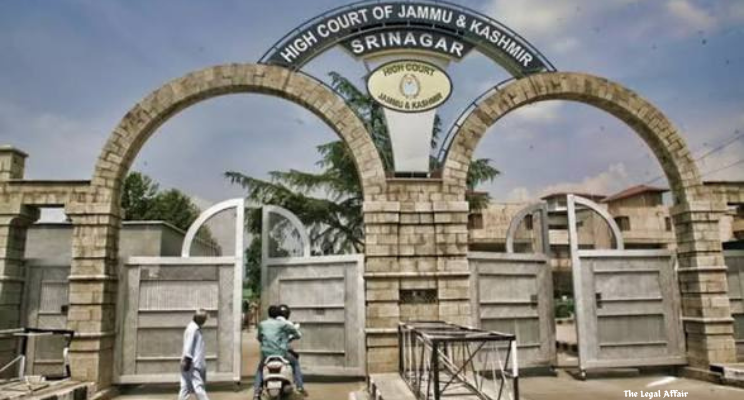
In a significant judgment concerning national security, public service discipline, and the constitutional exceptions to procedural safeguards available to civil servants, the High Court of Jammu & Kashmir and Ladakh has upheld the dismissal of a police constable who was found to be involved in anti-national and subversive activities. The Court observed that during the peak years of militancy in Jammu and Kashmir, hostile forces sought to weaken the Indian State not merely through acts of violence but also by infiltrating government institutions and security agencies through compromised public servants. The Court remarked that the respondent was one such individual who had allegedly been drawn into activities detrimental to the interests of the nation and the security of the State.
The judgment was delivered by a Division Bench comprising Justice Sanjeev Kumar and Justice Sanjay Parihar in State of Jammu and Kashmir & Others v. Ghulam Mohd. Tantray, reported as 2026 LiveLaw (JKL). The matter arose from an intra-court appeal filed by the then State of Jammu and Kashmir, now the Union Territory of Jammu and Kashmir, challenging a judgment of a Single Judge who had earlier set aside the dismissal of the respondent from service.
The respondent had joined the Jammu and Kashmir Police Department as a Driver Constable in 1991. For more than a decade, he remained in service until allegations surfaced regarding his involvement in activities considered prejudicial to the security of the State. In 2004, the respondent came under the scanner of law enforcement agencies after information emerged linking him to militant elements operating in the Kashmir Valley.
Following investigations, he was arrested in connection with offences registered under Section 120-B of the Ranbir Penal Code and Sections 7 and 24 of the Indian Arms Act. Simultaneously, the authorities placed him under suspension and initiated departmental proceedings against him. However, before the departmental inquiry could proceed to its logical conclusion, the Government invoked Section 126(2)(c) of the Constitution of Jammu and Kashmir, a provision corresponding to Article 311(2)(c) of the Constitution of India.
Under this constitutional provision, a government servant may be dismissed without holding a regular departmental inquiry if the competent authority is satisfied that, in the interest of the security of the State, such an inquiry is not expedient. Acting on material placed before it and after obtaining approval through the prescribed constitutional process, the Government dismissed the respondent from service on the ground that his continued retention was detrimental to State security.
The respondent challenged the dismissal before the writ court, contending that the constitutional protection ordinarily available to civil servants had been violated. The Single Judge accepted this contention and set aside the dismissal order, primarily on the ground that the State had failed to adequately explain why the departmental inquiry that had already been initiated was subsequently abandoned.
Aggrieved by this decision, the State preferred an intra-court appeal before the Division Bench. The appeal required the Court to examine the extent of judicial review available in cases where dismissal is ordered under constitutional provisions relating to national security and whether the contemporaneous record justified the Government’s decision to dispense with a regular inquiry.
The case thus involved a delicate balancing exercise between individual service rights and the larger imperatives of national security, particularly in a region that had witnessed prolonged insurgency and cross-border terrorism.
Arguments of the Parties:
The appellants, representing the State authorities, argued that the dismissal order was fully justified in light of the material available against the respondent and the prevailing security situation at the relevant time. Senior Additional Advocate General Mohsin Qadri submitted that the respondent’s activities were not merely instances of misconduct but constituted serious acts prejudicial to the security of the State.
The State contended that investigations had revealed the respondent’s direct association with militant elements operating in Jammu and Kashmir. According to the material placed before the Government, the respondent had established contact with a Pakistani militant and had actively assisted him by arranging a permanent hideout. Such conduct, the State argued, was wholly incompatible with the duties of a police official entrusted with maintaining law and order and safeguarding public security.
The appellants further submitted that the decision to invoke Section 126(2)(c) of the Constitution of Jammu and Kashmir was not arbitrary or mechanical. The matter had been examined at multiple levels within the Government. A detailed memorandum was prepared by the Home Department, which incorporated findings of a committee headed by the Chief Secretary. The issue was thereafter considered by the Cabinet, and ultimately the constitutional satisfaction required under Section 126(2)(c) was arrived at by the Governor acting on the aid and advice of the Council of Ministers.
It was argued that the constitutional framework itself recognizes exceptional situations where the interests of State security outweigh the necessity of conducting a regular departmental inquiry. The State emphasized that disclosure of sensitive intelligence material during a disciplinary proceeding could jeopardize national security interests, expose confidential sources, and endanger the lives of witnesses and informants.
The appellants maintained that in the atmosphere prevailing in Kashmir at the relevant time, it would have been unrealistic to expect witnesses to come forward and depose against an individual alleged to have links with militant organizations. Therefore, conducting a departmental inquiry would have been both impractical and counterproductive.
On the other hand, the respondent supported the judgment of the Single Judge and contended that the dismissal order was legally unsustainable. The respondent argued that once the authorities had initiated a departmental inquiry, they were required to carry it to its logical conclusion. Abandoning the inquiry midway and resorting to constitutional exceptions, according to the respondent, deprived him of a fair opportunity to defend himself against the allegations.
The respondent maintained that principles of natural justice constitute a fundamental aspect of service jurisprudence and that denial of an opportunity to contest the allegations amounted to arbitrary exercise of power. It was submitted that the State had failed to disclose sufficient reasons demonstrating why the ordinary procedure of inquiry could not be followed.
The respondent further argued that constitutional safeguards available under service law are intended to protect government employees from arbitrary dismissal and that any departure from the normal rule of inquiry must be strictly scrutinized by the courts.
Reliance was placed on the reasoning adopted by the Single Judge, who had found that the record did not adequately disclose why the departmental inquiry had been dispensed with after its initiation. According to the respondent, the absence of a clear explanation rendered the dismissal vulnerable to judicial interference.
Thus, while the State emphasized national security considerations and constitutional exceptions, the respondent focused on procedural fairness and the necessity of adhering to established disciplinary processes.
Court’s Judgment:
The Division Bench allowed the appeal filed by the State and set aside the judgment of the Single Judge, thereby restoring the dismissal order passed against the respondent.
At the outset, the Court undertook a detailed examination of the legal principles governing Section 126(2)(c) of the Constitution of Jammu and Kashmir, which is substantially similar to Article 311(2)(c) of the Constitution of India. The provision creates an exception to the general requirement of holding a departmental inquiry before dismissing a government servant.
The Court relied heavily upon the Constitution Bench judgment of the Supreme Court in Union of India v. Tulsiram Patel and the subsequent decision in A.K. Kaul v. Union of India. These landmark decisions clarified that when action is taken under Article 311(2)(c), the satisfaction of the Governor or President is not personal satisfaction but constitutional satisfaction reached on the aid and advice of the Council of Ministers.
The Division Bench observed that courts exercising judicial review cannot demand disclosure of all materials forming the basis of such satisfaction, particularly where matters of State security are involved. The constitutional scheme itself contemplates a degree of confidentiality in such cases.
The Court then examined the contemporaneous record produced by the State. It found that the material before the Government was extensive and compelling. The record revealed that the respondent had been implicated in activities linked to militant operations. Investigations indicated that he was in contact with a Pakistani mercenary and had arranged a hideout for him in the residence of another individual.
The Court noted that acting on intelligence inputs, security forces conducted a raid on the premises where the militant had allegedly been sheltered. The raid resulted in the recovery of a substantial quantity of arms and ammunition. Subsequent investigations uncovered the respondent’s role in facilitating these activities.
The Court further observed that searches conducted at the respondent’s rented accommodation led to the recovery of two hand grenades. This recovery, coupled with the other material collected during investigation, constituted strong evidence of the respondent’s involvement in activities prejudicial to national security.
In one of the most significant portions of the judgment, the Court reflected on the broader context of militancy and infiltration of public institutions. The Bench observed that hostile elements had adopted various strategies to undermine the sovereignty and integrity of India, including attempts to infiltrate government departments and security agencies through compromised personnel.
The Court remarked that several government employees across different levels had been influenced or recruited by hostile forces to advance objectives contrary to national interests. Against this backdrop, the Court described the respondent as a person who had allegedly been persuaded to act against both his employer and his country.
The Court found that the memorandum prepared by the Home Department and approved by the Cabinet specifically recorded the reasons why a regular inquiry would not be feasible. It noted that witnesses would have been reluctant to testify against the respondent due to genuine fears regarding their safety and security.
According to the Court, compelling the authorities to conduct a departmental inquiry in such circumstances would have served little practical purpose. It would not only have endangered potential witnesses but also risked disclosure of sensitive information relating to intelligence operations and security assessments.
The Division Bench strongly criticized the approach adopted by the Single Judge. It observed that the writ court had dealt with the matter in a “slipshod manner” and had failed to properly appreciate the extensive material available on record. The Court held that the Single Judge had ignored both the contemporaneous documents and the specific pleadings advanced by the State.
The Bench concluded that the record contained abundant material justifying invocation of Section 126(2)(c). Therefore, the finding of the writ court that there was no justification for dispensing with the inquiry was factually and legally incorrect.
The Court reiterated that judicial review in such matters is limited to examining whether relevant material existed and whether the constitutional procedure was followed. Courts are not expected to substitute their own assessment for that of the competent constitutional authorities, particularly where issues of national security are involved.
Applying these principles, the Division Bench held that the dismissal order was lawful and constitutionally valid. The Government had acted on relevant material, followed the prescribed constitutional process, and legitimately concluded that holding a regular inquiry would be inexpedient in the interest of State security.
Accordingly, the appeal was allowed, the judgment of the Single Judge was set aside, and the writ petition filed by the respondent was dismissed. The dismissal from service was thus upheld.
The judgment serves as an important reaffirmation of the constitutional balance between individual service protections and national security concerns. While procedural safeguards remain a cornerstone of service jurisprudence, the Court emphasized that exceptional circumstances involving threats to State security may justify invocation of constitutional provisions permitting departure from ordinary disciplinary procedures. The ruling underscores the principle that public servants occupying sensitive positions bear a heightened obligation of loyalty to the Constitution and that involvement in activities prejudicial to national security can attract the most serious service consequences.