


Introduction:
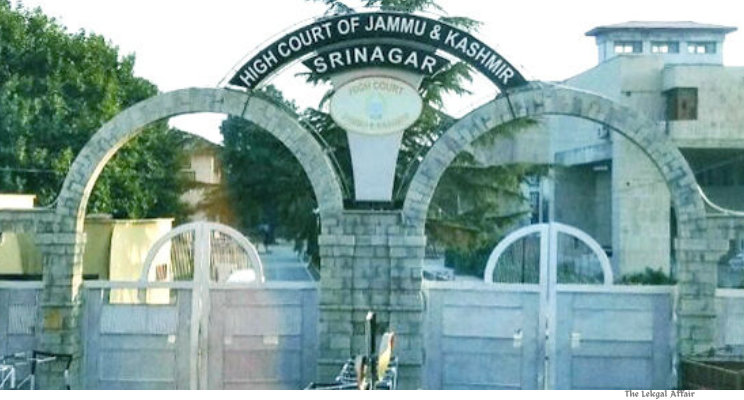
In a deeply consequential public interest litigation that strikes at the heart of the constitutional right to health and human dignity, the Jammu and Kashmir and Ladakh High Court, in the case titled Court On Its Own Motion v. M. K. Bhandari and another, issued stern and unequivocal directions to the Union Territory administration to urgently address the long-standing and systemic deficiencies in cancer treatment facilities across Jammu and Kashmir. A Division Bench comprising Chief Justice Arun Palli and Justice Rajnesh Oswal expressed serious dissatisfaction over the repeated failure of the authorities to comply with earlier judicial directives aimed at strengthening oncology services, recruiting specialist doctors, and installing critical diagnostic infrastructure such as PET scan machines. Originating from a Public Interest Litigation filed as far back as 2016 by late Senior Advocate A.V. Gupta, the case exposes a decade-long saga of administrative inertia, unfulfilled assurances, and mounting human suffering. After examining successive status and compliance reports, the Court recorded its anguish in clear terms, observing that the reports did not disclose “any tangible progress or promise.” Treating the issue as one of urgent public importance affecting thousands of cancer patients, the Court called senior officials to account, warned against further delay, and made it clear that continued non-compliance would have serious consequences. The order is a powerful reaffirmation that the right to health is not aspirational rhetoric, but a justiciable constitutional obligation that the State cannot afford to neglect.
Contentions and Stand of the Authorities:
The administration of Jammu and Kashmir, through periodic status and compliance reports, sought to demonstrate that steps were being contemplated or were “under process” to improve cancer care facilities in the Union Territory. It was indicated that requisitions for oncologists had been forwarded to the Jammu and Kashmir Public Service Commission, proposals for procurement of advanced medical equipment were under consideration, and certain infrastructural upgrades were being planned for Government Medical Colleges and the State Cancer Institute.
The authorities attempted to justify the delay by citing administrative complexities, procedural bottlenecks, financial approvals, and logistical challenges involved in procuring sophisticated equipment such as PET scan machines and in recruiting highly specialised medical professionals. It was also suggested that the process of selection of oncologists and specialists required time due to the limited pool of eligible candidates and the need to adhere to statutory recruitment rules.
In response to earlier judicial directions, senior officers including the Administrative Secretary, Health and Medical Education Department, the Principal of Government Medical College, Jammu, and the Secretary of the Public Service Commission appeared before the Court. They sought additional time to place on record a more comprehensive affidavit explaining the steps taken so far and the proposed roadmap for future compliance. The administration conveyed assurances that it was committed to improving cancer care facilities and requested the Court to take a pragmatic view of the constraints faced by the executive machinery.
Concerns Raised Through the PIL and the Court’s Scrutiny:
The Public Interest Litigation, initiated in 2016 by late Senior Advocate A.V. Gupta, had laid bare the grim realities of cancer care in Jammu and Kashmir. It highlighted the acute shortage of oncologists, the near absence of specialists in allied disciplines such as Nuclear Medicine and Radio Diagnosis, and the shocking lack of essential diagnostic tools, particularly PET scan machines, in government medical institutions. The PIL underscored how cancer patients were being forced to travel long distances, often outside the Union Territory, for diagnosis and treatment, leading to delays that proved fatal in many cases.
Over the years, the High Court had passed multiple orders directing the administration to fill vacant posts, strengthen medical colleges, and ensure the availability of modern diagnostic facilities. However, when the matter came up again, the Court found that these directions had largely remained on paper. The Bench noted with concern that although the requisition for oncologists was sent to the Public Service Commission as early as March 2016, no meaningful selection process had been initiated even after nearly a decade.
The Court took judicial notice of the alarming shortage of specialised faculty, recording that Government Medical College, Jammu, had only one Professor and one Assistant Professor in Medical Oncology, while other crucial departments were equally understaffed. The situation in Nuclear Medicine and Radio Diagnosis was described as equally bleak, leaving cancer patients without access to timely and accurate diagnostic support. The Court was particularly disturbed by the fact that only one PET scan machine was functional in the entire region, located at the State Cancer Institute, Jammu, which was grossly inadequate for the population it was expected to serve.
Court’s Judgment and Observations:
After carefully examining the status and compliance reports filed from time to time, the Division Bench delivered a strongly worded order expressing its profound dissatisfaction with the administration’s approach. The Court observed that despite repeated opportunities and clear directions, the authorities had failed to demonstrate any real progress on the ground. In unequivocal terms, the Bench stated that the reports did not inspire confidence and showed neither tangible improvement nor a credible plan of action.
The Court underscored that delays in recruiting oncologists and installing diagnostic equipment were not mere administrative lapses but had direct and devastating consequences for cancer patients, many of whom depend entirely on public healthcare facilities. Emphasising the urgency of the situation, the Court remarked that timely diagnosis and treatment are often the difference between life and death in cancer cases, and the State’s failure to provide basic infrastructure amounted to a grave abdication of its constitutional responsibilities.
Taking a stern view of the prolonged inaction, the Court noted that its earlier directions regarding the installation of PET scan machines in all medical colleges had been blatantly ignored. It observed that such non-compliance not only undermined the authority of the judiciary but also perpetuated avoidable suffering. The Bench made it clear that explanations rooted in procedural delays could no longer be accepted, especially when the issue had been pending for nearly ten years.
To ensure accountability, the Court directed senior officials to file a detailed affidavit clearly setting out what concrete steps had been taken so far, what timelines were being proposed, and how compliance with past and present orders would be ensured without further delay. The Court cautioned that failure to act decisively would have “dire consequences for the health of the citizens” and signalled that it would not hesitate to adopt stricter measures if the administration continued to drag its feet.
The matter was adjourned to December 18, 2025, with the Bench categorically stating that no further indulgence would be shown. The tone and tenor of the order reflected judicial impatience with cosmetic compliance and underscored that the right to health cannot be sacrificed at the altar of bureaucratic inefficiency.