


Introduction:
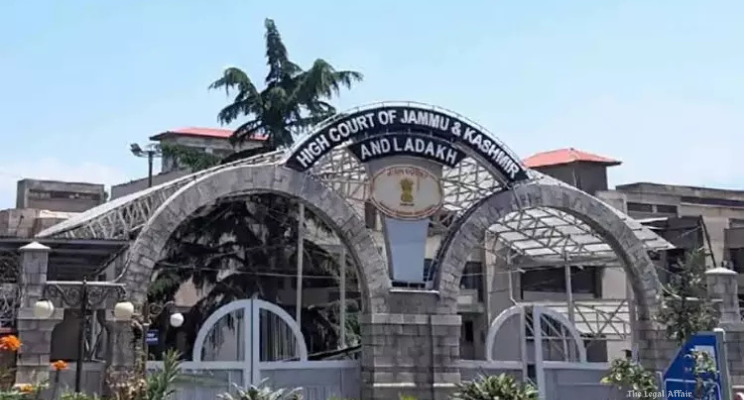
In a significant development safeguarding the principles of equality and fairness in recruitment, the High Court of Jammu and Kashmir and Ladakh at Jammu quashed the medical disqualification of a Central Armed Police Forces (CAPF) aspirant, Anish Rajulia, who had been rejected solely on the basis of a congenital facial birthmark known as ‘Port Wine Stain’. The judgment came from a bench presided over by Justice M. A. Chowdhary in the case titled Anish Rajulia v. Union of India, cited as 2025 LiveLaw (JKL). Anish Rajulia, a 22½-year-old resident of Samba and a promising CAPF applicant with a prestigious NCC ‘A’ Grade certificate and accolades in district-level football tournaments, had successfully cleared every phase of the recruitment process, including the written examination, Physical Standard Test (PST), Physical Efficiency Test (PET), and document verification. However, his candidature was abruptly terminated when both the Detailed Medical Examination Board and the Review Medical Examination Board declared him medically unfit due to the presence of a ‘Port Wine Stain’ on the right side of his face, offering no explanation on how this vascular birthmark hindered his functionality or posed a risk to operational performance.
Arguments:
Represented by Advocate Sheikh Altaf Hussain, Rajulia approached the High Court, seeking judicial redress on the grounds that his rejection violated the Revised Uniform Guidelines dated 31.05.2021 and infringed upon his fundamental rights guaranteed under Articles 14, 16, and 21 of the Constitution of India. The petitioner contended that the birthmark was purely cosmetic and congenital in nature, and lacked any clinical evidence or reasoning to establish a connection between the stain and any functional incapacity relevant to the duties of a Constable (GD) in CAPF.
Judgement:
The Court, after an in-depth review of all medical documents, recruitment rules, and pleadings, found that the rejection orders were cryptic, mechanical, and devoid of any substantiated medical rationale. Justice Chowdhary made specific reference to Clause 6(20) of the Revised Uniform Guidelines, 2021, which provides that congenital anomalies are disqualifying only when they impede the candidate’s ability to perform or undergo training. He also cited Clause XII(B)(8), which discusses disqualification on account of vascular or pigmented lesions like nevi or tumors, again conditioned on such anomalies causing discomfort or functional impairment. Highlighting the procedural lapses and arbitrariness, the Court noted that neither the Detailed Medical Board nor the Review Medical Board provided any reasoning or analysis in their medical assessments. The rejection merely recorded “Port Wine Stain” as the cause without elaboration. Adding to the concern, the Court questioned the authenticity of the Review Medical Certificate, observing that the certificate was dated 09.10.2024 but the signatures were dated 12.10.2024, a gap that raised serious doubts about its credibility and procedural integrity. Justice Chowdhary also referred to the Rajasthan High Court’s ruling in Ashok Dukiya v. Union of India, where the court had struck down a medical rejection based on a birthmark on similar constitutional and procedural grounds, citing lack of correlation between the condition and the job’s functional demands. Drawing from this precedent, the bench held that unless a medical condition demonstrably impairs the capacity to discharge public service duties, especially in paramilitary roles, mere presence of such a condition cannot be grounds for rejection. In clear and unequivocal terms, the Court stated that the rejection of Rajulia’s candidature was wrongful, arbitrary, and rendered in a casual and non-application-of-mind manner. The judgment emphasized that such rejections violate the right to equality and dignity enshrined in the Constitution, and cannot be permitted to stand in the face of procedural fairness and substantive justice. Consequently, the High Court quashed the Detailed Medical Examination Report and the Review Medical Examination Report and directed the respondent authorities to convene a fresh Medical Board to reassess Rajulia’s candidature strictly in accordance with the 2021 Guidelines and based on medically sound reasoning. The revised board must be constituted within eight weeks from the date of receipt of the judgment, ensuring due consideration and justice. The decision marks a crucial reiteration of the legal principle that medical disqualification must rest on concrete, objective findings and not cosmetic or superficial anomalies. The judgment is also an affirmation of the judiciary’s commitment to upholding procedural fairness and fundamental rights, especially for young aspirants striving to serve the nation through disciplined services like the CAPFs.