


Introduction:
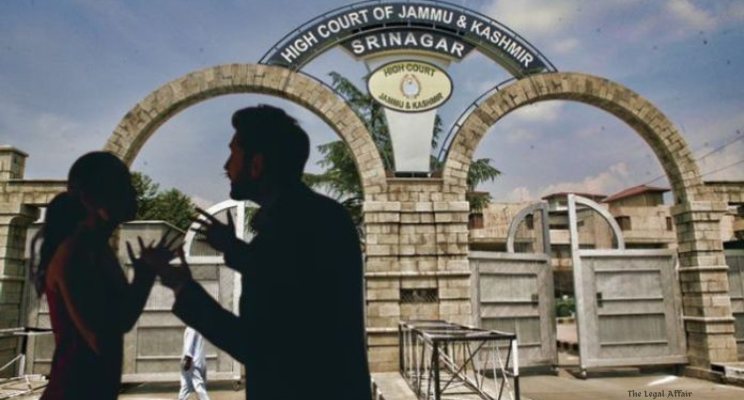
The Jammu & Kashmir and Ladakh High Court in Murti Devi & Anr v. Balkar Singh (2025) delivered a significant judgment that clarifies the scope of maintenance claims under Section 125 of the Code of Criminal Procedure (Cr.P.C.) in cases involving live-in relationships. The matter arose when a woman who had been in a live-in relationship with the respondent for about ten years sought interim maintenance for herself and her child. The trial Magistrate had initially granted her interim maintenance despite the respondent having been convicted under Section 376 IPC (rape) based on her complaint. However, the Principal Sessions Judge, Kathua, set aside this order with respect to her claim, though maintenance for the minor child was upheld. The petitioner then challenged this revisional order before the High Court. A single judge bench of Justice Vinod Chatterji Koul upheld the Sessions Court’s decision, ruling that a woman in such a circumstance cannot be treated as a legally wedded wife for the purpose of claiming maintenance under Section 125 Cr.P.C., especially when the respondent had been convicted of rape in the context of the same relationship. This judgment carries profound implications for how Indian courts interpret the intersection of live-in relationships, promises of marriage, and the statutory framework of maintenance.
Petitioners’ Submissions:
The petitioner argued that she had lived with the respondent for over a decade, during which time they cohabited as husband and wife, though no formal marriage had taken place. She further submitted that she had borne a child with the respondent, who was recognized as his offspring. The petitioner maintained that the respondent had promised to marry her, which gave legitimacy to her expectations and her reliance on his assurances. Based on this long period of cohabitation and shared domestic life, the petitioner contended that she should be treated as a wife under Section 125 Cr.P.C., which is intended to protect women from destitution and neglect. She argued that maintenance provisions are welfare-oriented and must be interpreted liberally to prevent injustice, particularly in cases where women have lived for years in de facto marital relationships. The petitioner’s counsel also highlighted that denying her maintenance would effectively punish her for the respondent’s wrongful acts, despite the fact that she had been the victim of sexual exploitation, and would leave her without financial recourse.
Respondent’s Submissions:
The respondent, through counsel, relied heavily on the fact that he had been convicted under Section 376 IPC on the complaint of the petitioner herself. He argued that such a conviction legally negates the possibility of treating the parties as husband and wife. For a claim under Section 125 Cr.P.C. to succeed, the petitioner must establish the existence of a valid or legally recognizable marriage. A relationship that is simultaneously characterized as rape under criminal law, the respondent submitted, cannot logically or legally be recognized as a marriage-like relationship for maintenance purposes. The respondent further contended that the trial Magistrate had committed an error of law by granting interim maintenance to the petitioner despite the conviction. He pointed out that the Principal Sessions Judge had corrected this error, and the High Court should not interfere with a well-reasoned revisional order. While he acknowledged his responsibility towards the minor child, which had been separately recognized, he denied any obligation to maintain the petitioner herself, given that their relationship was not a legal marriage and had, in fact, been judicially recognized as non-consensual sexual exploitation.
Court’s Observations:
The High Court carefully examined the factual background and the legal framework under Section 125 Cr.P.C. It reiterated that Section 125 is a beneficial provision meant to prevent vagrancy and destitution, but it is strictly limited to “wives,” which has been judicially interpreted to include women in valid marriages or in certain circumstances women who could be considered as such under personal or statutory law. However, the Court underscored that in the present case, the respondent’s conviction under Section 376 IPC fundamentally altered the legal characterization of the relationship. The Court reasoned that if the relationship between the petitioner and the respondent had been one of husband and wife, consensual cohabitation would not have given rise to criminal liability under Section 376 IPC. The conviction implied that the relationship was not legally recognized and could not be simultaneously treated as marital for the purposes of maintenance. Justice Vinod Chatterji Koul observed: “As the respondent was admittedly charged with an offence punishable under Section 376 IPC on the complaint of the petitioner, therefore, they cannot be treated as husband and wife for claiming maintenance under Section 125 Cr.P.C.” The Court clarified that while live-in relationships have in some cases been given limited recognition in law, such recognition cannot extend to situations where the man has been found guilty of rape in the context of the relationship.
Court’s Judgment:
Ultimately, the High Court upheld the order of the Revisional Court, which had set aside the trial Magistrate’s grant of interim maintenance to the petitioner. The Court concluded that the trial Magistrate erred in granting interim maintenance without properly considering the respondent’s conviction under Section 376 IPC. It emphasized that while social justice is important, courts cannot disregard clear statutory limitations and the implications of a criminal conviction. However, the Court also clarified that its ruling did not affect the maintenance awarded to the minor child of the parties, which remained in force. This distinction reinforced the principle that children, regardless of the legality of their parents’ relationship, are entitled to maintenance and protection under the law. The judgment thus balanced the petitioner’s rights as a victim of crime and as a mother with the statutory restrictions governing claims for spousal maintenance.
Broader Implications:
The judgment is significant because it underscores the strict boundary between the criminal law’s treatment of rape and the family law framework of maintenance. It highlights the judiciary’s cautious approach to extending spousal rights to live-in relationships, especially where the circumstances involve allegations and findings of coercion or exploitation. While Indian courts in past decisions have recognized that women in stable, long-term live-in relationships may, in certain contexts, be entitled to relief similar to wives, this recognition is not absolute and is contingent on the absence of criminal findings that undermine the legitimacy of the relationship. The ruling also reflects the delicate balance between protecting women from destitution and preventing misuse or distortion of maintenance laws. Importantly, by affirming the child’s right to maintenance, the Court reiterated its commitment to ensuring that children are not disadvantaged by the circumstances of their birth or their parents’ relationship status.