


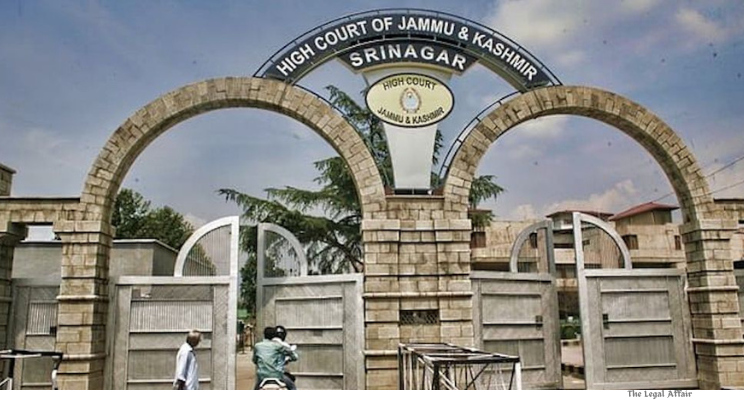
Introduction:
A significant ruling by the Jammu and Kashmir and Ladakh High Court in the case of Union of India vs. Jagjeet Kour highlights the rigorous application of limitation laws even concerning government departments. The case arose from a compassionate appointment plea by Jagjeet Kour, where the Union of India sought a review of the court’s order, facing a delay of 65 days. Justice Javed Iqbal Wani dismissed the application for condonation of delay, emphasizing the necessity for government departments to adhere strictly to limitation laws.
Arguments of Both Sides:
Jagjeet Kour’s plea for a compassionate appointment led to the Union of India seeking a review of the court’s directive. The Union attributed the delay in filing the review petition to administrative procedures, record collection, legal counsel, and inter-departmental consultations. They advocated for leniency in applying the limitation law, particularly for government entities. On the other hand, Justice Wani scrutinized the application for condonation of delay, stressing the need for a stringent approach to limit extensions, especially for government departments. He referred to legal precedents, emphasizing the requirement for a credible and specific cause to justify delay condonation.
Court’s Judgment:
Justice Javed Iqbal Wani’s observations highlighted the insufficient nature of the explanation provided by the Union of India. The court underscored the lack of specificity in the explanation, pointing out vague timelines and generic justifications for the delay. Emphasizing the necessity for a plausible and detailed explanation, the court dismissed the application for condonation of delay, subsequently leading to the dismissal of the Review Petition filed by the Union of India against the earlier order mandating a compassionate appointment for Jagjeet Kour. The ruling reiterates the principle that even government departments are bound by the strictures of limitation laws and need to provide cogent reasons for delay in legal proceedings.