


Introduction:
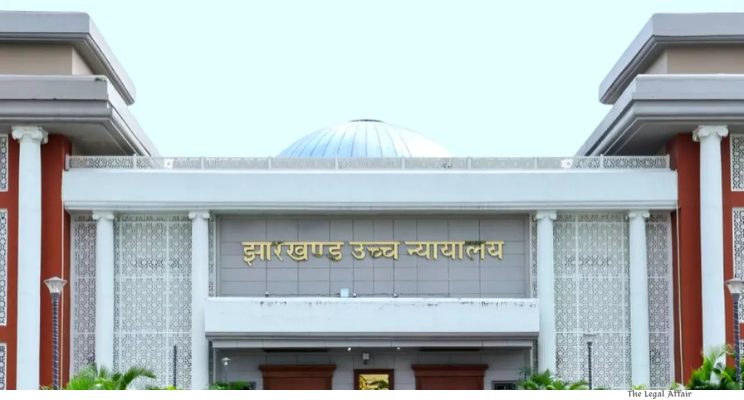
The case of Dharam Kumar Saw and Others v. The State of Jharkhand came before the Jharkhand High Court, where Justice Sanjay Kumar Dwivedi was called upon to decide whether a revision petition could be filed directly before the High Court under Section 397 of the Criminal Procedure Code (CrPC) without first approaching the Sessions Court. The petitioners had challenged an order of the Judicial Magistrate, Dhanbad, who had rejected their plea for discharge under Section 245 CrPC in a complaint case. Instead of seeking remedy before the Sessions Court, which is ordinarily the first forum in such matters, they directly moved the High Court, arguing that the revisional jurisdiction under Section 397 empowers both the Sessions Court and the High Court, and hence, the choice lay with them. This case brought into sharp focus the principle of judicial propriety, the hierarchy of courts, and the correct procedural approach that litigants must adopt while invoking revisional powers.
Arguments:
The petitioners contended that Section 397 of the CrPC, which corresponds to Section 438 of the Bharatiya Nagarik Suraksha Sanhita (BNSS), explicitly grants revisional powers to both the High Court and the Sessions Court, and thus the law provides a concurrent remedy. They further submitted that Section 397(3) creates a bar on a second revision petition, meaning that once they approach the Sessions Court, they lose the right to file another revision in the High Court. This, according to them, justifies their direct approach to the High Court. They invoked Sections 399 and 401 of the CrPC, highlighting that both the Sessions Judge and the High Court have been vested with authority to examine the correctness, legality, and propriety of orders passed by subordinate courts. In their view, since the Magistrate’s order rejecting discharge was already causing prejudice to their rights, the High Court, being the higher constitutional forum, was the correct and preferable authority to intervene in the matter directly without compelling them to approach the Sessions Court first.
On the other hand, the State, through its counsel, emphasized that the petitioners’ approach was procedurally flawed and contrary to the principle of judicial propriety. It was argued that though Section 397 confers concurrent jurisdiction, the established norm and prudence dictate that litigants should approach the Sessions Court first. The State pointed out that the Sessions Court is a superior forum to the Magistrate and is intended by law to act as the first revisional authority. Only in rare or special circumstances, where approaching the Sessions Court would not serve the ends of justice or where the Sessions Judge has a direct or indirect conflict, should the High Court be moved directly. The State stressed that allowing litigants to bypass the Sessions Court would undermine the judicial hierarchy, overburden the High Court with cases that could be effectively resolved at the Sessions level, and deprive litigants of the benefit of a double remedy—first before the Sessions Court and later, if necessary, before the High Court under its inherent powers.
Judgement:
After hearing both sides, Justice Sanjay Kumar Dwivedi clarified the position of law. The Court acknowledged that Section 397 indeed allows both the Sessions Court and the High Court to exercise revisional powers. Sub-section (3) of Section 397 makes it clear that if an application for revision has been filed before one of the two forums, no further application on the same matter can be filed before the other. This statutory bar prevents abuse of process and ensures finality of revisional scrutiny. However, the Court also observed that the exercise of revisional jurisdiction is not a matter of routine or course, but is meant to be invoked sparingly and in rare situations. Importantly, the Court underlined that the Sessions Court is the “first forum” to be approached as a matter of propriety, and the High Court should only be approached in exceptional cases.
The Court reasoned that when two forums of revisional jurisdiction are available, the “elder superior court” in the hierarchy—the Sessions Court—must be approached first. This principle aligns with customary common law where hierarchical order is respected. Justice Dwivedi emphasized that litigants would actually benefit by first approaching the Sessions Court, since this provides them with two levels of revisional scrutiny. If dissatisfied with the Sessions Court’s ruling, the aggrieved party can still invoke the High Court’s inherent jurisdiction under Section 482 CrPC (or Section 528 of the BNSS), thereby ensuring that the ends of justice are served without prematurely invoking the High Court’s jurisdiction.
The Court also drew attention to the fact that approaching the High Court directly is not prohibited under the law, but it should be reserved for “rare and special circumstances.” For example, if the Sessions Judge has directly or indirectly participated in the inquiry, investigation, or trial, or if there are compelling reasons where justice demands that the High Court alone intervene, a direct approach to the High Court may be justified. However, in the present case, no such special circumstances had been demonstrated by the petitioners. The Magistrate’s order could have been effectively challenged before the Sessions Court, and the petitioners had not shown why bypassing that forum was necessary.
The Court elaborated further on the importance of judicial propriety and discipline in such matters. Allowing litigants to indiscriminately choose between the Sessions Court and the High Court at the first instance would lead to forum shopping, erosion of the judicial hierarchy, and overburdening of the High Court. The High Court’s revisional powers, the Court noted, are extraordinary and are meant to correct glaring errors, illegality, or impropriety that could not be addressed at lower levels. These powers must therefore be invoked with restraint and only after the litigant has exhausted remedies at the Sessions Court level, unless exceptional situations exist.
In dismissing the revision petition, Justice Dwivedi reiterated that while the High Court possesses concurrent revisional jurisdiction under Section 397, prudence, propriety, and respect for judicial hierarchy require that the Sessions Court be approached first. The Court stressed that this practice also ensures a double layer of protection to litigants: if the Sessions Court fails to grant relief, the High Court can still be approached under its inherent or supervisory jurisdiction. Thus, in the absence of rare and compelling reasons to bypass the Sessions Court, the High Court would not entertain a revision petition filed directly against a Magistrate’s order.
This ruling has significant implications for criminal procedure and litigants in general. It underscores that while procedural law provides multiple forums, the sequence of approaching them matters. The decision reinforces the principle that the Sessions Court is the primary revisional authority, and only in extraordinary cases should the High Court intervene directly. The case serves as a reminder that legal remedies must be pursued in accordance with established hierarchies, not merely based on litigants’ convenience.
By dismissing the petition, the Jharkhand High Court reaffirmed that revisional jurisdiction is not to be used casually. The hierarchy of courts exists for a reason: to ensure orderly administration of justice, to prevent unnecessary burdening of higher forums, and to provide litigants with a structured, layered system of remedies. The Court’s reasoning highlights that while the law may allow concurrent powers, judicial prudence dictates that they must be exercised with caution and in deference to the established order.