


Introduction:
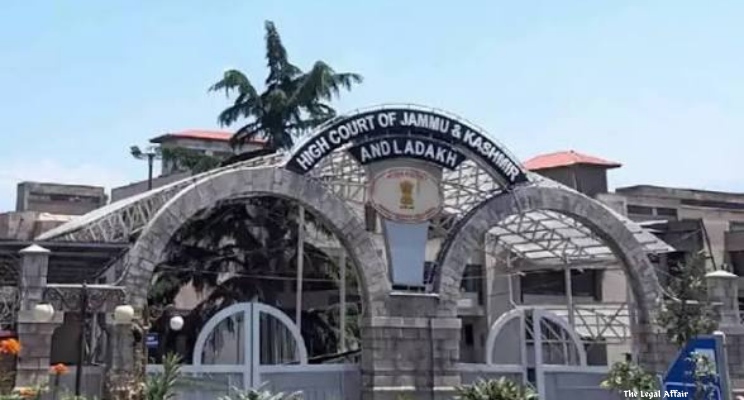
The High Court of Jammu & Kashmir and Ladakh at Jammu has reiterated that a criminal charge sheet alleging rape cannot be quashed merely because the complainant had earlier sworn an affidavit during the investigation contradicting the allegations, or because the medical report does not support the prosecution’s case. The Court held that once the victim’s statement has been recorded under Section 164-A of the Code of Criminal Procedure (CrPC), the High Court cannot disregard that subsequent statement and terminate the prosecution solely on the basis of an earlier affidavit.
The ruling came in a petition filed under Section 482 CrPC by an accused seeking quashing of a charge sheet for an offence under Section 376 of the Ranbir Penal Code (RPC). The proceedings had been initiated before the Court of the Munsiff, Kotranka, Budhal, District Rajouri, and the petitioner had been proceeded against under Section 512 CrPC. The matter was heard by Justice Rajnesh Oswal, who found no sufficient ground to exercise the High Court’s inherent jurisdiction in favour of the petitioner.
The dispute had its origins in a longstanding land conflict between the petitioner and respondent No. 7, who belonged to the same village. According to the petitioner, the criminal complaint was a consequence of this existing hostility and had been lodged to pressurise him into settling the property dispute. Respondent No. 7, however, alleged that the petitioner had sexually assaulted her when she had gone to cut grass on her land.
The allegations resulted in the registration of an FIR under Sections 376 and 354 RPC following an application moved by respondent No. 7 under Section 156(3) CrPC before the Chief Judicial Magistrate, Rajouri. During the initial investigation, the complainant allegedly executed an affidavit stating that the accusation had been fabricated following an altercation concerning the cutting of grass. The police also considered the medical report, which did not support the allegations, and initially treated the case as not proved.
The central legal controversy was whether the earlier affidavit and the medical report were sufficient to invalidate the subsequent investigation and justify quashing the charge sheet. The petitioner maintained that the police could not reopen the matter after having submitted a closure report, particularly when the complainant herself had earlier disowned the accusation. The respondents, on the other hand, disputed the petitioner’s claim that the closure report had been accepted by the competent court and emphasised that the investigation had continued under directions from senior police authorities.
The Court’s decision turned substantially on the distinction between an investigation that has merely resulted in the preparation of a closure report and one in which the report has actually been accepted by the competent court. It also considered the significance of the victim’s statement recorded under Section 164-A CrPC and the limits of the High Court’s power to quash criminal proceedings under Section 482 CrPC.
Arguments of the Parties:
The petitioner challenged the continuation of the criminal proceedings primarily on the ground that the allegations had already been withdrawn by respondent No. 7 through an affidavit executed during the investigation. According to him, the affidavit clearly demonstrated that the rape allegation was false and had been made because of the pre-existing land dispute between the parties.
The petitioner relied on the complainant’s account in the affidavit, which stated that on 21 October 2009, while he was cutting grass from her land, she attempted to stop him. An altercation followed, and she subsequently conceived the idea of implicating him in a serious criminal offence. The petitioner argued that this statement undermined the very foundation of the prosecution and established that the criminal case was motivated by personal hostility rather than a genuine allegation of sexual assault.
He further submitted that the medical evidence did not support the accusation. Since the medical report was negative and the complainant had sworn an affidavit contradicting her original allegations, the police had initially concluded that the case was not proved. The investigating officer consequently prepared a closure report, also referred to as an Ikhtami report, and placed it before the competent court.
According to the petitioner, once the police had completed the investigation and submitted the closure report, the authorities could not simply reopen the matter without following the procedure prescribed by law. He contended that the subsequent investigation was impermissible and that the charge sheet arising from it deserved to be quashed.
To support this argument, the petitioner’s counsel relied on the Supreme Court’s decision in Pramod Kumar & Ors. v. State of U.P. & Ors. (2026). The reliance was intended to establish that further investigation following the submission of a final report under Section 173 CrPC raises questions concerning the authority of the investigating agency and the role of the Magistrate. On this basis, the petitioner sought the exercise of the High Court’s inherent powers under Section 482 CrPC to prevent what he described as an unjustified continuation of criminal proceedings.
The petitioner also referred to the subsequent developments between the families. He stated that a compromise had taken place with the intervention of village elders and that a marriage between him and respondent No. 7 had been solemnised in accordance with Shariat law. In his submission, these circumstances further supported his claim that the dispute had been resolved and that the criminal proceedings should not be allowed to continue.
The official respondents opposed the petition by explaining that the initial closure of the case had not brought the investigation to a legally final conclusion. Their counsel submitted that although the investigating officer had prepared a closure report on the basis of the affidavits and the medical report, the supervisory authorities did not accept the conclusion reached by the investigating officer. Instead, directions were issued for the investigation to continue.
The official respondents maintained that the reopening of the investigation was duly reflected in the charge sheet and that the subsequent investigation had been conducted in accordance with the directions issued by the competent supervisory authority. During this renewed investigation, the complainant’s statement was recorded under Section 164-A CrPC. The investigating agency ultimately found sufficient material to proceed against the petitioner for the alleged offence under Section 376 RPC.
Respondent No. 7 also contested the petitioner’s version of the events. Her counsel argued that the petitioner was attempting to use the earlier compromise and the subsequent marriage as instruments to escape the consequences of a serious criminal allegation. It was submitted that the marriage had not represented a genuine resolution of the matter but was instead a device intended to obstruct the investigation and avoid legal responsibility.
The complainant further alleged that the petitioner had subsequently divorced her after the marriage, thereby demonstrating, according to her, the fraudulent nature of the arrangement. The respondents disputed the petitioner’s assertion that the earlier affidavit and the compromise conclusively established his innocence. They maintained that the subsequent investigation and the statement recorded during it had to be considered before any decision could be taken regarding the continuation of the prosecution.
Thus, while the petitioner sought to rely on the earlier affidavit, the medical report and the alleged acceptance of the closure report, the respondents emphasised that the investigation had continued on the directions of senior authorities and had culminated in the filing of a charge sheet supported by the complainant’s statement.
Court’s Judgment:
Justice Rajnesh Oswal dismissed the petition, holding that the petitioner had failed to establish a legally sustainable basis for quashing the charge sheet. The Court examined the investigation record, the status report submitted by the official respondents and the rival submissions before addressing the petitioner’s principal contention that the case could not have been reopened after the preparation of the closure report.
The first important aspect considered by the Court was the actual legal status of the earlier closure report. The petitioner proceeded on the assumption that the investigation had been conclusively closed and that the final report had been accepted by the competent court. However, the Court found that the material placed before it did not establish this position.
On examining the charge sheet and the response filed by the official respondents, the Court observed that the investigating officer had initially treated the case as not proved on the basis of the affidavit sworn by respondent No. 7 and the medical report. Thereafter, the matter was reopened pursuant to an order dated 10 March 2011 passed by the District Police Officer, Rajouri. The investigation was subsequently continued and entrusted to another investigating officer.
The Court made a significant distinction between a police officer preparing or submitting a closure report and the competent court accepting that report. These are not necessarily identical stages in the criminal process. The mere fact that an investigating officer has concluded that the allegations are not substantiated does not, by itself, establish that the criminal proceedings have reached a final legal conclusion.
In this regard, the Court observed:
“It is not the case where after the investigation of the case was closed as not admitted by the Investigating Officer and the Final report in terms of Section 173 Cr.P.C. was filed before the court and was accepted, rather it appears that the higher authorities did not accept the final report and rather directed the continuance of the investigation.”
This observation was central to the rejection of the petitioner’s argument. The Court clarified that the present matter could not be treated as a case in which a closure report had been accepted by the court and the investigation had thereafter been reopened without addressing the legal consequences of such acceptance.
The petitioner had not placed any documentary material on record demonstrating that the closure report had actually been submitted and accepted by the competent court. The absence of such proof weakened the foundation of his challenge. His contention that the police had reopened a matter that had already attained finality was therefore not established.
The Court’s reasoning also highlighted the importance of distinguishing between an internal conclusion reached by the investigating officer and a judicial order accepting a final report. A closure report reflects the investigating agency’s assessment of the evidence collected during the investigation. Its legal consequences, however, cannot be determined merely by referring to the investigating officer’s conclusion. The court must also consider whether the report was placed before the competent Magistrate and what order, if any, was passed on it.
The Court then considered the petitioner’s reliance on Pramod Kumar & Ors. v. State of U.P. & Ors. (2026). It found that the decision did not govern the factual situation before it. The Supreme Court in that case had considered whether the police or investigating agency could undertake further investigation under Section 173(8) CrPC after submitting a final report under Section 173(2), without obtaining the leave of the Magistrate or the court concerned.
The High Court explained that the issue before it was materially different. In the present matter, the petitioner had not established that the closure report had been accepted by the competent court. Instead, the material indicated that the supervisory authorities had directed the continuation of the investigation. Consequently, the legal question considered in Pramod Kumar could not automatically be applied to invalidate the investigation in the present case.
The Court’s treatment of the precedent is important because it demonstrates that a judgment must be applied in light of the precise legal issue and factual circumstances it addresses. A decision concerning further investigation after the submission of a final report cannot be mechanically invoked in every case where an investigating officer initially prepares a closure report. The procedural stage reached in the earlier investigation and the existence or absence of judicial acceptance of the report are relevant considerations.
The Court next examined the effect of the affidavit sworn by respondent No. 7 during the investigation. The petitioner argued that the affidavit amounted to a withdrawal of the accusation and made the continuation of the prosecution legally untenable. However, the Court did not accept that the earlier affidavit could, by itself, determine the outcome of the criminal proceedings.
A significant development in the investigation was that the complainant’s statement had subsequently been recorded under Section 164-A CrPC. The Court considered this statement relevant while assessing whether the charge sheet could be quashed at the preliminary stage. It held that once the victim’s statement had been recorded under the provision, the earlier affidavit could not be treated as a conclusive basis for terminating the prosecution.
The Court observed:
“This is not the situation in the present case, as such, once the statement of the victim under Section 164-A Cr.P.C. has been recorded, this Court cannot quash the charge sheet on the basis of the affidavit sworn during investigation by the complainant.”
The ruling underscores that an affidavit made during an investigation cannot automatically displace the significance of a subsequent statement recorded in the course of the criminal process. Where the investigating agency has continued its inquiry and recorded the victim’s statement under the relevant provision, the High Court must consider the material forming part of the subsequent investigation rather than treating an earlier affidavit as decisive.
This does not mean that an affidavit contradicting an earlier accusation becomes irrelevant or that the accused is prevented from relying on it during the appropriate stage of the proceedings. Rather, the Court’s decision makes clear that such an affidavit cannot, by itself, justify quashing the charge sheet when the investigation has continued and the prosecution is supported by subsequent material.
The Court also addressed the petitioner’s reliance on the negative medical report. The petitioner had argued that the medical evidence did not support the allegation of rape and that the charge sheet should therefore be set aside. The Court rejected this argument as an independent ground for quashing the prosecution.
It categorically held:
“The charge sheet can also not be quashed solely on the ground that the medical report does not support the prosecution case.”
For this proposition, the Court relied on paragraph 6.2 of the Supreme Court’s judgment in Deepak Kumar v. State of Chhattisgarh (2025). By referring to this decision, the High Court reinforced the principle that medical evidence must be considered as part of the overall evidentiary record and cannot invariably be treated as the sole determinant of whether a prosecution should continue.
A medical report that does not support the prosecution version may be a relevant circumstance in evaluating the case. However, the absence of medical corroboration does not necessarily establish that the allegations are false or that the prosecution is legally unsustainable. The nature and significance of medical evidence must be assessed alongside the other material collected during the investigation, including the victim’s statement and the circumstances of the alleged offence.
The Court’s approach reflects the distinction between the evidentiary assessment that takes place during a criminal trial and the limited scrutiny undertaken while considering a petition for quashing. At the stage of examining a charge sheet under Section 482 CrPC, the High Court is not ordinarily expected to conduct a detailed trial-like evaluation of the credibility of every statement or weigh competing pieces of evidence as though it were deciding the guilt or innocence of the accused.
The inherent jurisdiction under Section 482 CrPC is intended to prevent abuse of the process of a court and to secure the ends of justice. However, it is not a substitute for the ordinary criminal trial. Where the investigation has resulted in a charge sheet and the material relied upon by the prosecution requires examination, the High Court must exercise caution before terminating the proceedings at the threshold.
In the present case, the petitioner sought to establish that the prosecution was untenable by relying on the earlier affidavit, the medical report and the alleged acceptance of the closure report. The Court found that the last of these claims was not supported by documentary evidence. It further found that the investigation had continued on the directions of the supervisory authorities and that the complainant’s statement had subsequently been recorded under Section 164-A CrPC.
The Court therefore declined to treat the earlier affidavit or the medical report as sufficient grounds to quash the charge sheet. It also distinguished the Supreme Court’s decision relied upon by the petitioner, finding that the legal issue addressed in that case did not arise in the same manner in the present proceedings.
Importantly, the High Court’s decision was not a finding that the petitioner was guilty of the offence under Section 376 RPC. The Court was concerned with whether the charge sheet and the material available at that stage justified the continuation of the criminal proceedings. Questions concerning the truthfulness of the accusation, the credibility of the witnesses, the effect of the conflicting statements and the evidentiary value of the medical report would have to be considered in accordance with law during the appropriate proceedings.
Finding the petition without merit, the High Court dismissed it and declined to interfere with the charge sheet. The Court also vacated any interim directions operating in the matter.
The decision reiterates two important principles in criminal proceedings. First, an accused cannot establish that a case has attained finality merely by pointing to the investigating officer’s initial preparation of a closure report; the acceptance of that report by the competent court is a separate and material consideration. Second, an earlier affidavit by the complainant and a medical report that does not support the prosecution cannot, in isolation, be treated as sufficient grounds to quash a charge sheet when the subsequent investigation includes a statement recorded under Section 164-A CrPC.
By dismissing the petition, the High Court allowed the criminal proceedings to continue in accordance with law, leaving the merits of the allegations to be determined through the appropriate judicial process.