


Introduction:
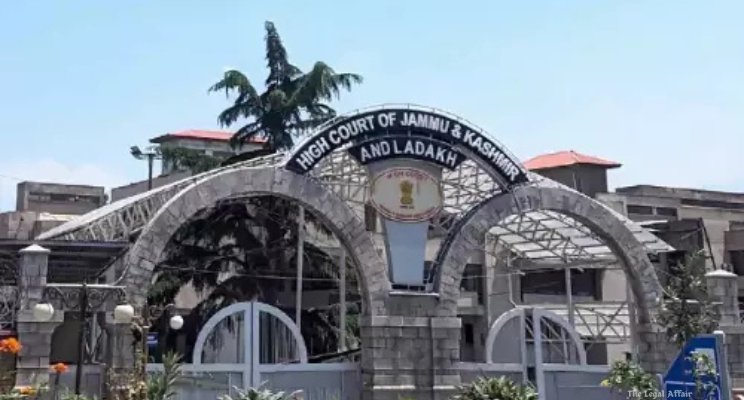
The Jammu & Kashmir and Ladakh High Court recently dismissed a writ petition filed by four teachers challenging their termination from Army Public School (APS), Udhampur. The teachers had argued that their termination was unjustified and that the school, governed by the Army Welfare Education Society (AWES), qualified as a “State” under Article 12 of the Indian Constitution. This would allow them to challenge the employment dispute through writ jurisdiction under Article 226. The court, however, ruled that neither APS nor AWES qualifies as “State” under Article 12, emphasizing that disputes arising from private employment contracts cannot be addressed through writ petitions unless a statutory element is involved. The court’s decision reaffirmed the distinction between public duties and private contractual matters, offering clarity on the legal status of institutions like APS when it comes to employment disputes.
The petitioners, all teachers appointed in APS Udhampur in 2022, argued that their termination orders issued in February 2024 were unjustified. They contended that they were selected through an open recruitment process, and there were no adverse reports or disciplinary actions on record against them. Despite this, their services were terminated, while teachers appointed under the same recruitment drive at APS Dhar Road were retained. They sought reinstatement, the continuation of their services, and the release of their salaries and benefits. Furthermore, they claimed that APS, engaged in the public duty of providing education, should be considered a “State” under Article 12, thus allowing the court to intervene under Article 226.
On the other hand, the respondents, APS, and AWES, argued that they were private entities operating under private law, and as such, the writ petition was not maintainable. They contended that the teachers’ employment relationship was purely contractual and that the termination was in line with the probationary rules, which permit termination without cause, as long as proper notice is given.
Petitioners’ Arguments:
The petitioners, four teachers employed at APS Udhampur, argued that their termination was arbitrary and unjustified. They had been selected in an open recruitment process in 2022, and there were no adverse reports or disciplinary actions against them. Despite their clean service records, including one petitioner having received a “Best Teacher” award, their services were terminated in February 2024. The petitioners contended that teachers hired under the same advertisement notice for APS Dhar Road had not been terminated, creating an unfair situation.
The petitioners further argued that APS, being engaged in the public duty of imparting education, qualifies as “State” under Article 12 of the Indian Constitution. This classification would allow them to challenge the termination of their services through writ jurisdiction under Article 226. They claimed that APS’s role in providing education to the public should bring it within the purview of Article 12, as it performs a public function. Therefore, the termination of their services, which violated principles of natural justice, should be quashed, and they should be reinstated with full benefits.
Additionally, the petitioners argued that the termination orders were issued without any valid reason and that they were not provided with an opportunity to defend themselves. This, they claimed, was a violation of natural justice, as their services were terminated without any prior notice or disciplinary inquiry. They sought the court’s intervention to quash their termination orders, reinstate them, and direct APS to release their salaries and benefits.
Respondent’s Arguments:
The respondents, represented by APS and AWES, argued that they were not “State” under Article 12 and therefore not subject to writ jurisdiction under Article 226. They maintained that APS operates under the governance of AWES, a private society, and is not an instrumentality of the State. They cited the Supreme Court’s ruling in Army Welfare Education Society vs. Sunil Kumar Sharma (2024), which clarified that AWES and APS do not qualify as “State” under Article 12. As a result, the petitioners could not invoke writ jurisdiction to challenge their termination.
The respondents further contended that the employment relationship between the petitioners and APS was purely contractual. The teachers were employed on probation, and the terms of their contracts allowed for termination without cause, provided notice was given. They argued that the termination of the petitioners was valid under the probationary rules, and the petitioners had been duly notified. Therefore, the termination was lawful, and the petitioners were not entitled to any relief under Article 226.
The respondents emphasized that disputes arising from private contracts do not fall under the purview of writ jurisdiction unless there is a statutory element involved. They argued that the petitioners’ grievance was a matter of private employment, governed by the terms of their contracts, and did not involve any public duty or statutory violation. As such, the petition could not be entertained under Article 226.
Court’s Observations and Findings:
- Does AWES Qualify as a “State” Under Article 12?
The court first addressed the question of whether AWES and APS qualify as “State” under Article 12. Justice Wasim Sadiq Nargal, relying on the Supreme Court’s decision in Army Welfare Education Society vs. Sunil Kumar Sharma (2024), ruled that AWES and APS do not qualify as instrumentalities of the State under Article 12. The court acknowledged that APS performs the public function of providing education, but this alone does not make it a “State” under the Constitution. The court emphasized that APS’s relationship with its employees is governed by private law, not public law. Therefore, the petitioners could not invoke writ jurisdiction to challenge their termination.
The court noted that while educational institutions like APS play an important role in society by imparting education, this does not automatically bring them under the purview of Article 12. For an entity to be classified as a “State,” it must perform a public function and be subject to statutory regulations. Since APS operates under the governance of AWES, a private society, and the employment relationship between APS and its teachers is contractual, the court ruled that APS does not qualify as a “State” under Article 12.
- Can a Private Employment Contract Be Enforced Through Writ Jurisdiction?
The second question addressed by the court was whether a private employment contract could be enforced through writ jurisdiction under Article 226. Justice Nargal clarified that disputes arising from private contracts do not fall under the ambit of Article 226 unless a statutory element is involved. The court noted that APS’s relationship with its employees is contractual, governed by private law, and not subject to statutory regulations. Therefore, the petitioners’ grievance, which stemmed from their termination, was a matter of private employment and could not be addressed through a writ petition.
The court further emphasized that grievances related to personal wrongs or violations of private contracts, without any public aspect, cannot be addressed through writ jurisdiction. Judicial intervention in employment disputes under Article 226 is only possible when the employer is classified as “State” or when the service conditions are regulated by statutory provisions. Since APS is not a “State” and the petitioners’ employment was governed by a private contract, the court ruled that the writ petition was not maintainable.
- Was the Termination Justified in the Absence of Adverse Reports or Disciplinary Proceedings?
The court also addressed the petitioners’ argument that their termination was unjustified, given the absence of any adverse reports or disciplinary proceedings against them. The court acknowledged that the petitioners had clean service records, and one of them had even received a “Best Teacher” award. Despite this, the court noted that the employment contract allowed for termination during the probationary period without cause, as long as proper notice was given. The court found that the petitioners’ termination was in line with the terms of their probationary contracts, which permitted termination without cause.
Justice Nargal expressed concern over the fact that the petitioners were terminated despite having clean service records and no disciplinary inquiries pending against them. However, the court concluded that the petitioners’ termination was a contractual matter, and since no statutory element was involved, the court could not intervene under Article 226. The court left the door open for the petitioners to pursue remedies through other appropriate legal forums, such as civil courts or labour tribunals, where they could seek damages or other equitable relief.
Conclusion:
The Jammu & Kashmir High Court’s ruling reaffirmed the principle that private employment disputes, especially those governed by contracts without statutory backing, cannot be challenged through writ jurisdiction under Article 226. While APS may be engaged in the public duty of imparting education, its relationship with employees remains a matter of private law, and as such, writ petitions challenging employment disputes are not maintainable under Article 226. The court dismissed the petition but allowed the petitioners to seek remedies through other legal forums if they wished to challenge their termination.