


Introduction:
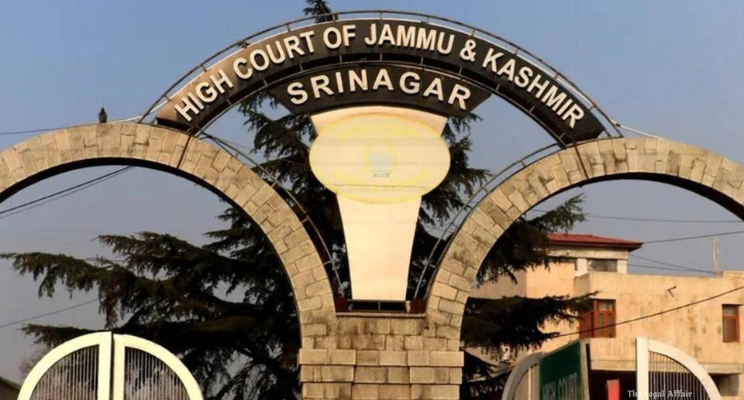
In the case of Mohd Khalil Qazi vs. State of J&K, decided by the High Court of Jammu & Kashmir and Ladakh, Justice Sindhu Sharma dismissed a writ petition that had lingered for 34 years challenging deportation orders issued by the State Home Department. The case centered on two petitioners—a husband and wife—who argued that despite having Pakistani citizenship, their birth and roots in Srinagar entitled them to Indian citizenship and protection from deportation. Petitioner No. 1, born in Srinagar in 1945, was stranded in Pakistan during the 1948 war and subsequently acquired Pakistani nationality. Petitioner No. 2, born in Srinagar in 1962, married Petitioner No. 1 in Rawalpindi in 1986, thereby also becoming a Pakistani citizen. The couple, along with their minor son, entered India in 1988 using Pakistani passports and were issued residential permits in Srinagar. After three short-term visa extensions expired on November 1, 1988, their further requests for visa extension and resumption of Indian citizenship were denied, culminating in a deportation order dated September 13, 1989. The petitioners then approached the High Court through a writ petition in 1990 seeking a declaration that the deportation orders were illegal, unconstitutional, and violative of their fundamental rights under Article 14, as well as a mandamus restraining authorities from removing them from India. The matter remained pending due to interim orders that stayed their deportation, allowing them to reside in Srinagar for over three decades.
Arguments:
Counsel for the petitioners, Mr. Mohammad Altaf Khan, argued that both petitioners’ Pakistani citizenship was acquired under coercive historical circumstances, not by their free will. He claimed that the birth and familial ties of the petitioners to Srinagar and their attempts to reclaim Indian citizenship entitled them to legal status and protection from deportation. He insisted the deportation orders were arbitrary, discriminatory, and violated their right to equality under Article 14 of the Constitution, especially considering they were born in India and had maintained continuous efforts to return and stay in Srinagar. Mr. Khan argued that the deportation was unjust, and that refusing their requests to regularize their citizenship status despite their deep-rooted familial and cultural connections to India violated principles of natural justice.
Conversely, Senior Additional Advocate General Mr. Mohsin Qadiri and Deputy Solicitor General of India Mr. T.M. Shamsi, appearing for the respondents, firmly contended that the petitioners voluntarily acquired Pakistani citizenship, which automatically terminated their Indian citizenship under Section 9(1) of the Citizenship Act, 1955. The State argued that the petitioners entered India in 1988 on Pakistani passports with limited residential permits that expired over three decades ago and that their continued stay was unlawful. The respondents pointed out that despite repeated opportunities, the petitioners never filed any proper or complete application seeking Indian citizenship nor provided credible proof of any legal right to stay. They emphasized that the unsigned letters addressed to the Chief Minister of J&K and the Ministry of Home Affairs did not constitute valid applications under Indian law. Relying on the Supreme Court’s binding judgments in Izhar Ahmad Khan vs. Union of India (1962) and the recent Union of India vs. Pranav Srinivasan (2024), the State argued that voluntary acquisition of foreign citizenship causes automatic cessation of Indian citizenship, making the petitioners’ stay illegal once their residential permits expired. The respondents maintained that the deportation orders issued by the Home Department were entirely valid and legally sustainable. In its detailed judgment, the Court embarked on a comprehensive analysis of the Citizenship Act, 1955, especially Section 9, which deals with voluntary acquisition of foreign citizenship.
Judgement:
Justice Sharma emphasized that the constitutional provisions under Articles 5 to 11 of the Constitution and precedents from the Supreme Court clearly establish that Indian citizenship terminates by operation of law upon voluntary acquisition of foreign nationality. The Court held that Petitioner No. 1, by voluntarily acquiring Pakistani citizenship after remaining in Pakistan post-1948, and Petitioner No. 2, by choosing to marry in Pakistan and adopting Pakistani nationality, had both consciously and voluntarily relinquished their Indian citizenship. The bench categorically rejected the petitioners’ argument that their acquisition of Pakistani citizenship was involuntary or forced by circumstances, noting that no material had been placed on record to prove coercion or compulsion. Justice Sharma found that the petitioners had failed to demonstrate any attempt to follow due process under Indian citizenship law for re-acquisition of Indian citizenship or regularization of their status. Instead, their stay had been entirely dependent on interim orders of the High Court, which had only temporarily stalled deportation but did not grant any substantive legal right to remain in India. The Court further highlighted the legal significance of the petitioners’ Pakistani passports and expired residential permits as unequivocal evidence of their foreign nationality and lack of entitlement to Indian citizenship rights. Addressing the petitioners’ reliance on communications to state and central authorities seeking citizenship, Justice Sharma observed that these letters were unsigned or lacked endorsement by any competent authority, making them insufficient to establish any legal claim. She noted that the failure to pursue proper procedures under the Citizenship Act underscored the petitioners’ lack of bona fide intent to regularize their stay legally. The Court further noted that their petitions had become an abuse of process to prolong unauthorized residence in India, relying on interim protection rather than any substantive legal entitlement. The bench concluded that the deportation orders were legally valid, issued in conformity with Section 9 of the Citizenship Act, and in no way violated the petitioners’ fundamental rights, as their status as foreign nationals barred them from claiming Indian constitutional protections. Accordingly, the writ petition was dismissed, and the interim stay protecting the petitioners from deportation was vacated, paving the way for authorities to proceed with their removal in accordance with the law. Through this judgment, the High Court reaffirmed the principle that citizenship entails rights and duties under the law, and that voluntary acquisition of foreign nationality extinguishes any claim to Indian citizenship by operation of law under the Citizenship Act, 1955.