


Introduction:
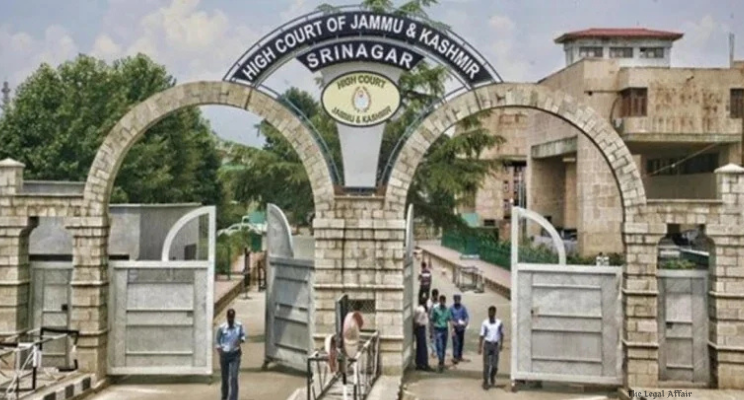
In the landmark case Iqbal Singh vs Durga Devi & Ors, the High Court of Jammu & Kashmir and Ladakh delivered a significant ruling that not only reiterates the weak nature of the statutory right of pre-emption but also underscores the principle that such a right can be lawfully defeated through legitimate means and irrevocably lost through the conduct of the pre-emptor, thereby shaping a new judicial approach towards property disputes governed by outdated pre-emptive laws. The controversy that culminated in this appeal has its origins in a modest residential property located in Poonch town, jointly purchased in 1976 by Durga Devi, the plaintiff, and Roop Chand, father of the predecessor-in-interest of the respondents. Although each party occupied separate rooms within the same building and despite the absence of a formal written partition, the plaintiff continued to treat the property as undivided. Matters took a dramatic turn when, in 1987, Durga Devi learnt that the share belonging to Roop Chand’s successor, Isher Dass, was in the process of being sold to Iqbal Singh, the appellant. Rather than immediately invoking her statutory remedy of pre-emption under the J&K Right of Prior Purchase Act, the plaintiff merely served a notice under Section 19 of the Act and thereafter filed an injunction suit alleging possible encroachment, without seeking enforcement of her pre-emptive right. This omission, followed by her decision to abandon that suit, led the defendants to argue that she had irrevocably waived her right through conduct, thereby triggering the legal battle that would last more than three decades.
Arguments of the Plaintiff:
Durga Devi, armed with a decree granted by the District Judge in 2001, contended that her statutory right of pre-emption stood preserved owing to the nature of the jointly purchased property. According to her, the building constituted a single indivisible house despite physical occupation of separate rooms, a fact she insisted made the sale to Iqbal Singh impermissible without first offering her the option to purchase the share being alienated. She argued that pre-emption served as a protective statutory shield to maintain social harmony and prevent forced cohabitation with strangers, which in her view aligned with the legislative spirit of the J&K Right of Prior Purchase Act. She further asserted that mere delay or procedural missteps in enforcing her rights should not override the statutory privilege that she enjoyed, especially after she deposited the required purchase amount of Rs.40,000 pursuant to the decree. The plaintiff claimed that her earlier injunction suit had no bearing on the present cause of action since that proceeding was aimed merely at restraining physical interference and not challenging the transfer per se. Therefore, she maintained that she had never consciously or legally waived her right of pre-emption, and that the trial court had rightly recognized her entitlement.
Arguments of the Defendants:
Iqbal Singh and the other defendants countered these arguments by presenting a far more compelling narrative of implied waiver, estoppel, and legal inconsistency. They asserted that Durga Devi was fully aware of the intended sale as early as 1987, and despite issuing a Section 19 notice, she deliberately refrained from enforcing her pre-emptive right in the injunction suit filed during that period. Her failure to raise such a crucial statutory right at the earliest possible moment, especially while the sale was still negotiable, was presented as incontrovertible proof that she had willingly abandoned this legal entitlement. The defendants highlighted that the plaintiff’s earlier pleadings had even admitted that the property was partitioned, thereby negating the essential prerequisite for exercising pre-emption. Furthermore, they argued that Iqbal Singh had undertaken substantial structural modifications on the property based on the legitimate belief that his title was secure—belief reasonably induced by the plaintiff’s silence and non-action. This silence, they contended, created a situation amounting to estoppel, making it inequitable for her to revive a dormant right decades later. The defendants also stressed that the right of pre-emption is not a natural extension of ownership but a statutory privilege designed to substitute the purchaser in certain limited situations. Citing authoritative precedents such as Bishan Singh, Mool Chand v. Ganga Jal, Barasat Eye Hospital, Raghunath v. Radha Mohan, and Indira Bai v. Nand Kishore, they emphasised that pre-emption is frowned upon by courts due to its restrictive impact on an owner’s fundamental right to freely transfer property. They therefore urged that Durga Devi’s conduct clearly manifested abandonment, and once waived, the right could not be resurrected.
Court’s Judgment:
Justice Sanjay Dhar, writing for the High Court, embarked on a detailed analysis of the statutory nature, jurisprudential philosophy, and normative purpose of pre-emption. The Court observed that pre-emption is not a right that automatically accompanies property ownership—it is merely a right of substitution, enabling the pre-emptor to step into the shoes of a vendee under certain circumstances. It is inherently weak, susceptible to defeat by genuine transactions, and vulnerable to waiver. The Court held that where a pre-emptor knows of a sale, initiates legal proceedings, but consciously refrains from invoking pre-emption, the law interprets such omission as waiver. Examining the plaintiff’s past conduct, the Court found her silence during earlier proceedings fatal, especially when she neither disclosed the existence of the prior suit in her fresh pleadings nor offered justification for abandoning it. This omission, coupled with her delay of nearly four decades, stood in stark contrast to the requirement of prompt assertion of pre-emptive rights. The Court also emphasised that ordering possession now would create inequities of grave magnitude since the appellant had possessed, utilised, and altered the property for over 38 years. Justice Dhar further noted that the statutory scheme governing pre-emption in J&K has since been repealed following the J&K Reorganisation Act, 2019, therefore raising pressing concerns regarding the enforceability of outdated decrees arising under a defunct statutory framework. The Court found the trial court’s approach legally untenable, particularly its myopic focus on the physical nature of the property while ignoring the pivotal question of waiver. Ultimately, the High Court set aside the 2001 decree, allowed the appeal, and directed that Durga Devi’s deposited amount of Rs.40,000 be refunded. The Court thus reaffirmed that pre-emption, having always been an exception to the freedom of contract and alienation, must yield to equitable considerations, conduct of parties, and constitutional values governing property rights, concluding firmly that once waived, such a right cannot be resurrected like a perennial claim revived at the whim of the claimant.