


Introduction:
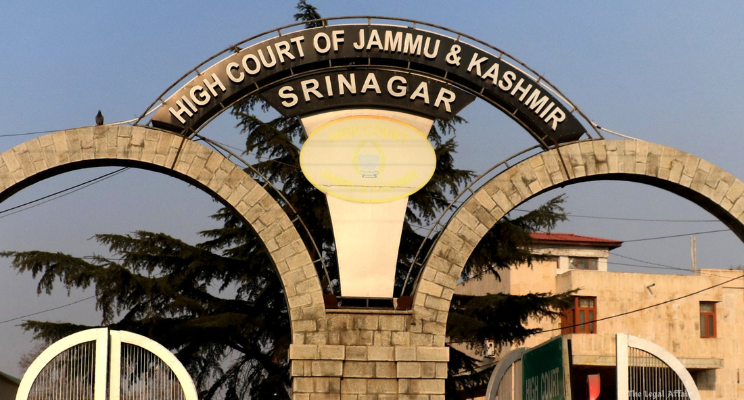
The Jammu and Kashmir and Ladakh High Court has ruled that the stringent provisions of Section 37 of the Narcotic Drugs and Psychotropic Substances (NDPS) Act do not operate as a blanket restriction on the powers of the High Court under Section 439 of the Code of Criminal Procedure (Cr.P.C.). The judgment was delivered by Justice Mohammad Yousuf Wani while granting bail to Mohammad Junaid Raina, convicted under the NDPS Act, on humanitarian grounds due to his father’s critical medical condition. The case revolved around Raina’s conviction by the 4th Additional Sessions Judge, Srinagar, for possessing a commercial quantity of psychotropic substances. The prosecution alleged that on June 23, 2020, Raina was intercepted near Shalteng, where ten boxes of Spasmo Proxyvon Plus capsules were recovered from his vehicle, along with one additional strip found in his pocket. Consequently, he was sentenced to ten years of rigorous imprisonment and fined Rs. 1 lakh, with an additional year of imprisonment in case of default in paying the fine. Raina, challenging his conviction, filed an appeal before the High Court, seeking suspension of his sentence and bail. While his appeal was pending, he submitted an interim application exclusively on humanitarian grounds, citing his father’s urgent need for liver surgery at AIIMS and the absence of any other male family member to care for him. The application was supported by medical records demonstrating his father’s critical health condition.
Arguments of Both Sides:
Raina’s senior counsel, S. T. Hussain, argued that the humanitarian aspect of the case warranted the suspension of his sentence and the grant of bail. He emphasized that while Section 37 of the NDPS Act imposes restrictions on granting bail in cases involving commercial quantities of narcotics, it does not completely curtail the High Court’s discretion under Section 439 of the Cr.P.C. He cited judicial precedents, including Syed Ishfaq Hussain Shah & Another vs Union Territory Th. Police Station Karnah and Jaswinder Singh Vs State of J&K, where courts had granted bail on humanitarian grounds despite the statutory restrictions of the NDPS Act. Furthermore, he referred to the Karnataka High Court’s ruling in Syed Abdul Ala vs Narcotic Control Bureau, which held that Section 37 does not create an absolute bar on the High Court’s powers. Hussain contended that given Raina’s father’s dire medical condition, humanitarian grounds alone justified bail, irrespective of the merits of his primary appeal.
On the other hand, the prosecution, representing the Union Territory of Jammu and Kashmir, opposed the bail application, asserting that the NDPS Act imposes stringent conditions for bail, particularly in cases involving commercial quantities of contraband. The prosecution argued that granting bail in such cases could undermine the strict legal framework designed to curb drug trafficking. It emphasized that the NDPS Act was enacted to prevent the misuse and illegal trade of narcotic substances, and allowing bail in commercial quantity cases would set a precedent weakening the statutory safeguards. The prosecution also pointed out that Raina had been convicted based on strong evidence, including the seizure of contraband in commercial quantity, and thus did not deserve leniency. While acknowledging the humanitarian concerns raised by the defence, the prosecution insisted that such considerations should not override the legal restrictions under Section 37 of the NDPS Act.
Court’s Judgment:
After considering the arguments presented by both sides, Justice Mohammad Yousuf Wani ruled that while Section 37 of the NDPS Act does impose restrictions on granting bail in commercial quantity cases, it does not create an absolute bar on the High Court’s powers under Section 439 of the Cr.P.C., particularly in cases where humanitarian grounds are involved. The court noted that the limitations under Section 37 apply primarily when bail is sought on the merits of the case. However, when bail is requested due to pressing humanitarian concerns such as a convict’s immediate family member requiring urgent medical care, the High Court retains the discretion to grant relief.
Justice Wani referred to previous judgments that upheld this interpretation, including Syed Ishfaq Hussain Shah & Another vs Union Territory Th. Police Station Karnah and Jaswinder Singh Vs State of J&K, where the courts had exercised discretion in granting bail despite the statutory restrictions of the NDPS Act. He also cited Syed Abdul Ala vs Narcotic Control Bureau, where the Karnataka High Court ruled that the bar under Section 37 was not absolute and that the High Court could grant bail when justified by extraordinary circumstances.
The High Court observed that in Raina’s case, the humanitarian concerns were genuine and well-documented. His father, Abdul Jabar Raina, was critically ill and required urgent liver surgery at AIIMS, New Delhi. The court acknowledged that his medical records confirmed the severity of his condition and the need for immediate care. Additionally, since Raina was the only male family member available to take care of his father, the humanitarian aspect of the case was compelling.
The court further explained that while the provisions of Section 37 of the NDPS Act do restrict the power to grant bail in commercial quantity cases, they do not entirely eclipse the High Court’s discretion. Instead, these provisions operate as a “partial eclipse,” meaning that in cases involving strong humanitarian grounds, the High Court can still exercise its inherent powers to provide relief. This interpretation aligns with the principle that while statutory safeguards against drug-related offences are essential, they should not override fundamental humanitarian considerations.
Accordingly, the High Court allowed Raina’s interim applications for suspension of sentence and granted him bail, subject to specific conditions. The court ordered that he be released on bail to care for his father but imposed restrictions to ensure that he did not misuse the bail privilege. These conditions included regular reporting to the authorities, surrendering his passport, and providing an undertaking to return to custody after his father’s medical crisis was resolved.