


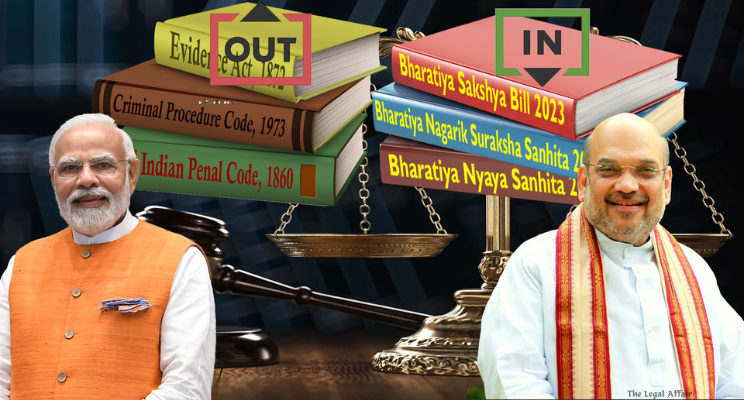
Introduction:
In a monumental stride, the President recently granted assent to three crucial criminal law bills, signifying a transformative overhaul in India’s legal framework. These bills, namely the Bharatiya Nyaya (Second) Sanhita replacing the Indian Penal Code, Bharatiya Nagarik Suraksha (Second) Sanhita replacing the Code of Criminal Procedure, and Bharatiya Sakshya (Second) Sanhita replacing the Indian Evidence Act, received approval from both houses of Parliament and have now secured the Presidential nod.
Overview of the Legislative Journey:
The Lok Sabha, amid the suspension of 141 opposition Members of Parliament, passed these bills on December 20th, while the Rajya Sabha cleared them on December 21st, endorsed through a voice vote after being presented by Union Home Minister Amit Shah. Chairman Jagdeep Dhankar lauded this historic moment, highlighting the bills’ unanimous passage and their role in emancipating India’s criminal jurisprudence from its colonial legacy.
Highlights of the Bills and Debate:
During parliamentary discussions, Home Minister Amit Shah ardently defended these reforms, emphasizing their divergence from antiquated colonial laws. He underscored the legislation’s shift from punitive measures to a justice-centric approach, focusing on citizen-centric criminal justice reform, digitization, and mandatory videorecording of search and seizure procedures, among other vital provisions. However, concerns were voiced by opposition leaders Adhir Ranjan Choudhary and Senior Advocate Kapil Sibal, citing apprehensions regarding human rights infringements and inadequacies in safeguarding against potential law enforcement excesses.