


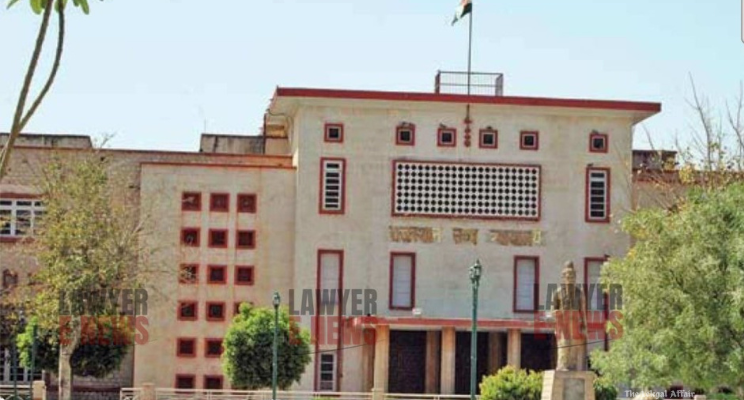
Introduction:
In Bishan Lal & Anr. v. State of Rajasthan & Anr., reported as 2026 LiveLaw (Raj) 125, the Rajasthan High Court, presided over by Justice Anoop Kumar Dhand, delivered a significant judgment addressing the contours of criminal liability in cases involving allegations of organ removal after death. The case arose from an unusual and legally complex set of facts where a charitable shelter home, engaged in humanitarian work for destitute individuals, was accused of committing culpable homicide not amounting to murder under Section 308 of the Indian Penal Code (IPC). The allegation stemmed from a complaint filed by a man who claimed that his brother, a 60-year-old destitute individual, had been subjected to illegal organ removal by the shelter home after his death. The deceased had reportedly been found in a critical condition on the roadside by the petitioner society, which then took him in and provided care. Unfortunately, due to severe weakness and cardiopulmonary failure, he passed away, after which the society performed his last rites. Nearly two months later, the complainant surfaced, alleging that the deceased had been subjected to organ removal after death, leading to the registration of an FIR. Although the police initially filed a negative report, a second FIR with identical allegations led to cognizance being taken by the trial court under Section 308 IPC. Aggrieved by this, the petitioners approached the High Court seeking quashing of the proceedings. The case thus presented critical questions regarding the applicability of culpable homicide provisions to acts allegedly committed on a dead body, the evidentiary threshold required for criminal prosecution, and the broader implications of frivolous allegations on humanitarian institutions.
Arguments:
The matter involved sharply contrasting arguments from both sides, touching upon criminal law principles, evidentiary standards, and statutory interpretation.
The petitioners, representing the charitable shelter home, contended that the entire case against them was baseless, speculative, and devoid of any legal foundation. Their primary argument was that the essential ingredients of Section 308 IPC were completely absent in the present case.
It was submitted that Section 308 IPC deals with an attempt to commit culpable homicide, which necessarily requires an act directed towards a living person with the intention or knowledge that such act could cause death. In the present case, it was an admitted position, even by the complainant, that the deceased had already died of natural causes before any alleged act of organ removal took place. Therefore, the question of attempting to cause death did not arise at all.
The petitioners argued that the very foundation of the prosecution’s case was legally flawed, as it sought to attribute criminal liability for an “impossible act”—that is, attempting to cause the death of a person who was already dead. Such an allegation, they contended, is not only absurd but also contrary to established principles of criminal jurisprudence.
They further emphasized that the police had conducted an investigation and submitted a negative report, finding no evidence to support the allegations. Despite this, the trial court proceeded to take cognizance on the basis of a second FIR containing identical allegations, which, according to the petitioners, amounted to an abuse of the process of law.
The petitioners also highlighted the absence of any medical or forensic evidence to support the claim of organ removal. They pointed out that no post-mortem report or inquest report indicated that any organs were missing from the body of the deceased. In the absence of such primary evidence, the allegations were purely speculative and could not form the basis of criminal prosecution.
Another significant argument advanced by the petitioners was based on the provisions of the Transplantation of Human Organs and Tissues Act, 1994 (THOT). They contended that the Act provides a comprehensive framework for dealing with cases of illegal organ removal, including specific procedures for investigation and evidence collection. However, none of these procedures were followed in the present case, further undermining the credibility of the allegations.
The petitioners also drew attention to their humanitarian work, emphasizing that they were engaged in rescuing and caring for destitute individuals. They argued that subjecting such organizations to baseless criminal proceedings would have a chilling effect on charitable activities and discourage others from engaging in similar work.
On the other hand, the State and the complainant sought to justify the initiation of criminal proceedings and the taking of cognizance by the trial court.
The complainant alleged that his brother had been subjected to illegal organ removal by the petitioners after his death. Although he admitted that the death was due to natural causes, he maintained that the subsequent removal of organs constituted a serious criminal offense.
The respondent argued that the allegations, if proven, would amount to a grave violation of the dignity of the deceased and could attract penal consequences under various provisions of law. It was contended that the trial court was justified in taking cognizance to ensure that the matter was thoroughly examined during trial.
The State further submitted that at the stage of taking cognizance, the court is not required to conduct a detailed analysis of evidence or determine the guilt of the accused. It was argued that even a prima facie case based on the allegations in the complaint is sufficient to proceed with the trial.
However, the respondents did not provide any substantial evidence to counter the petitioners’ claim that no organs were found missing during post-mortem or inquest proceedings. Nor did they adequately address the legal argument regarding the inapplicability of Section 308 IPC to acts committed on a dead body.
Judgment:
After considering the submissions of both parties and examining the material on record, the Rajasthan High Court delivered a well-reasoned judgment quashing the cognizance taken by the trial court.
At the outset, the Court focused on the fundamental legal issue—whether an offense under Section 308 IPC could be made out in the facts of the case. The Court observed that the provision applies to acts committed against a living person with the intention or knowledge that such acts are likely to cause death.
The Court noted that it was an admitted position that the deceased had died of natural causes before any alleged act of organ removal took place. In such circumstances, the essential ingredient of the offense—namely, the existence of a living victim—was clearly absent.
The Court remarked:
“Section 308 IPC applies to the acts committed against a living person… It is quite surprising that cognizance has been taken… that after the death… an attempt was made to cause his death.”
Building on this reasoning, the Court held that the alleged act constituted an “impossible attempt,” as it is legally and physically impossible to cause the death of a person who is already dead. The concept of an impossible attempt, the Court explained, cannot attract criminal liability under Section 308 IPC.
The Court further examined the evidentiary aspects of the case and found that there was no material to support the allegation of organ removal. It emphasized the importance of primary evidence such as post-mortem reports and inquest reports, which are crucial in establishing whether any organs were missing from the body.
The Court observed that if such evidence had indicated organ removal, the case could have been considered under the relevant provisions of the THOT Act. However, in the absence of such evidence, the allegations remained hypothetical and imaginative.
The Court also took note of the conduct of the complainant, observing that he had not made any effort to locate his brother for a considerable period and had raised allegations only after a significant delay. This conduct, according to the Court, further weakened the credibility of the complaint.
Importantly, the Court highlighted the societal role of the petitioner organization, recognizing its efforts in rescuing and caring for destitute individuals. The Court cautioned that allowing such baseless allegations to proceed would discourage charitable activities and undermine humanitarian efforts.
The Court also made a poignant observation regarding the dignity of the dead, emphasizing that even unidentified bodies deserve to be treated with respect and their last rites performed in accordance with their religious beliefs.
In conclusion, the Court held that the continuation of criminal proceedings against the petitioners would amount to an abuse of the process of law. Accordingly, it quashed the cognizance taken by the trial court and allowed the petition.