


Introduction:
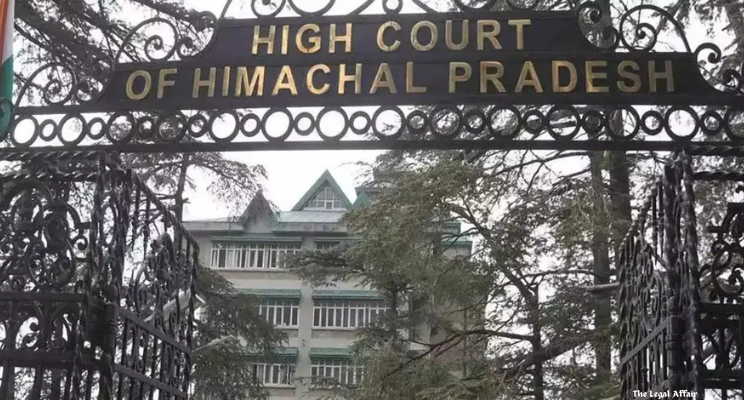
In the case of Nek Singh Dogra v. State of Himachal Pradesh & Ors., CWP No. 5746 of 2024, decided on 12 August 2025, the Himachal Pradesh High Court examined a significant question concerning service jurisprudence — whether an employee who has superannuated can claim promotion merely on the ground that he was found eligible and that his details were forwarded to the competent authority prior to his retirement. The petitioner, Nek Singh Dogra, joined service as a clerk in the Higher Education Department of the State of Himachal Pradesh in 1989, later rising to the post of Senior Assistant and then Superintendent Grade-II in 2007. In March 2024, he was found eligible for promotion to the post of Superintendent Grade-I and his details were duly submitted to the Director of Higher Education, Himachal Pradesh. As his retirement was approaching, in June 2024 he submitted a representation to the State authorities requesting them to convene the Departmental Promotion Committee (DPC) at the earliest, so that he might be considered for promotion before superannuation. Despite his efforts, the DPC was not convened before his retirement. Consequently, he filed a writ petition before the Himachal Pradesh High Court seeking directions that the DPC be convened promptly, or in the alternative, that his case be considered notionally for promotion even if the DPC were to take place after his retirement.
Arguments:
The petitioner, through his counsel Mr. Surender Sharma and Mr. Neeraj Sharma, contended that his name had already been found eligible for promotion to Superintendent Grade-I and had been forwarded to the competent authority. According to him, this created a legitimate expectation that his case would be considered for promotion before his superannuation. It was further argued that the delay in convening the DPC was arbitrary and prejudicial, especially given that the petitioner had made a timely representation in June 2024 seeking urgent action. He asserted that the failure of the respondents to hold the DPC in time amounted to unfair treatment and a denial of his rightful chance at career progression. His counsel submitted that when the petitioner had fulfilled all eligibility conditions, the mere fact of his retirement should not extinguish his claim, and at the very least, he should be granted notional promotion so that his dignity and service record reflect his deserved position. Reliance was placed on principles of fairness, non-arbitrariness under Article 14 of the Constitution, and the doctrine of legitimate expectation.
On the other hand, the respondents, represented by Deputy Advocate General Ms. Menka Raj Chauhan, argued that there is no vested right to promotion, especially once an employee has superannuated. They submitted that while the petitioner was found eligible for consideration, mere inclusion in the eligibility list does not guarantee promotion, since actual promotion depends on the convening of the DPC, assessment of comparative merit, and availability of vacancies. The respondents further pointed out that the DPC was not deliberately delayed and that there was no mala fide intent to deprive the petitioner of his promotion. The delay, they argued, was administrative in nature and applied equally to other eligible employees, meaning that the petitioner was not singled out or victimized. Citing settled law, they contended that once an employee retires, he ceases to be in service and has no enforceable right to be promoted retrospectively unless the delay was deliberately engineered with mala fide intention by the authority. They also stressed that courts have consistently held that promotion is not a matter of right but a matter of consideration, and unless the DPC had met before the retirement date, the petitioner could not claim promotion merely based on eligibility.
Judgement:
Justice Jyotsna Rewal Dua, after hearing both sides, held that the petitioner had no vested right to promotion merely on the basis of eligibility. The Court reiterated that eligibility only confers a right to be considered, not to be promoted. Since the DPC had not been convened before the petitioner’s superannuation, and there was no evidence of mala fide delay on the part of the respondents, the petitioner could not claim either actual or notional promotion. The Court observed that the service law jurisprudence is clear that promotions after retirement can be considered only in limited circumstances — such as when the employer deliberately withholds the DPC with mala fide intent to deny promotion to an employee. In this case, however, there was no such mala fide intent established. The delay in convening the DPC was found to be routine administrative delay rather than intentional misconduct by the State authorities.
The Court emphasized that promotions are governed by statutory rules and administrative procedures, and courts cannot create rights that do not exist in service law. The fact that the petitioner was eligible and had been included in the list of candidates did not mean that he was entitled to be promoted, especially after retirement. Justice Rewal Dua noted that had the petitioner been promoted before his superannuation, he would have legitimately enjoyed the benefits of the higher post, but after retirement, promotion would have only notional value and could not be granted without legal foundation. The Court thus concluded that in the absence of mala fide delay, the petitioner’s claim was untenable. Accordingly, the writ petition was dismissed.
This judgment reinforces a settled principle in service jurisprudence: while employees can demand fair consideration for promotion during service, they cannot claim promotion as a matter of right after retirement unless there is clear evidence of mala fide action by the employer. The Court also underscored that legitimate expectation does not extend to granting promotions where statutory rules and timelines have not been complied with. The decision thereby balances employee expectations with administrative realities, emphasizing that service law rights must be exercised within the period of active employment.
In broader terms, the judgment has important implications for service law disputes across India. It clarifies the contours of eligibility versus entitlement and sends a message that courts will not intervene to create notional promotions absent mala fide intent by the administration. It also highlights the importance for employees nearing superannuation to pursue timely remedies but also recognizes that not every delay by the State amounts to mala fides. By dismissing the petition, the High Court preserved the principle that promotions are prospective and limited to the tenure of active service, thereby preventing a flood of retrospective claims from retired employees who may have been eligible but not considered in time.