


Introduction:
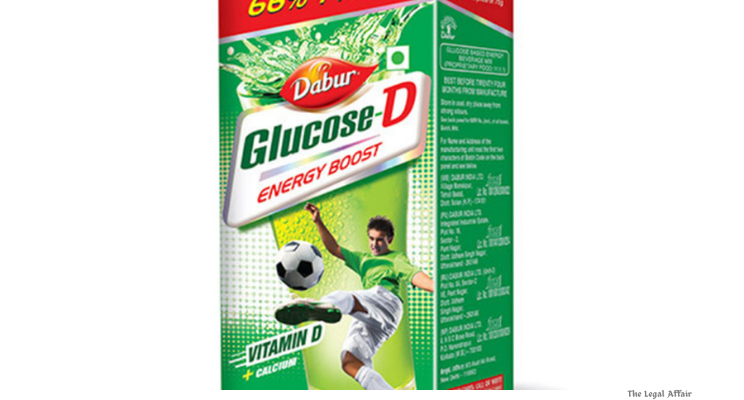
In a significant ruling that reinforces the limits of trademark protection, the Himachal Pradesh High Court, presided over by Justice Sandeep Sharma, recently dismissed an interim application filed by Zydus Wellness Products Ltd. seeking to restrain Leeford Healthcare Ltd. from using the expressions “Glucose-D” and “Glucose-C” for its glucose-based energy products. The court held that no company can claim an exclusive right over descriptive trade terms like “glucose”, which merely describe the nature or key ingredient of a product. This ruling, delivered on November 11, 2025, in OMP No. 885 of 2024, underscores a key principle in trademark law — that descriptive or generic words cannot be monopolized, even by companies that have invested heavily in popularizing them.
In this case, Zydus Wellness Products Ltd., the well-known manufacturer of energy drink mixes under the brand “Glucon-D” and “Glucon-C”, alleged that Leeford Healthcare Ltd. had infringed upon its intellectual property rights by marketing its products under the names “Glucose-D” and “Glucose-C.” The plaintiff claimed that its “Glucon” range, which had been on the market for decades, enjoyed unparalleled goodwill and consumer recognition. Zydus argued that Leeford’s use of near-identical names not only diluted its brand identity but also created a strong likelihood of consumer confusion in the marketplace. Zydus therefore sought an injunction to prevent Leeford from selling, promoting, or advertising any products bearing these allegedly infringing marks during the pendency of the suit.
Arguments:
However, Leeford Healthcare Ltd. opposed the plea, contending that Zydus’s claims were unfounded and legally unsustainable. The defense emphasized that the words “Glucose” and “Vitamin D” are descriptive, representing the core ingredients of their product, and thus incapable of exclusive ownership by any one entity. Leeford asserted that its usage was purely descriptive, honest, and in accordance with established commercial practices. The defendant also highlighted that Zydus’s own trademark registration carried a disclaimer issued by the Trademark Registry, explicitly stating that the company could not claim exclusivity over the terms “Gluco” or “Glucose.” Therefore, Leeford argued that their use of the term “Glucose” was legitimate and non-infringing.
Zydus, represented by Advocates Guru Natraj, Shradha Karol, and Vaibhav Singh Chauhan, pressed that the resemblance between “Glucon-D” and “Glucose-D” was deliberate and deceptive. The plaintiff argued that the defendant’s products were designed to exploit the goodwill Zydus had painstakingly built over the years. It maintained that consumers could easily mistake Leeford’s “Glucose-D” for “Glucon-D,” given the phonetic and visual similarities, especially since both were glucose-based nutritional powders. The company contended that its mark had acquired a secondary meaning, symbolizing quality and trust in the consumer’s mind, and thus deserved stronger protection against similar-sounding marks.
In rebuttal, Leeford’s counsel, Advocates Neeraj K. Grover and Yash Sharma, maintained that Zydus was seeking to monopolize a term that belonged to the public domain. They explained that the term “Glucose” is directly associated with the product’s composition, serving merely as a descriptive identifier rather than a brand origin indicator. They emphasized that their packaging prominently featured the “Rock On” brand name in bold, distinctive lettering, clearly differentiating it from Zydus’s “Glucon-D.” According to Leeford, the only similarity between the two products was the use of the word “glucose,” which is generic, descriptive, and essential for identifying the nature of the product. The defendant further argued that allowing Zydus’s request would set a dangerous precedent, permitting large corporations to claim ownership of everyday words and restrict fair competition.
Judgement:
Justice Sandeep Sharma, after hearing the arguments and examining the evidence, emphasized that trademark law does not grant monopoly rights over descriptive or generic words that indicate the kind, quality, or nature of a product. The court noted that while Zydus indeed held valid registrations for “Glucon-D” and “Glucon-C,” its trademarks included disclaimers limiting the company’s exclusive rights over the elements “Gluco” and “Glucose.” These disclaimers, the judge pointed out, were crucial because they reflected the recognition by the Trademark Registry itself that these terms were descriptive in nature.
The court further observed that the primary function of a trademark is to distinguish the goods or services of one trader from those of another, and not to describe the product itself. Justice Sharma clarified that descriptive words, such as “glucose,” cannot be appropriated as trademarks, since they fail to fulfill this distinguishing function. He reasoned that consumers purchasing glucose-based energy drinks naturally expect the word “glucose” to appear somewhere on the packaging, as it denotes the product’s content and intended use. Therefore, the use of such descriptive terminology by Leeford could not, by itself, constitute trademark infringement.
The court also conducted a visual and phonetic comparison of the two marks. While acknowledging a superficial similarity due to the shared root word “glucose,” Justice Sharma found that the overall get-up, design, and branding elements of Leeford’s “Rock On” product were distinct enough to avoid consumer confusion. The judge observed that the defendant’s use of “Glucose-D” and “Glucose-C” was clearly descriptive of the key ingredient and added vitamin components, not intended to pass off its product as that of the plaintiff.
In his detailed reasoning, Justice Sharma cited the precedent from Pernod Ricard India Pvt. Ltd. & Anr. v. Karanveer Singh Chhabra, reiterating that interim injunctions in trademark disputes require the plaintiff to establish a strong prima facie case, likelihood of confusion, balance of convenience, and risk of irreparable injury. The court concluded that Zydus had failed to demonstrate these essential elements. There was no prima facie evidence of confusion, and the balance of convenience did not favor restraining Leeford’s legitimate business operations.
Justice Sharma further remarked that Zydus’s claim seemed to rest more on commercial rivalry than genuine trademark infringement, and that intellectual property law should not be weaponized to curb fair market competition. He underscored that descriptive use of words like “glucose” and “vitamin D” in product names or packaging is permissible under Section 30 of the Trademarks Act, which protects descriptive and honest use in accordance with trade practices.
Accordingly, the court refused to grant the interim injunction and dismissed Zydus’s interim application. The decision sends a clear message to the corporate sector that brand ownership does not extend to words that describe a product’s nature, quality, or ingredient, as such terms must remain available for all traders to use.
Justice Sharma’s judgment reaffirms a long-standing principle of trademark jurisprudence — that while distinctive and creative brand names merit protection, descriptive and generic expressions do not. The court emphasized that protecting descriptive terms would unfairly stifle competition and consumer choice, undermining the very purpose of intellectual property law, which seeks to balance innovation with public interest. The judgment also reflects judicial consistency with previous rulings by Indian courts, which have consistently held that a trader cannot monopolize a term that is directly associated with the goods themselves.
Through this ruling, the Himachal Pradesh High Court upheld the spirit of fairness in commercial competition, recognizing that the word “glucose” has been used generically for decades and belongs to common trade parlance. The decision is not only a setback for Zydus but also a valuable precedent clarifying the boundaries of trademark protection for descriptive terms. As a result, Leeford Healthcare Ltd. can continue to market its “Rock On Glucose-D” and “Glucose-C” products without legal impediment, provided that its packaging continues to differentiate the brand identity clearly.
This case underscores the judiciary’s commitment to maintaining the balance between intellectual property protection and public access to descriptive terminology. It illustrates that while the law seeks to protect creativity and goodwill, it simultaneously ensures that essential trade vocabulary remains accessible for all.