


Introduction:
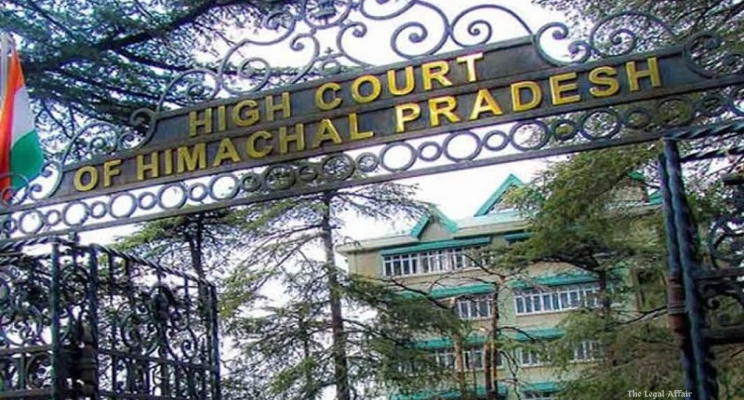
In Shrinjana Buddha v. State of Himachal Pradesh, Cr.MP(M) No.2439 of 2025, decided on 24.11.2025, the Himachal Pradesh High Court, presided over by Justice Rakesh Kainthla, examined a bail application filed by a Nepali national accused of possessing a commercial quantity of opium under Sections 18 and 29 of the Narcotic Drugs and Psychotropic Substances Act (NDPS Act), and delivered a significant ruling that not only granted bail to the petitioner but also exposed glaring procedural flaws in the investigation, thereby reiterating the indispensable importance of strict compliance with the statutory mandates governing the handling, seizure, sampling, and analysis of narcotic contraband. The petitioner, a foreign national with no past criminal antecedents, was apprehended in April 2025 and was alleged to be in possession of nine pouches of opium, which according to the prosecution amounted to a commercial quantity, thus attracting the stringent rigours of Section 37 of the NDPS Act, which ordinarily imposes severe restrictions on the grant of bail in cases involving commercial quantities of narcotic drugs.
Arguments:
The petitioner, represented by Advocates Ajay Sipahiya and Tarun Mehta, challenged the legality and propriety of her arrest and the prosecution’s claims, arguing that the entire recovery was vitiated due to a fundamentally defective sampling procedure as the investigating officer had mixed all nine pouches of the alleged contraband into a single homogeneous bulk before drawing samples, thereby destroying the evidentiary sanctity required under the NDPS Act and the Standing Instructions issued by the Narcotics Control Bureau (NCB). She further contended that the mixing of separate packets before sampling rendered the entire process arbitrary and unscientific, raising serious doubts about whether the substance seized was indeed opium, or whether all pouches contained narcotic material at all, an aspect that assumes critical significance, for the law mandates that each packet must be independently sampled and tested to prevent wrongful conviction based on unverified assumptions. Additionally, the petitioner emphasized a glaring discrepancy between the weight of contraband alleged by the police at the time of seizure and the actual weight recorded later, while also asserting that despite repeated demands, she was neither provided with the grounds of her arrest nor informed about the specific material relied upon by the prosecution, thereby constituting a violation of Articles 21 and 22 of the Constitution of India, which guarantee personal liberty and procedural fairness. The petitioner argued that in the absence of any forensic report indicating that the seized sample was indeed opium, or that the sample drawn was representative of each pouch, the prosecution’s case stood on weak and speculative footing.
In response, the State, represented by Additional Advocate General Jitender Sharma, vehemently opposed the grant of bail and asserted that the petitioner was apprehended with a commercial quantity of narcotic substance, and hence the embargo under Section 37 of the NDPS Act applied with full force, mandating that bail could only be granted if the court was satisfied that the accused was not guilty and unlikely to commit an offence while on bail. According to the State, the recovery was lawful, duly sealed, and indicative of the petitioner’s deliberate involvement in drug trafficking, and mere procedural irregularities, if any, could not overshadow the gravity of the offence. The State further argued that NDPS crimes are a societal menace and courts must remain cautious while granting bail in such cases, especially when the accused has foreign nationality, increasing the risk of absconding. However, the High Court was not persuaded by the prosecution’s submissions, and upon examining the record, noted several critical loopholes that cast serious doubt on the prosecution’s narrative.
Judgement:
Justice Rakesh Kainthla observed with concern that the status report did not mention whether the seized samples were ever dispatched to the State Forensic Science Laboratory, nor was any chemical analysis report placed on record to confirm that the substance recovered was indeed opium; thus, the very foundational element of the prosecution’s claim—establishing the identity of the contraband—remained unproven. The Court took judicial notice of the established legal position that the NDPS Act prescribes extremely rigorous penalties, and therefore, compliance with mandatory procedural safeguards is not optional but intrinsic to ensuring that innocent persons are not roped into fabricated prosecutions. It held that the mixing of all nine packets into one bulk before drawing a single sample was not merely a technical lapse but a substantial illegality that obliterated the evidentiary value of the sampling process, for it was impossible now to ascertain whether each packet contained opium, or whether opium was present only in some of them. The Court relied on precedents wherein the Supreme Court and various High Courts have repeatedly held that sampling must be done separately from each packet to preserve the integrity of evidence, and failure to do so renders the entire recovery unreliable. Citing this legal principle, the Court observed that the prosecution had failed to demonstrate that the sample was representative or homogeneous, and without adequate proof that the entire seizure pertained to a commercial quantity, the stringent bar under Section 37 NDPS Act could not be invoked blindly, particularly when the petitioner had no criminal history and was entitled to the presumption of innocence. The Court highlighted that the NDPS Act is a special statute imposing harsh punishments, but the burden lies heavily on the prosecution to show that every procedural requirement was followed with precision. In the instant case, the prosecution not only failed to demonstrate compliance with the mandatory sampling procedure but also could not provide any forensic analysis report, leaving the identity, quantity, and purity of the alleged contraband unverified. Accordingly, the Court held that continued incarceration of the petitioner without firm evidence would not only violate her fundamental rights but also amount to pre-trial punishment. The Court thus concluded that the petitioner had made out a strong case for bail and directed her release upon furnishing requisite bonds, subject to conditions ensuring her attendance during trial, thereby reaffirming the judicial position that procedural lapses in NDPS cases go to the root of prosecution and cannot be brushed aside as trivialities, especially in cases involving foreign nationals where liberty interests demand heightened scrutiny. With this ruling, the High Court underscored that, even though drug trafficking is a grave offence, constitutional safeguards and evidentiary requirements cannot be sacrificed in the name of expediency, and if the investigating agency fails to follow the mandated procedure, the accused cannot be compelled to suffer imprisonment solely because statutory presumptions exist under the NDPS Act.