


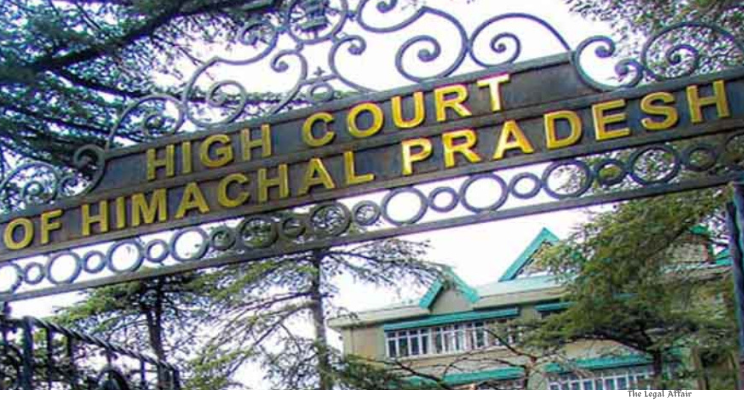
Introduction:
In Chaman v. State of Himachal Pradesh & Others (CWP No. 3646 of 2024), decided on October 14, 2025, the Himachal Pradesh High Court, through Justice Jyotsna Rewal Dua, delivered a nuanced judgment interpreting the Himachal Pradesh Civil Services (Revised Pay) Rules, 2022. The Court clarified that under the 2022 Rules, no government employee can be permitted to draw a salary higher than that of their immediate senior. However, the Court simultaneously quashed the recovery proceedings initiated against the petitioner, noting that the overpayment resulted not from any fraud or misrepresentation by the employee, but from an inadvertent administrative error. The judgment thus strikes a fine balance between the principles of pay equity within the service hierarchy and the protection of employees from undue financial hardship due to departmental mistakes.
Arguments of the Petitioner:
The petitioner, Chaman, represented by Advocate Rajender Singh, argued that the impugned order of the Food and Civil Supplies Department reducing his pay and directing recovery of alleged excess salary was arbitrary, illegal, and contrary to the provisions of the Himachal Pradesh Civil Services (Revised Pay) Rules, 2022. He contended that both he and his immediate senior (respondent No.4) were appointed as Clerks in 2011 on a contractual basis and were regularised after five years of service. Later, both were placed as Junior Assistants in October 2021, which, according to him, amounted to a promotion in functional responsibility and pay scale.
The petitioner asserted that under Rule 9 of the Revised Pay Rules, 2022, his pay fixation was carried out as per the permissible option, and hence any subsequent reduction was illegal. He maintained that instead of lowering his pay to match his senior’s, the department ought to have increased the senior’s pay to ensure parity. The petitioner’s main argument revolved around the interpretation of the word “placement,” contending that his movement to the post of Junior Assistant was equivalent to a promotion under the meaning of the 2022 Rules. Therefore, he claimed that his pay fixation was valid and lawful.
Chaman further argued that the department’s action in revising his pay downward and ordering recovery of the so-called excess salary was in clear violation of the principles of natural justice. No prior notice or opportunity of being heard was granted before passing the impugned order. He also submitted that he had not made any false declarations or attempted to secure higher pay fraudulently. The overpayment, if any, was solely due to a departmental mistake, and under settled law, recovery in such cases is impermissible, especially when the employee is not at fault.
He relied on precedents such as State of Punjab v. Rafiq Masih (White Washer) [(2015) 4 SCC 334], where the Supreme Court categorically held that recovery of excess payment made by the employer, without any misrepresentation or fraud on part of the employee, is unjust and inequitable, particularly in cases involving lower-rung employees. He emphasized that the department’s corrective action should not penalize him for an error that originated from its own misinterpretation of the pay fixation rules.
Arguments of the Respondents:
The State of Himachal Pradesh, represented by Additional Advocate General Mr. Y.P.S., and supported by Mr. Rohit, Deputy Controller (Finance & Accounts) of the Food and Civil Supplies Department, argued that the petitioner’s pay had been incorrectly fixed under a wrong assumption of “promotion.” It was clarified that the petitioner’s placement as a Junior Assistant was merely a re-designation or lateral placement, not a promotion, within the meaning of the Revised Pay Rules, 2022. Therefore, the petitioner’s option for pay fixation was invalid from the beginning.
The respondents contended that under Clause 4(II) of the Revised Pay Rules, 2022, the pay structure must ensure that no junior officer draws higher pay than his immediate senior in the same cadre or category. Once this irregularity was noticed—following a representation filed by respondent No.4, the petitioner’s senior—it became mandatory for the department to rectify the error to restore pay hierarchy. The Department stated that the competent authority duly examined the issue and corrected the anomaly in compliance with the Rules.
Mr. Rohit, appearing in person, explained that after implementation of the 2022 Pay Rules, all employees were asked to exercise their options for pay fixation. The petitioner, however, had chosen an incorrect option that treated his “placement” as a promotion, contrary to the express provisions of the Rules. The department initially processed the pay fixation without detecting this mistake, which led to a temporary anomaly where the junior (petitioner) was drawing higher pay than his senior. When respondent No.4 noticed this and submitted a representation, the department realized the inconsistency and refixed the petitioner’s pay correctly.
The State argued that rectification of an erroneous pay fixation cannot be termed arbitrary when it is done in accordance with the rules. The recovery was also justified, as the overpayment was a direct result of the petitioner’s incorrect option. However, the department conceded that the overpayment was not willful or fraudulent but a result of a clerical or interpretational mistake, and thus left the matter of recovery to the Court’s discretion.
Court’s Judgment and Observations:
Justice Jyotsna Rewal Dua, after carefully examining the record and the relevant provisions of the Himachal Pradesh Civil Services (Revised Pay) Rules, 2022, observed that the Rules leave no room for a situation where a junior employee can draw higher pay than his immediate senior. Clause 4(II) of the Rules explicitly mandates that in cases where such a situation arises due to the exercise of pay fixation options, the junior’s pay shall be refixed downward to bring it at par with or below that of his senior.
The Court clarified that the petitioner’s contention regarding his “placement” as a Junior Assistant being a “promotion” was misconceived. Referring to the language of the rules and departmental clarifications, Justice Dua stated: “Admittedly, a Clerk is ‘placed’ as Junior Assistant and not ‘promoted’ as such. This error, having come to the notice of the competent authority upon being pointed out by respondent No.4, has justly been ordered to be rectified.” The Court, therefore, upheld the refixation of the petitioner’s pay to align it with his senior’s, noting that this correction was necessary to maintain the hierarchical integrity of the pay structure.
However, on the question of recovery, the Court took a compassionate and legally balanced approach. Relying on the Supreme Court’s judgment in State of Punjab v. Rafiq Masih, the Court held that recovery of excess payment made due to a bona fide departmental error is impermissible, particularly when the employee has not committed fraud or misrepresentation. Justice Dua observed: “The excess payment made to the petitioner has not been occasioned due to any fault, misrepresentation, or fraud on his part. It was a result of an inadvertent error by the department, which has now been rectified. Hence, ordering recovery from the petitioner would cause undue hardship and is contrary to principles of equity.”
The Court also underscored the importance of fair treatment in administrative corrections, stating that while the rectification of an erroneous pay fixation is legitimate, such rectification should not result in punitive financial recovery from employees who acted in good faith and received payment as determined by their employer. Accordingly, the High Court upheld the department’s decision to refix the petitioner’s pay in accordance with the Rules but quashed the recovery order in its entirety.
Justice Dua’s reasoning thus reaffirmed two key principles of service jurisprudence: (1) maintenance of pay parity and hierarchy under the Revised Pay Rules, and (2) the protection of employees from retrospective financial recovery due to departmental negligence. The judgment not only clarifies the correct application of the Himachal Pradesh Civil Services (Revised Pay) Rules, 2022 but also strengthens the judicial precedent on equitable treatment in cases of administrative errors.
In conclusion, the writ petition was partly allowed. The refixation of the petitioner’s pay, bringing it in line with his immediate senior, was upheld as valid. However, the order directing recovery of the alleged excess payment was quashed. The Court also directed that if any amount had already been recovered from the petitioner, the same should be refunded to him within eight weeks.