


Introduction:
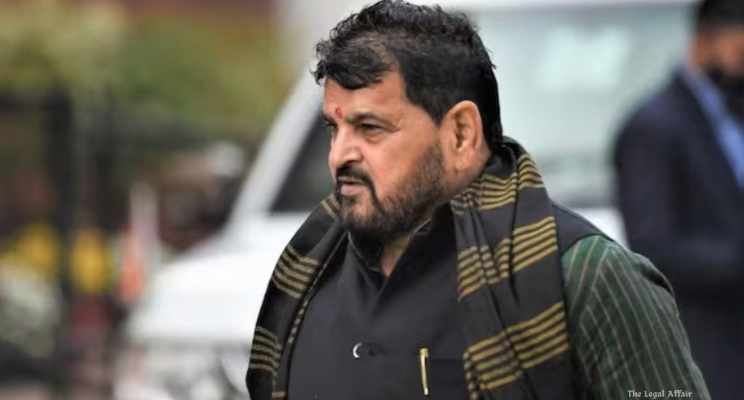
In a case that has garnered national attention, BJP leader Brij Bhushan Sharan Singh, the former Chief of the Wrestling Federation of India (WFI), has petitioned the Delhi High Court to quash the sexual harassment charges leveled against him by five women wrestlers. The allegations have ignited widespread protests and intense scrutiny, raising significant questions about the conduct of one of India’s most influential sports administrators. Singh, who has staunchly denied the accusations, contends that there is a “hidden agenda” behind the complaints, suggesting that they were orchestrated to oust him from his powerful position within the WFI.
This case presents a complex legal challenge, intertwining serious allegations of sexual harassment with broader issues of power, influence, and the treatment of women in Indian sports. The Delhi High Court’s impending decision on Singh’s plea could have profound implications, both for the accused and the complainants, who have bravely brought these allegations into the public eye.
Arguments Presented:
Singh’s Arguments:
Brij Bhushan Sharan Singh’s defense hinges on several key assertions aimed at discrediting the accusations and challenging the legitimacy of the charges. Singh’s legal team argues that the timing and nature of the complaints are suspicious, noting that none of the wrestlers had previously raised any allegations against Singh before April last year. This sudden emergence of complaints, according to Singh, suggests a coordinated effort to displace him from his role as WFI Chief rather than a genuine pursuit of justice.
Singh’s defense further claims that the accusations are part of a broader conspiracy orchestrated by individuals with vested interests in wrestling and sports administration. Singh argues that these individuals aim to seize control of the WFI’s lucrative operations by removing him from his influential position. This, he asserts, explains why the complaints surfaced only after media-covered protests by wrestlers, which significantly tarnished his reputation.
Moreover, Singh’s counsel contends that the charges framed by the trial court were not based on sufficient evidence and that the court failed to adequately consider the possibility of a politically motivated vendetta against him. They highlighted Singh’s long-standing service to Indian sports, arguing that his contributions and achievements should be factored into assessing the credibility of the accusations.
Singh also challenges the validity of the trial court’s decision to frame charges under Sections 354 (outraging the modesty of a woman) and 354A (sexual harassment) of the Indian Penal Code. His legal team argues that the incidents cited in the chargesheet are either misrepresented or exaggerated, and that the court should have taken a more nuanced approach in evaluating the evidence. Singh maintains that he was not in India on certain dates when the alleged incidents occurred, further questioning the authenticity of the claims.
Delhi Police and Complainants’ Arguments:
The Delhi Police, along with the complainant wrestlers, strongly opposed Singh’s plea, arguing that the charges were based on credible evidence and that the trial court had correctly framed them after a thorough examination of the facts. The complainants, who have stood by their allegations despite facing significant backlash, asserted that the accusations were made in good faith and solely intended to seek justice for the wrongs they suffered.
The police maintained that their investigation was conducted meticulously, following all necessary legal procedures to ensure the case’s integrity. They argued that the evidence gathered, including testimonies from the wrestlers and other witnesses, provided a solid foundation for the charges against Singh. The police also emphasized that the charges under Section 354 (outraging modesty of a woman), Section 354A (sexual harassment), Section 354D (stalking), and Section 506(1) (criminal intimidation) were appropriate given the seriousness of the allegations.
Furthermore, the police argued that Singh’s attempt to quash the case was an effort to evade justice and silence the complainants. They pointed out that the trial court had already found sufficient material on record to proceed with the case, and that Singh’s plea was an attempt to undermine the judicial process. The complainants echoed these sentiments, arguing that Singh’s claims of a “hidden agenda” were baseless and designed to deflect attention from the seriousness of the allegations.
The police also contested Singh’s claim that he was not in India on some of the alleged incident dates, arguing that this assertion had been investigated and dismissed as part of the broader inquiry. They emphasized that the trial court had carefully reviewed all the evidence before deciding to frame charges and that Singh’s absence on specific dates did not negate the possibility of wrongdoing on other occasions.
Court’s Judgment:
Presided over by Justice Neena Bansal Krishna, the Delhi High Court heard the arguments from both sides and decided to adjourn the matter to September 26, allowing Singh’s counsel time to file a short note disclosing the grounds for seeking to quash the case. The court also directed the State to prepare a detailed affidavit explaining the reasoning behind the charges framed against Singh.
In its observations, the court acknowledged the seriousness of the charges and the need for a thorough legal examination of the case. While the court did not issue a definitive ruling on Singh’s plea, it expressed skepticism regarding the claim of a “hidden agenda” behind the complaints. The court noted that the trial court had found sufficient evidence to frame charges against Singh, suggesting that the matter required careful consideration before any further action could be taken.
The court’s decision to adjourn the case, rather than dismiss Singh’s plea outright, indicates a cautious approach, ensuring that all legal avenues are explored before making a final determination. The case will likely hinge on the strength of the evidence presented by the complainants and the ability of Singh’s legal team to convincingly argue that the charges were politically motivated or otherwise unfounded.
The High Court’s ruling in this case could set a significant legal precedent, not only for Singh but for similar cases involving powerful individuals accused of sexual misconduct. The court’s approach will be closely watched by legal experts, women’s rights activists, and the public as it navigates the complex intersection of law, politics, and social justice.