


Introduction:
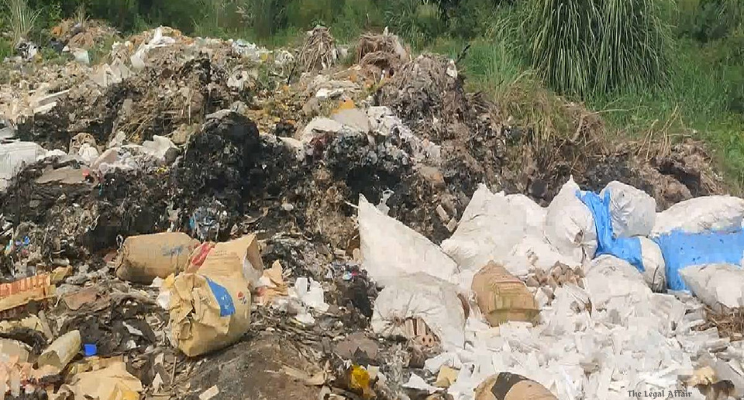
In Pankaj Yadav v. State of Haryana & Others, the Punjab and Haryana High Court raised grave concerns over the massive garbage crisis in Gurugram, a city marketed as a “millennium city” by the Haryana Government. The case arose from a civil writ petition filed by Pankaj Yadav, highlighting the non-removal of scattered garbage across Gurugram, which posed significant health risks to residents. Justice Vinod S. Bhardwaj noted that despite the Court’s directives, the Municipal Corporation of Gurugram (MCG) attempted to mislead the proceedings by submitting irrelevant and inflated data, earning a penalty of ₹50,000. The Court emphasized that the issue was a human problem demanding urgent attention and accountability from the municipal and state authorities to uphold hygiene and sanitation standards amidst growing urbanization.
Arguments of the Petitioner:
The petitioner, Pankaj Yadav, appeared in person to present his concerns about the health hazards caused by the unchecked garbage piles across Gurugram. He highlighted that the Municipal Corporation’s failure to remove solid waste, construction debris, and biological waste exposed the city’s residents to multiple diseases. He further argued that despite several reports of stray animals gathering around scattered garbage, endangering people, the civil authorities had failed to act efficiently. The petitioner contended that the municipal body and state agencies lacked accountability and had ignored the fundamental responsibility of ensuring cleanliness in the city, adversely affecting public health and safety.
Arguments of the Respondents:
The respondents, represented by Senior Deputy Advocate General Suneel Ranga and counsel Vivek Saini for MCG, submitted voluminous data detailing the resources allocated for garbage management, including a summary of 470 vehicles used for garbage collection and the personnel employed for the same. The respondents claimed that significant measures had been taken to address the city’s waste management issues. They emphasized their commitment to ensuring timely garbage removal and presented records of purported actions taken by the municipal corporation. However, their submissions were criticized by the Court as an attempt to deflect accountability and overload the Court with irrelevant paperwork instead of providing precise and relevant answers to the queries raised.
Court’s Judgment:
The Punjab and Haryana High Court expressed dissatisfaction with the Municipal Corporation’s handling of Gurugram’s garbage crisis, stating that it reflected poorly on the city’s management despite being branded as a symbol of Haryana’s development. Justice Bhardwaj observed that the MCG’s responses lacked substance and were aimed at misleading the Court rather than addressing the real issue of garbage removal. The Court stressed that urbanization challenges must be met with effective planning and execution by municipal and state authorities.
The bench imposed a fine of ₹50,000 on MCG for filing irrelevant data and directed the appointment of nine advocates as Local Commissioners to inspect specific localities in Gurugram. The Local Commissioners were tasked with assessing the efficiency and regularity of garbage removal operations and submitting comprehensive reports. The Court emphasized that civil bodies are legally obligated to maintain sanitation and hygiene and prevent garbage accumulation on streets, which could attract stray animals and endanger residents.
The Court further criticized the MCG’s attempt to deflect responsibility by submitting a “jugglery of statistics,” instead of providing concrete answers about waste management practices. It directed the municipal authorities to ensure immediate and effective action for garbage removal, stating that “timely action, rather than paper shuffling, is the need of the hour.” The bench acknowledged the petitioner’s concerns as a genuine reflection of the systemic failures of the municipal corporation in fulfilling its statutory obligations.
While taking a stern stance against the administrative failures, the Court refrained from issuing immediate directions for garbage removal, granting the respondents time to act on its observations. The matter was listed for further consideration on February 17, allowing the municipal corporation to implement corrective measures and ensure compliance with the Court’s directives.
The Court reiterated that waste management is not merely a logistical challenge but a fundamental public health issue that requires the utmost commitment from civil agencies. It also highlighted the need for proactive governance to ensure that Gurugram’s image as a “millennium city” aligns with the realities on the ground.