


Introduction:
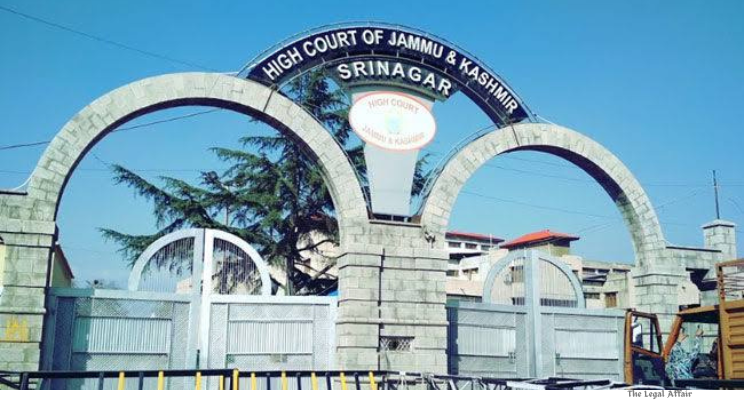
The Jammu and Kashmir and Ladakh High Court recently upheld the acquittal of two accused in a case relating to the suicide of Sanjokta Kumari, dismissing the state’s criminal appeal under Section 306 of the Ranbir Penal Code (RPC). The court ruled that a heated exchange between family members over the preparation of food for a religious event did not amount to abetment of suicide. Justice M.A. Chowdhary presided over the case and emphasized that common domestic disputes could not be construed as incitement to suicide unless clear and direct acts of instigation or coercion were proven. The case involved Rakesh Kumar, the deceased’s husband, and Harbans Lal, her brother-in-law, who were originally charged after Sanjokta ingested poison following the altercation.
Case Background:
The case arose from the tragic suicide of Sanjokta Kumari on May 1, 2009. Sanjokta, the wife of Rakesh Kumar, consumed poison after a confrontation with her family. According to the police, this confrontation centred around a disagreement over the preparation of food for a religious event (Ramayan Path) held at the family’s residence. It was alleged that Sanjokta had been scolded for not preparing the food on time, and following the argument, she ingested insecticide. She was rushed to the hospital but succumbed to the poison while en route.
Following her death, the police charged both her husband and brother-in-law with abetment of suicide under Section 306 of the RPC. The prosecution alleged that Sanjokta had been consistently harassed by her in-laws over dowry demands and household matters. The police report claimed that this continuous harassment, compounded by the argument on the day of her death, had driven her to commit suicide.
During the trial, the Principal Sessions Judge in Rajouri examined the evidence but found it insufficient to convict the accused, ultimately acquitting them. Dissatisfied with the verdict, the state filed an appeal, which led to the current proceedings in the High Court.
Arguments by the State:
The state’s appeal centred on the claim that the trial court had failed to consider key pieces of evidence and testimonies that indicated a pattern of harassment and mistreatment suffered by the deceased at the hands of her in-laws. The prosecution argued that witnesses had provided evidence suggesting that Sanjokta was subjected to continuous harassment, particularly concerning dowry demands and her perceived failure to meet the family’s expectations in managing household chores.
The prosecution further claimed that the trial court’s judgment was overly technical and dismissed important circumstantial evidence. It was argued that the heated argument on the day of the incident, combined with the broader context of dowry-related harassment, provided sufficient grounds to establish the abetment of suicide. The state urged the High Court to overturn the acquittal and hold the accused accountable for their role in Sanjokta’s death.
Arguments by the Defense:
In response, the defense maintained that the prosecution had failed to present any concrete evidence linking the accused to the abetment of suicide. They argued that the police and prosecution had constructed a narrative based on assumptions rather than facts. The defense emphasized that the argument over food preparation on the day of the religious event was a common domestic issue, which did not amount to abetment.
The defense also pointed out that the allegations of dowry-related harassment were vague and unsubstantiated. While some of the deceased’s family members had testified that Sanjokta faced harassment, these testimonies lacked specific details regarding the nature or frequency of such mistreatment. The defense argued that there was no evidence of direct instigation or coercion by the accused that could be construed as abetment to suicide under Section 306 RPC. They further asserted that mere dissatisfaction or arguments within a household did not automatically lead to criminal liability for a subsequent suicide.
Court’s Judgment:
Justice M.A. Chowdhary, in delivering the High Court’s judgment, meticulously reviewed the evidence and the findings of the trial court. The bench concluded that the state had failed to establish beyond reasonable doubt that the accused had abetted Sanjokta’s suicide. The Court emphasized the lack of any direct evidence linking the accused to the act of instigating or coercing Sanjokta to take her own life.
The Court remarked, “There is admittedly no eyewitness to the commission of the offence as no witness has been cited to depose that the deceased had been instigated, coerced, or abetted to take poison in anyone’s presence.” This lack of direct evidence was a critical factor in the Court’s decision to uphold the acquittal.
Furthermore, Justice Chowdhary observed that domestic disputes, particularly over mundane issues such as food preparation, are common in many households and cannot be automatically construed as abetment to suicide. The Court noted that while the argument between Sanjokta and her family may have been heated, it was not an extraordinary or abnormal event that could be classified as abetment under the law.
The Court also addressed the broader allegations of dowry harassment, concluding that the evidence presented by the prosecution was vague and lacked specificity. The testimonies provided by the deceased’s family members were general in nature, with no concrete details about the alleged dowry demands or severe mistreatment. Moreover, the Court highlighted that Sanjokta’s frustrations, including her struggles with employment, had no clear linkage to any actions or omissions by the accused that could constitute abetment.
Citing several Supreme Court precedents, the Court reiterated that mere domestic disagreements, quarrels, or dissatisfaction within a family are insufficient grounds for convicting someone under Section 306 RPC. The Court emphasized that for a conviction under this section, there must be clear and proximate evidence of instigation, coercion, or deliberate facilitation of the victim’s suicide.
In light of these findings, Justice Chowdhary ruled that the trial court’s decision to acquit the accused was correct and required no interference. The High Court dismissed the state’s appeal, upholding the acquittal of Rakesh Kumar and Harbans Lal.