


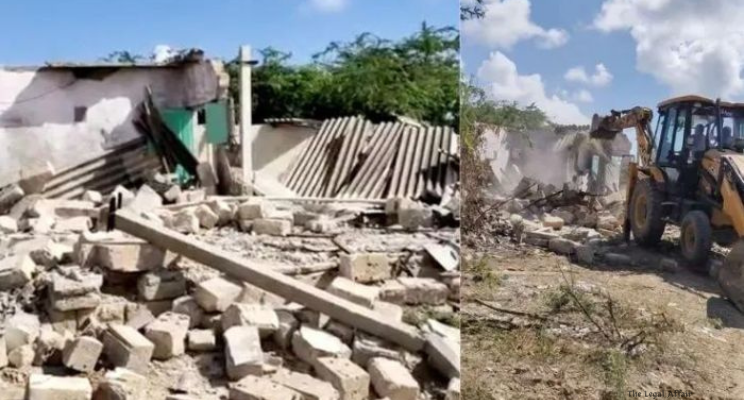
Introduction:
On February 4, 2025, the Gujarat High Court dismissed a series of petitions seeking protection against demolishing certain structures in Beyt Dwarka. The petitions challenged notices issued by the state government directing the removal of unauthorized constructions within three days and warning that failure to comply would result in demolition.
Background:
The petitioners, represented by Bet Bhadela Muslim Jamat Trust, contended that the structures in question were religious, including dargahs (shrines) and madrasas (Islamic educational institutions), and held significant sentimental value for the community. They argued that the notices issued for demolition lacked due process, were vague, and did not adhere to the provisions of Section 185 of the Gujarat Municipalities Act. Additionally, they claimed that the land was used as a kabarastan (graveyard) and should be recognized as ‘waqf by the user,’ thereby warranting protection under the Waqf Act.
State’s Arguments:
The state government, represented by Government Pleader GH Virk, countered that the land in question was government or gauche (pasture) land, and the petitioners had no ownership or authority over it. They emphasized that government resolutions from 1986 and 1989 clearly stated that land allotted for specific purposes, such as graveyards, remained under government ownership, and any unauthorized constructions on such land were illegal. The government also highlighted the strategic importance of the area, noting that it had become a hub for anti-national activities, including smuggling of narcotics, with FIRs registered depicting misuse of the structures in question.
Court’s Judgment:
Justice Mauna M Bhatt, after considering the submissions from both sides, concluded that the petitions lacked merit and did not warrant consideration. The court dismissed all writ petitions and vacated the interim relief that had been granted earlier. The court also rejected the petitioners’ plea for an extension of interim relief for an additional 15 days.
The court accepted the government’s contention that the land was government-owned and that the petitioners had no legal right over it. It was noted that the government resolutions clearly outlined that land designated for specific purposes, such as graveyards, could not have constructions on it without proper authorization, and any unauthorized structures were subject to demolition.
Conclusion:
The Gujarat High Court’s decision underscores the importance of adhering to legal procedures and regulations concerning land use and construction. While the petitioners emphasized the religious significance of the structures, the court upheld the state’s authority to remove unauthorized constructions, especially when such structures are on government land and potentially linked to unlawful activities.