


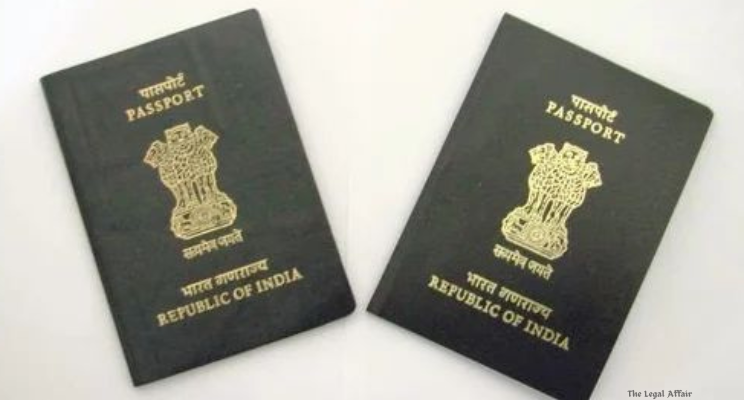
Introduction:
In a recent decision, the Gujarat High Court has set aside a charge sheet issued against Charu Narendrabhai Bhatt, who served as Director of Accounts and Treasury. Bhatt was accused of renewing her passport in 2013 without obtaining a No Objection Certificate (NOC) from the State Government. Her appeal was centred on challenging this charge as an administrative lapse rather than an act of misconduct. Notably, two other related charges concerning passport procurement and unauthorized travel abroad had already been dropped. Bhatt’s appeal argued that the remaining charge did not amount to misconduct under the Gujarat Civil Services (Conduct) Rules, 1971. The court’s decision to quash the charge was based on the prolonged eight-year delay, which it viewed as indicative of administrative malice, and on the interpretation that Bhatt’s actions did not constitute “misconduct” under the rules.
Brief Facts of the Case:
Charu Narendrabhai Bhatt filed a Letters Patent Appeal under Clause 15 against a single-judge decision that had upheld a charge sheet accusing her of misconduct in renewing her passport without a government-issued NOC. This charge stemmed from an incident in 2013 and was formally brought against her in May 2021, eight years later, as she neared retirement. Bhatt argued that her failure to secure an NOC did not violate the Conduct Rules, as it was an oversight rather than intentional misconduct. The primary points of contention included the delay in issuing the charge sheet and whether such an omission could be deemed misconduct as defined under the Gujarat Civil Services Rules. The High Court, recognizing these points, evaluated the legitimacy of the charges under both administrative and legal scrutiny.
Appellant’s Arguments (Charu Bhatt):
- No Misconduct in Administrative Lapse:
Bhatt’s counsel argued that her failure to obtain an NOC before renewing her passport did not qualify as a “misconduct” or a “lack of integrity.” This act was, at most, an administrative oversight without malicious intent, as she was unaware of the need for an NOC.
- Inordinate Delay Indicative of Malice:
The appellant emphasized the eight-year delay in the charge sheet issuance, arguing that such a prolonged period before issuing charges created a perception of administrative malice, possibly stemming from personal grievances held by the officer responsible for initiating the charge sheet. The delay, she contended, undermined the case’s credibility.
- Lack of “Grave Misconduct” as Required for Pension Impact:
Citing Rule 24 of the Gujarat Civil Services (Pension) Rules, 2002, Bhatt’s legal team argued that “grave misconduct” was the necessary threshold to impact pension eligibility. Since her omission did not meet this definition, the charge could not affect her pension rights.
- Judicial Precedents on Charge Sheets in Exceptional Cases:
The appellant cited the Supreme Court ruling in Union of India and another vs. Kunisetty Satyanarayana, which permits High Courts to quash charge sheets in rare and exceptional cases. Bhatt’s counsel argued that the eight-year delay in her case qualified as an exception due to its potential impact on her retirement benefits.
Respondent’s Arguments (State of Gujarat):
- Conduct Violation under Service Rules:
The State argued that Bhatt’s failure to obtain an NOC before renewing her passport violated the Gujarat Civil Services (Conduct) Rules, 1971. According to them, this was a neglectful act that could be considered “misconduct” under the standards expected of a government servant.
- Dismissal of the Appeal Based on Past Precedents:
The respondent referenced the single-judge ruling that upheld the charge sheet’s legitimacy, asserting that the court should follow this precedent. They argued that the lapse, though administrative, could still qualify as an action unbecoming of a government servant.
- Procedure and Authority in Issuing Charge Sheets:
The State claimed that the delayed issuance was within the administrative purview, given that government agencies require time to gather and analyze pertinent records. They argued that the charge sheet was issued based on a thorough review, implying procedural legitimacy despite the delay.
Pension Rules Interpretation and Authority: According to the State, the Gujarat Civil Services (Pension) Rules allow administrative review when lapses occur in conduct. They argued that Bhatt’s lapse could affect her pension rights, given that pension is conditional on maintaining a certain standard of conduct, which Bhatt’s action breached.
Court’s Observations and Judgment:
- Significance of Delay in Charge Sheet Issuance:
The High Court scrutinized the eight-year delay in issuing the charge sheet, suggesting that the timing indicated possible malintent. The court’s judgment cited UCO Bank and others vs. Rajendra Shankar Shukla, where the Supreme Court ruled against charge sheets with unexplained, excessive delays. Here, the court applied this principle, asserting that the protracted delay compromised the charge’s validity and appeared to penalize Bhatt for an unintentional oversight.
- Interpretation of Gujarat Civil Services Rules, 1971:
The court evaluated the alleged misconduct against Rule 3(1) of the Conduct Rules, which requires absolute integrity, devotion to duty, and conduct that is becoming of a government servant. The court concluded that Bhatt’s omission, though procedurally improper, did not constitute a “lack of integrity” or “devotion to duty.” Rather, it was a minor oversight. The court emphasized that “unbecoming conduct” must involve significant ethical lapses, not administrative errors, thereby quashing the charge.
- Rule 24 of the Gujarat Civil Services (Pension) Rules, 2002:
The court analyzed Rule 24, which allows for pension withholding only if the employee is found guilty of “grave misconduct.” Since Bhatt’s conduct did not meet this standard, the court found no legal basis for any punitive action against her pension. The alleged misconduct was ruled insufficiently serious to warrant such measures, effectively protecting Bhatt’s retirement benefits.
- Applicability of Judicial Precedents on Quashing Charge Sheets:
While the court recognized the binding nature of Union of India vs. Kunisetty Satyanarayana, which generally discourages High Court intervention in charge sheet matters, it noted that Bhatt’s case qualified as an exception due to the extraordinary delay and minor nature of the charge. The court exercised its discretion, ruling that Bhatt’s situation was one of the “rare and exceptional cases” where quashing a charge sheet was justified to prevent unjust penalization.
- Costs Imposed on the Erring Officer:
The court took an additional step by ordering the State to cover Rs. 10,000 as costs to compensate Bhatt, granting the government authority to recover this amount from the officer responsible for initiating the charge. This decision underscored the court’s disapproval of the administrative delay and any potential personal motivations behind it.
- Precedent and Principles Reinforced:
This judgment reinforced principles of judicial restraint regarding minor administrative lapses, underscoring the need for disciplinary actions only in instances of genuine misconduct. The High Court sent a clear message that personal or administrative grudges must not colour the issuance of charge sheets, particularly at the end of a long career.