


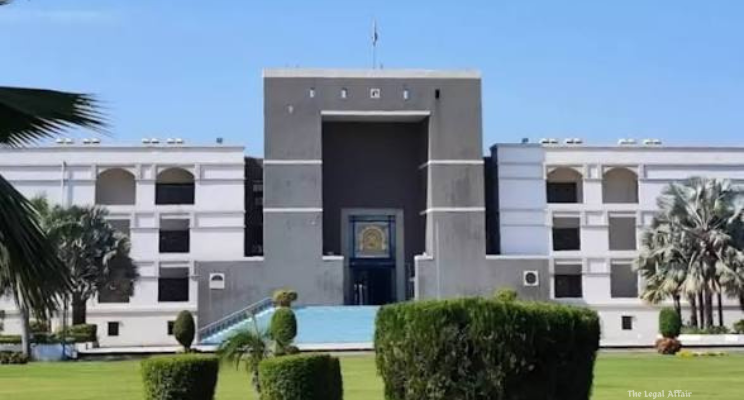
Introduction:
The Gujarat High Court recently delivered a significant judgment reaffirming the constitutional importance of personal liberty and the right to default bail while dealing with procedural delay in criminal appeals. In Ankush Kapoor v. NIA & Another, arising out of Criminal Miscellaneous Application (For Condonation of Delay) No. 1104 of 2026 in Criminal Appeal No. 80 of 2026, a Division Bench comprising Justice Ilesh J. Vora and Justice R.T. Vachhani condoned a delay of 146 days in filing an appeal challenging an order extending the accused’s judicial custody from 90 days to 180 days under the provisions of the Unlawful Activities (Prevention) Act, 1967 and the Narcotic Drugs and Psychotropic Substances Act, 1985.
The case arose from proceedings initiated by the National Investigation Agency before a Special NIA Court seeking extension of the investigation period and continued judicial custody of the accused under Section 43D(2)(b) of the UAPA and Section 36A(4) of the NDPS Act. These provisions permit extension of the statutory investigation period from 90 days to 180 days in serious offences involving terrorism and narcotic crimes, provided the prosecution demonstrates sufficient reasons for inability to complete the investigation within the ordinary statutory period.
Under Section 167(2) of the Code of Criminal Procedure, 1973, an accused becomes entitled to “default bail” if the investigation is not completed within the prescribed statutory period. This right has consistently been recognized by the Supreme Court as an integral component of personal liberty protected under Article 21 of the Constitution. However, special statutes such as the UAPA and NDPS Act permit courts to extend the period of investigation in specified circumstances.
In the present case, the NIA sought extension of the accused’s judicial custody beyond 90 days on the ground that the investigation could not be completed within the original period considering the nature and complexity of the allegations. The Special NIA Court allowed the request on 9 July 2025 after noting that notice had been sent to the accused through Central Jail, Sabarmati, Ahmedabad, though the accused allegedly refused to accept it.
Subsequently, the accused approached the Gujarat High Court challenging the order of extension. However, the appeal was filed with a delay of 146 days. This delay became the central issue before the High Court because Section 21(5) of the National Investigation Agency Act, 2008 prescribes a limitation period of 30 days for filing appeals against orders passed by Special Courts.
The accused sought condonation of delay by contending that there had been substantial delay in receiving the relevant documents and the impugned order necessary for filing an effective appeal. On the other hand, the NIA opposed the application, arguing that the accused had deliberately refused to accept notice served through jail authorities and could not later claim lack of knowledge.
The judgment is particularly important because it addresses the interplay between statutory limitation periods and the constitutional guarantee of personal liberty. By condoning the delay, the Gujarat High Court emphasized that technical procedural barriers should not defeat substantive rights concerning liberty, especially where the issue involves denial of default bail under stringent penal statutes.
Arguments of the Parties:
The applicant-accused argued that the delay of 146 days in filing the appeal was neither deliberate nor motivated by negligence. According to the applicant, the delay occurred primarily because the connected materials and the order passed by the Special NIA Court were not supplied to him within a reasonable time, thereby preventing him from effectively exercising his legal remedies.
The applicant submitted that on 30 July 2025, he had moved an application seeking copies of the relevant documents, including the NIA’s application for extension of custody and the order passed by the trial court. These documents were necessary for him to challenge the extension order and to pursue his claim for default bail. However, despite making such a request, the relevant materials were allegedly supplied only on 24 November 2025.
It was contended that until receipt of these documents, the applicant was not in a position to properly prepare and file the appeal under Section 21 of the NIA Act. Therefore, the delay was attributable to procedural circumstances beyond his control and not to any intentional disregard for limitation requirements.
The applicant further argued that the issue involved far more than a mere procedural challenge. According to him, the appeal directly concerned his statutory and constitutional right to seek default bail arising from non-completion of investigation within the prescribed period under Section 167(2) Cr.P.C. It was submitted that the right to default bail has repeatedly been recognized by the Supreme Court as an inseparable component of the right to personal liberty guaranteed under Article 21 of the Constitution.
The accused emphasized that denial of an opportunity to challenge the extension order solely on technical grounds of limitation would effectively deprive him of his substantive right to question the legality of prolonged custody. Such an interpretation, according to the applicant, would undermine constitutional protections against arbitrary detention.
The applicant also pointed out that there existed divergent judicial opinions among various High Courts regarding limitation issues in such appeals and that similar questions were pending consideration before the Supreme Court in several writ petitions. Therefore, the High Court was urged to adopt a liberal approach consistent with constitutional values rather than a narrow technical interpretation.
On the other hand, the National Investigation Agency strongly opposed the plea for condonation of delay. The NIA argued that the accused had already been served with notice regarding the application seeking extension of judicial custody. According to the prosecution, the notice had been forwarded through the Central Jail authorities at Sabarmati Jail, Ahmedabad, but the accused himself refused to accept the same.
The NIA therefore contended that the applicant could not subsequently claim ignorance regarding the proceedings or rely upon alleged non-supply of documents as justification for the prolonged delay. It was argued that the accused was fully aware of the extension proceedings and had failed to act diligently within the statutory limitation period prescribed under Section 21(5) of the NIA Act.
The prosecution further emphasized that Section 21(5) clearly stipulates that appeals against orders passed by Special Courts must ordinarily be filed within 30 days. According to the NIA, the legislative intent behind such limitation provisions was to ensure expeditious adjudication in cases involving serious offences under anti-terror and narcotics laws.
The NIA also sought to distinguish the issue of limitation from the merits of the accused’s claim regarding default bail. It argued that merely because personal liberty is involved does not automatically justify condonation of substantial delay in every case. Procedural discipline and statutory timelines, according to the prosecution, are equally essential for effective criminal administration.
Nevertheless, the applicant countered these submissions by arguing that constitutional protections relating to liberty cannot be mechanically subordinated to rigid technicalities. The accused maintained that where the issue concerns continued incarceration and denial of default bail, courts must adopt a justice-oriented and rights-based approach while considering applications for condonation of delay.
Thus, the principal issue before the High Court became whether procedural delay in filing an appeal challenging extension of custody should be condoned in light of the larger constitutional implications concerning personal liberty and default bail.
Court’s Judgment:
The Gujarat High Court condoned the delay of 146 days and directed the registry to register the appeal and assign it a regular number. The Court held that in matters affecting personal liberty and the statutory right to default bail, technical procedural barriers should not be applied in a manner that renders an accused remediless.
At the outset, the Court examined Section 21(5) of the National Investigation Agency Act, which provides that every appeal under the section must ordinarily be filed within 30 days from the date of the judgment, sentence, or order appealed against. However, the proviso to Section 21(5) authorizes the High Court to entertain an appeal beyond the prescribed period if sufficient cause for the delay is shown.
The Bench emphasized that the power to condone delay under the proviso must be exercised in a manner consistent with constitutional values, especially where the issue concerns deprivation of liberty. The Court observed that the applicant sought to challenge an order extending the investigation period and judicial custody from 90 days to 180 days under special statutes imposing severe punishments and restrictive bail conditions.
The Court placed substantial reliance upon the constitutional significance of default bail under Section 167(2) Cr.P.C. Referring to established Supreme Court jurisprudence, the Bench reiterated that the right to default bail is not merely a statutory privilege but forms part of the “procedure established by law” under Article 21 of the Constitution.
The Court observed:
“Now, reverting to the facts of the case on hand, it would appear that by filing the appeal, the applicant has sought to challenge the grant of extension from 90 days to 180 days on the grounds agitated in the memo of appeal and the consequence thereof flaws the personal liberty of the accused guaranteed under the statute which imposes drastic punishment as the right to default bail as has been correctly held by the plethora of judgments of the Hon’ble Apex Court, are not the mere statutory rights under the first proviso to Section 167(2) of the Code, but is part of the procedure established by law under Article 21 of the Constitution of India.”
The Court further observed that rigid enforcement of limitation in such matters could effectively extinguish a person’s opportunity to challenge continued incarceration. According to the Bench, denying condonation solely on technical grounds would undermine constitutional protections relating to personal liberty.
The High Court noted that an application seeking default bail stands on a fundamentally different footing from an ordinary application for regular bail. While regular bail involves judicial discretion based on merits, default bail arises from failure of the investigating agency to complete investigation within the statutory timeline prescribed by law.
The Court therefore held that refusal to condone the delay would deprive the accused of an opportunity to even place his case on merits regarding the legality of the custody extension order. Such deprivation, according to the Court, would be inconsistent with constitutional guarantees.
The Bench made an important observation regarding the relationship between procedural law and liberty:
“The embargo of limitation of 90 days virtually renders an aggrieved person remediless which in the matter of rights guaranteed under Article 21 of the Constitution of India through procedure is not the purpose of law and the right to life and personal liberty in ordinary circumstances cannot be irrationally barred even for a sufferer who seems indolent and the same cannot be rejected solely on the technical ground.”
Another important factor considered by the Court was the existence of divergent judicial opinions among different High Courts on related issues concerning limitation and default bail. The Bench also noted that similar constitutional questions were pending consideration before the Supreme Court in multiple writ petitions.
In view of this evolving legal landscape, the Court considered it appropriate to adopt a liberal and rights-oriented approach until an authoritative pronouncement is made by the Supreme Court. The Bench expressly stated that without “much delving on technicalities,” the order condoning the delay represented “good law.”
The Court also found that the applicant had satisfactorily explained the reasons for delay, particularly regarding delayed receipt of relevant documents and orders necessary for filing the appeal. Although the NIA argued that the accused had refused service of notice, the Court chose not to treat this factor as sufficient to defeat consideration of the application concerning liberty rights.
At the same time, the High Court clarified that its observations were confined solely to the question of condonation of delay and would not influence adjudication of the merits of the main appeal. The Court consciously refrained from expressing any opinion regarding the legality of the custody extension order itself.
Ultimately, the Bench concluded that sufficient cause had been established and that the interests of justice required condonation of delay. Accordingly, the delay of 146 days was condoned, and the registry was directed to register the appeal.
The judgment is significant because it reinforces the constitutional centrality of personal liberty in criminal procedure. By emphasizing that default bail rights form part of Article 21 protections, the Gujarat High Court reaffirmed the principle that procedural technicalities cannot override substantive liberty interests.
The ruling also demonstrates judicial sensitivity toward the harsh consequences of prolonged incarceration under special laws such as the UAPA and NDPS Act, where bail restrictions are stringent and investigations often extend over lengthy periods. The decision thus contributes to the broader jurisprudence safeguarding the balance between national security concerns and individual constitutional freedoms.