


Introduction:
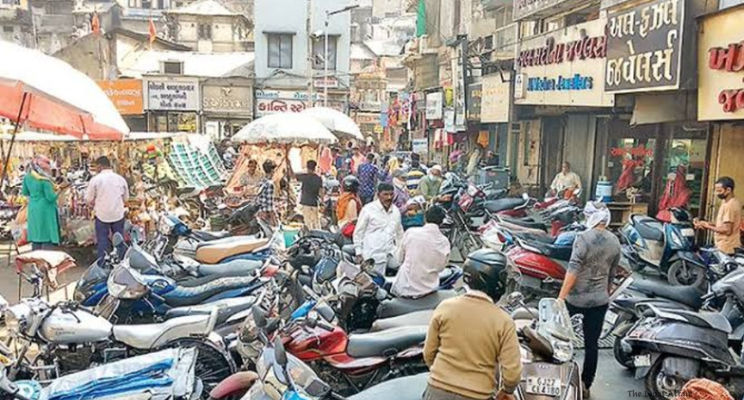
In a recent ruling, the Gujarat High Court dismissed a decade-old Public Interest Litigation (PIL) seeking a ban on the commercial use of residential properties in Ahmedabad’s Manekchowk area, located within the old walled city. The petition alleged that residential buildings were being illegally used for commercial purposes, such as jewelry making, which purportedly contributed to pollution. A division bench comprising Chief Justice Sunita Agarwal and Justice Pranav Trivedi passed the judgment on September 6, dismissing the petition on the grounds that the area is designated for “mixed use” and the commercial activities were not unauthorized. The judgment also addressed connected PILs concerning similar issues in the old city.
The petitioner argued that the Manekchowk area was being misused for commercial activities despite being a residential zone, while the Ahmedabad Municipal Corporation (AMC) contended that the area was designated for mixed use, accommodating both residential and commercial establishments. The court ruled in favor of the AMC, holding that the PIL was based on a “wrong premise” and dismissed the petitions, noting that the area’s current status as a mixed-use zone does not violate any laws.
Arguments by the Petitioners:
The petitioners in this case filed a PIL alleging the unauthorized commercial use of residential premises in the Manekchowk area of Ahmedabad’s walled city. The central claim was that these premises, initially constructed for residential purposes, were being unlawfully utilized for commercial activities, primarily jewelry manufacturing, which was purportedly causing pollution. The petitioners contended that the area was designated exclusively for residential purposes, and the transformation into a commercial hub, especially for jewelry manufacturing, was illegal and harmful to the environment.
The petitioners further claimed that the unauthorized commercial use not only violated local municipal laws but also caused significant environmental degradation due to the nature of the activities carried out. Jewelry making, particularly processes involving silver and gold melting, was identified as a primary cause of pollution in the area. The petitioners argued that these activities should be restricted to industrial zones.
They sought a complete ban on such activities in the area and demanded that the Ahmedabad Municipal Corporation (AMC) take immediate action to remove these unauthorized commercial establishments. Additionally, the petitioners requested the construction of dedicated parking spaces in the area, citing overcrowding and traffic congestion caused by the commercial activities. Their plea was based on the need to restore the original residential nature of the area and alleviate the environmental impact caused by the commercial units.
Moreover, the petitioners argued that these unauthorized commercial activities breached the rights of local residents to live in a clean and healthy environment. They emphasized that the buildings being used for commercial purposes were originally built for residential use and, therefore, should not be converted for any commercial enterprise, especially when it involved activities that potentially caused pollution.
Arguments by the State and Respondents (Ahmedabad Municipal Corporation):
In response, the Ahmedabad Municipal Corporation (AMC) defended the commercial activities in Manekchowk, stating that the area is designated as a “mixed-use” zone, where both residential and commercial activities coexist. The counsel for AMC, GH Virk, argued that many of the buildings in the area have shops on the ground floor while residents occupy the upper floors. This mixed-use nature of the area has historical precedence, particularly in the old walled city of Ahmedabad, which is home to many heritage structures.
The respondents rejected the petitioners’ argument that the area should be exclusively residential, pointing out that Manekchowk has long been a commercial hub for jewelry making and other businesses. They argued that the petitioner’s plea for banning commercial activities in this zone was vague and impractical. According to AMC, the area’s character as a mixed-use zone makes it impossible to completely separate residential from commercial use without causing significant disruption to the local economy and community.
AMC also submitted that specific steps had already been taken to regulate commercial activities in the area. The corporation had identified various manufacturing units and categorized them based on the nature of their activities. They noted that units involved in low-impact, non-polluting activities did not require stringent regulatory oversight. However, for units involved in potentially hazardous processes, such as silver and gold melting, AMC had taken steps to regulate these activities by mandating No Objection Certificates (NOC) from the Gujarat Pollution Control Board (GPCB) and other authorities.
The respondents further emphasized that any illegal constructions or activities in the area would be dealt with according to existing municipal regulations. The AMC assured the court that if any premises were found to be violating the law, appropriate action would be taken, including issuing notices and sealing the properties. They argued that the petitioner’s plea was overly broad and did not consider the actual mixed-use character of the area. Moreover, the prayer to remove all illegal constructions and provide parking facilities was described as vague and beyond the court’s capacity to enforce.
Court’s Judgment:
After considering the arguments from both sides, the Gujarat High Court dismissed the PIL, finding that the petitioners had filed their case on a “wrong premise” by assuming that the Manekchowk area was strictly for residential use. The court ruled that the area has historically been a mixed-use zone, where commercial activities, including jewelry making, have coexisted with residential spaces for many years. Therefore, the petitioners’ demand for a complete ban on commercial activities in the area was not feasible or legally justified.
The court observed that the AMC had already taken appropriate steps to regulate the commercial activities in Manekchowk. Pursuant to the court’s previous orders, the AMC had sealed buildings being used for unauthorized commercial purposes. However, the court noted that most of these actions were targeted at buildings where the commercial activity involved processes that required regulation, such as the use of furnaces for melting precious metals.
The court further noted that the petitioners had not pressed their plea for relief for over eight years, and no updated information regarding the current status of the area had been provided. The bench pointed out that vague assertions about illegal constructions and pollution could not form the basis for granting broad relief. Instead, any specific illegal activity or unauthorized construction in the area should be addressed by the AMC on a case-by-case basis, through proper legal channels.
The court acknowledged the mixed-use nature of the Manekchowk area, noting that it was not an exclusively residential zone and that commercial activities, particularly those related to jewelry making, were part of the area’s longstanding tradition. Given this context, the court ruled that the relief sought by the petitioners could not be granted, as it did not align with the legal and practical realities of the area.
The high court also dismissed a connected PIL filed in 2012, which sought the removal of commercial establishments from residential buildings in other parts of the old city. In both cases, the court vacated any interim relief granted earlier and ruled that the petitioners had failed to make a convincing case for their requests.