


Introduction:
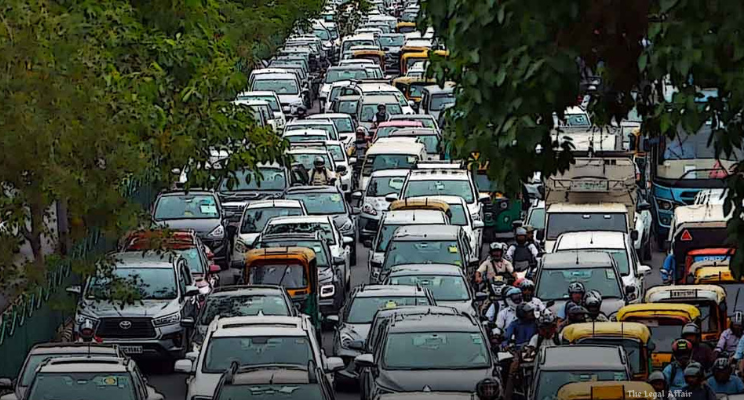
In a pivotal development, the Gujarat High Court has taken a proactive stance on traffic management issues in Ahmedabad, highlighting several critical areas for improvement. The court’s intervention stems from a suo motu Public Interest Litigation (PIL) concerning traffic congestion and the impact of infrastructure projects on the city’s green cover. A division bench led by Chief Justice Sunita Agarwal and Justice Pranav Trivedi has directed the state to address multiple facets of traffic management, emphasizing the need for better implementation of existing rules, expert planning, and the use of technology.
Arguments of Both Sides:
Arguments for the State:
During the recent hearing, the state’s counsel addressed several issues raised by the court, including the implementation of e-challans and infrastructure improvements. The state argued that both manual and electronic challans were in use but acknowledged the challenges in installing cameras across all locations. The counsel admitted the need to enhance the effectiveness of e-challans and assured the court that steps would be taken to address concerns regarding technological integration and infrastructure upgrades.
Arguments for the Petitioners and Amicus Curiae:
The petitioners, residents of Ahmedabad, initially raised concerns about the construction of a bridge affecting the green cover. Their concerns expanded to broader traffic management issues, prompting the court’s suo motu action. Advocate Pitamber Abichandani, appointed as amicus curiae, suggested several measures to address the traffic crisis. These included more rigorous deterrents for repeat offenders, such as increased insurance premiums or penalties for frequent violations. The amicus curiae emphasized the necessity of a comprehensive study on road safety and traffic management, and the establishment of an expert body to oversee these improvements.
Court’s Judgment:
The Gujarat High Court identified several key issues requiring immediate attention:
- E-Challans and Infrastructure: Chief Justice Agarwal expressed frustration with the current state of e-challans, stressing the need for phased implementation and technological upgrades to make enforcement more effective. The court emphasized that infrastructure improvements, including better enforcement of existing rules and the use of technology, are crucial for managing traffic congestion.
- Expert Planning and Manpower: The court directed the state to prepare a project report on e-challans and underscored the importance of establishing an expert body for comprehensive planning of road infrastructure. It also highlighted the need for a roadmap to address vacancies in the police force, ensuring adequate manpower for effective traffic management.
- Holistic Study and Implementation: The bench called for a holistic study of the city’s road infrastructure, including issues related to drainage, waterlogging, and accident-prone areas. It stressed that the immediate implementation of existing rules should be prioritized, followed by detailed planning and recruitment of experts.
- Technology and Enforcement: The court emphasized the use of technology as a critical component of traffic management. It noted that effective enforcement through e-challans and other technological measures could serve as a deterrent to traffic violations.
The High Court directed the state to submit a detailed report addressing these issues and scheduled the next hearing for September 6, 2024. This proactive approach aims to tackle the multifaceted traffic management challenges faced by Ahmedabad.
Conclusion:
The Gujarat High Court’s intervention marks a significant step towards overhauling traffic management in Ahmedabad. By addressing the implementation of existing rules, leveraging technology, and conducting a thorough study of road infrastructure, the court aims to alleviate traffic congestion and improve road safety. This comprehensive approach underscores the need for a balanced strategy involving expert planning, effective enforcement, and technological advancements to effectively tackle urban traffic challenges.