


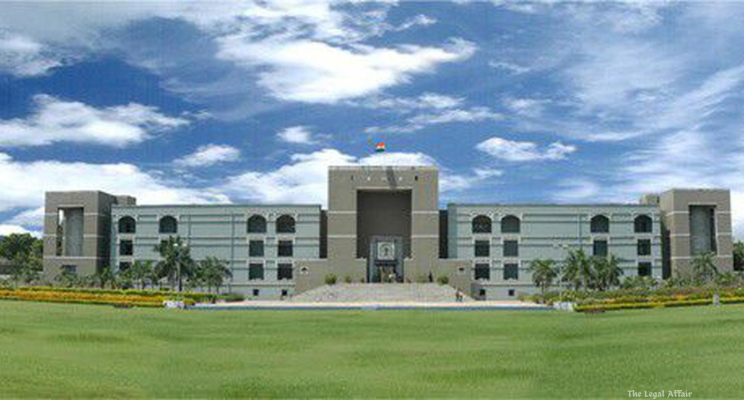
Introduction:
The case of Mancha Masjid through Trustee/Mutawalli v. State of Gujarat & Ors. (R/LPA/1130/2025 in R/SCA/12923/2025) arose before the Gujarat High Court in October 2025, concerning the proposed partial demolition of a centuries-old mosque situated at Saraspur in Ahmedabad. The appellant, the Mutawalli of the Mancha Masjid, approached the Court against the order of the municipal authorities which sought to demolish part of the mosque premises for widening a road leading to the Sabarmati railway station. The Mancha Masjid, believed to have been constructed around 400 years ago and registered as a Trust under the Bombay Public Trusts Act, 1950 as well as the Waqf Act, 1995, holds historical and religious significance for the local Muslim community. The appellant argued that the proposed demolition was unlawful, procedurally irregular, and a violation of both municipal and waqf laws, while the Ahmedabad Municipal Corporation (AMC) defended its decision on grounds of larger public interest, traffic regulation, and statutory compliance. The division bench of Justice A.S. Supehia and Justice L.S. Pirzada upheld the earlier decision of a single judge, who had dismissed the appellant’s writ petition, holding that the procedure under the Gujarat Provincial Municipal Corporations Act, 1949 (GPMC Act) had been properly followed and that the action was part of a wider road-widening project impacting multiple properties, including residential, commercial, and religious establishments.
Arguments Presented by the Appellant:
The counsel for the appellant Mutawalli argued that the Mancha Masjid has been recognized not only in revenue records but also enjoys registration as a religious trust under the Bombay Public Trusts Act and is monitored by the Waqf Board under the Waqf Act, 1995. The appellant emphasized that the mosque has historical significance and has been reconstructed and renovated several times, continuing to serve as an important place of worship for the Muslim community in Ahmedabad. The legal arguments rested on the interpretation of Section 212 of the Gujarat Provincial Municipal Corporations Act, which governs demolition for alignment with street lines. The appellant submitted that the estate officer issued a notice under Section 210, to which a detailed representation was filed highlighting objections. However, according to the appellant, the municipal corporation summarily rejected these objections without addressing them, and the Standing Committee took the decision to proceed without recording any cogent reasons. The appellant further argued that such an approach violated principles of natural justice, rendering the decision arbitrary. Additionally, it was argued that the demolition order failed to respect the special protections under Sections 51 and 91 of the Waqf Act, which require due consideration before interfering with waqf properties. It was contended that while road-widening may serve public interest, such projects must balance heritage preservation and religious freedom with developmental goals.
Arguments by the Respondents:
The Ahmedabad Municipal Corporation, represented by its counsel, submitted that the widening of the road was an essential public infrastructure measure, particularly because the road leads directly to the Sabarmati railway station, which is also a key junction for the Ahmedabad Metro Rail. Given the exponential increase in traffic, including emergency and public transport, failure to implement the road-widening scheme would cause severe hardship to the general public. The counsel submitted that the procedure prescribed under Sections 210 to 213 of the GPMC Act had been meticulously followed, including issuance of show-cause notices, consideration of objections, and obtaining approval from the Standing Committee. The AMC highlighted that the mosque was not being demolished in its entirety; only a portion of its boundary was to be set back in line with numerous other properties, including temples, residences, and commercial establishments. This demonstrated that the mosque was not singled out but was part of a uniform development measure. It was also argued that objections by the appellant were belated and came after public notices had already been issued. The AMC stressed that statutory powers must be exercised in a manner consistent with urban planning, and in this case, the balance tilted overwhelmingly in favor of public convenience and safety. The State also invoked the principle that individual inconvenience must yield to larger public interest when due process of law is followed.
Court’s Findings and Judgment:
The division bench carefully analyzed the contentions of both sides. At the outset, the Court noted that the single judge had already found compliance with the statutory procedure under the GPMC Act, 1949. Section 212, which governs pulling down of buildings for alignment with street lines, requires the Commissioner to act with the approval of the Standing Committee. The Court observed that in this case, the estate officer issued show-cause notices, objections were received, and the Standing Committee thereafter approved the decision. The Court rejected the argument that the Standing Committee’s decision lacked reasons, holding that the law does not require elaborate adjudication but only adherence to statutory procedure. It emphasized that the mosque was not being entirely demolished but only partially affected, along with many other properties, both religious and secular. The bench observed: “It is not in dispute that there are numerous properties, including residential areas, commercial establishments, and religious structures, included for demolition in the road widening. One of the properties is that of the appellant.” The Court also took note of the larger public interest involved in easing traffic congestion and ensuring smooth connectivity to Sabarmati station and the Ahmedabad Metro Rail. The contention that waqf properties enjoy special protection was not accepted as an absolute bar against lawful exercise of municipal powers, particularly where due process was followed and the action was aimed at public benefit. Ultimately, the Court found no illegality or infirmity in the single judge’s order and upheld the dismissal of the writ petition. Consequently, the appeal was dismissed, allowing the municipal authorities to proceed with the partial demolition as part of the road widening project.