


Introduction:
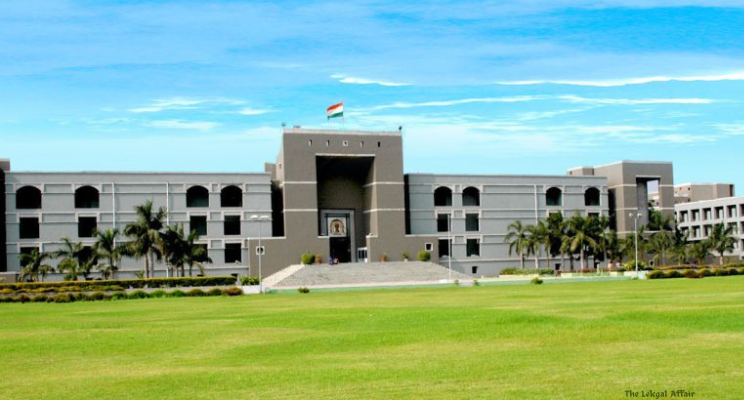
In the case titled Harsh Mahesh Tanna vs State of Gujarat & Anr., SCA No. 3289 of 2025, the Gujarat High Court, presided over by Justice Aniruddha P. Maye,e addressed a critical question concerning the authority of passport authorities to limit the validity of passports issued to accused persons with pending criminal proceedings. The petitioner, Harsh Mahesh Tanna, had approached the court contending that renewal of his passport for merely one year was arbitrary and in violation of his fundamental rights under Article 21, especially when the trial court had permitted such renewal. The High Court, reiterating principles laid down by the Bombay High Court and examining the scope of the 1993 GSR Notification under the Passport Rules, held that the passport authority lacks discretion in determining the period of renewal when a court has granted permission and directed the issuance of a passport for a full 10-year term.
Arguments of Both Sides:
The petitioner, Harsh Mahesh Tanna, represented by counsel, argued that he had been arraigned under Sections 4 and 5 of the Gujarat Gambling Act in a case pending for over six years, and that during this time, his passport expired. Despite an order from the Additional Chief Judicial Magistrate, San, dated 18.08.2023 and 20.11.2024, directing the passport’s renewal as per rules and applicable notifications, the Passport Authority renewed the passport only for one year. His counsel submitted that this limited renewal unjustifiably curtailed the petitioner’s right to travel, particularly impacting his business operations, which required frequent international travel for import and expansion. The petitioner relied on the judgment of the Bombay High Court in Narendra K. Ambwani v. Union of India (2014), which laid down specific directions to renew passports for 10 years by statutory provisions when court permissions exist. On the other hand, the respondent, represented by the Passport Authority, contended that the renewal was by the GSR Notification dated 25.08.1993, which stipulates that if the Trial Court’s order does not specify a duration, then the passport may only be renewed for a one-year term. They asserted that the authority had acted within the regulatory framework, especially since the court’s order lacked an explicit timeline.
Judgement:
In adjudicating the matter, Justice Aniruddha P. Mayee examined the 1993 GSR Notification and concluded that while it does impose a one-year validity where the trial court’s permission is silent on duration, the authority erred in interpreting the judicial directive mechanically rather than in spirit. The Court emphasised that the passport authority cannot assume or substitute the power of the Trial Court in determining the scope of travel and validity of travel documents of an accused. In furtherance of constitutional guarantees, particularly the right to livelihood and movement, and given the Bombay High Court’s binding interpretation in Ambwani, the Gujarat High Court unequivocally held that the passport must be renewed for 10 years. At the same time, the Court reiterated that for any actual travel, the petitioner must still seek permission from the Trial Court, which has discretion to impose suitable conditions in light of ongoing criminal proceedings. The Court directed the respondent Passport Authority to renew the passport for 10 years and process any further application for renewal within four weeks from the date of such application.