


Introduction:
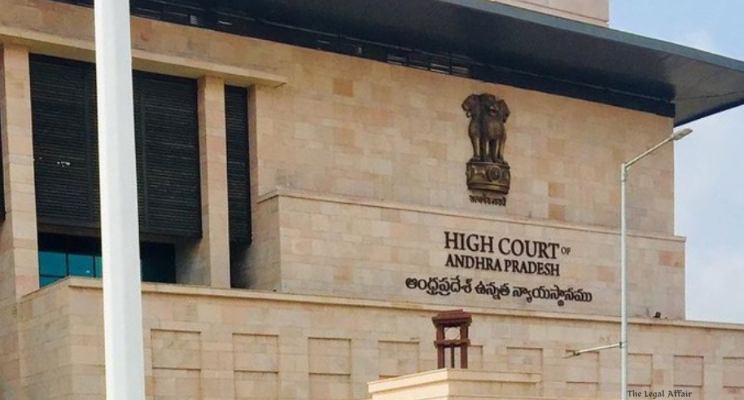
In Vikram Book Links Pvt. Ltd. v. State of Andhra Pradesh (W.P. No. 5435 of 2025), Justice Gannamaneni Ramakrishna Prasad, presiding over the Andhra Pradesh High Court, dismissed a writ petition challenging the State’s decision to raise the minimum annual turnover requirement from ₹5 crore to ₹10 crore in a tender for printing and distributing school textbooks/workbooks for private schools for Academic Years 2025–26 and 2026–27. The petitioner, Vikram Book Links, argued that the change was arbitrary and discriminatory, scheduled without a pre-bid meeting, and violated the Andhra Pradesh Financial Code, GFR 2017, and constitutional guarantees under Articles 14, 19(1)(g), and 21. The State defended the hike as a necessary step to ensure quality performance and prevent defaults, citing prior experience and the right to determine tender conditions. The High Court upheld the amendment, emphasizing that bidders cannot dictate terms to the authority.
Petitioner’s Arguments:
- Lack of Pre-bid Consultation: The petitioner contended that increasing the threshold without conducting a pre-bid meeting violated principles of transparency and procedural fairness.
- Arbitrary & Tailor-made: The argument was that the ₹10 crore requirement disproportionately excluded smaller firms, especially Vikram Book Links, and appeared tailored to favor a competitor, M/s Vyjayanti Printers.
- Constitutional & Statutory Breaches: Allegations included violations of the Andhra Pradesh Financial Code, General Financial Rules 2017, and Articles 14 (equality), 19(1)(g) (trade), and 21 (due process).
- Contradicted Justification: The State’s assertion of royalty-payment defaults was disputed, as no empanelled firm had defaulted during 2023–25.
- MSME Exclusion: The petitioner maintained that as a small-scale industry with NSIC certification, they should have been exempted or supported, given the State’s stated goals of promoting micro and small enterprises.
Respondent’s Arguments:
- Authority to Set Conditions: The State asserted its absolute prerogative to set or amend tender terms in furtherance of efficient procurement and public interest .
- Ensuring Reliability: The higher turnover requirement aimed to prevent delays or defaults in textbook supply and royalty payments, drawing on past execution issues.
- Minimal Exclusions: Even after increasing the threshold, 8 of 13 bidders still qualified, demonstrating that the change was neither unreasonable nor overreaching.
- Uniform Application: The turnover requirement applied equally to all bidders, with no discriminatory implementation.
- Industry Awareness: The State contended that paper costs reductions, as highlighted by the petitioner, were publicly known and did not warrant preferential treatment.
- NSIC Certifications: The presence of NSIC registration among bidders did not confer immunity from turnover requirements, which applied to all.
High Court’s Reasoning & Judgment:
Freedom to Amend Tender Terms:
The bench firmly held that public authorities have the inherent right to alter tender conditions at any point—and bidders cannot dictate procurement terms, drawing an analogy that “Monkeys cannot decide the affairs of the forest”.
Threshold Is Reasonable and Rational:
Observing that 8 of 13 bidders qualified under the new rule, the Court ruled the ₹10 crore turnover was neither arbitrary nor discriminatory .
No Violation of Principles or Rules:
The Court found no breach of the Financial Code, GFR, or constitutional provisions. The enhanced qualification criteria fell within statutory discretion and market practices.
No Preferential Treatment:
Despite allegations of serving Vyjayanti Printers’ interests, the Court concluded there was no evidence the change favored any specific bidder—qualifications were assessed evenly across the board.
Pre-bid Process Not Mandatory:
While pre-bid meetings are often good practice, the Court held they were not legally required—the absence thereof did not invalidate the corrigendum.
Paper Price Concerns and Whistle-blowing:
The Court noted that while the petitioner flagged reduced paper prices, the State was already aware of market conditions. The Court declined to grant any special concession, emphasizing that such unilaterally provided information does not entitle a bidder to benefits.
Outcome:
The writ petition was dismissed. The ₹10 crore turnover threshold stood, and the amended tender terms remained valid.
Broader Implications:
- Procurement Autonomy: This ruling reinforces governmental latitude in procurement, endorsing their freedom to modify qualifying criteria to promote efficiency and accountability.
- Equal Footing Principle: Uniform modifications benefitting a majority of bidders do not breach constitutional or policy strictures—even if they affect smaller enterprises.
- Procurement Strategy: The verdict illustrates that while transparency is vital, procedural norms like pre-bid meetings are practices—not hard mandates—unless lawfully codified.
- MSME Limitations: NSIC or MSME certifications do not exempt firms from standard eligibility criteria and underscore the need for diversified qualification pathways in public tenders.