


Introduction:
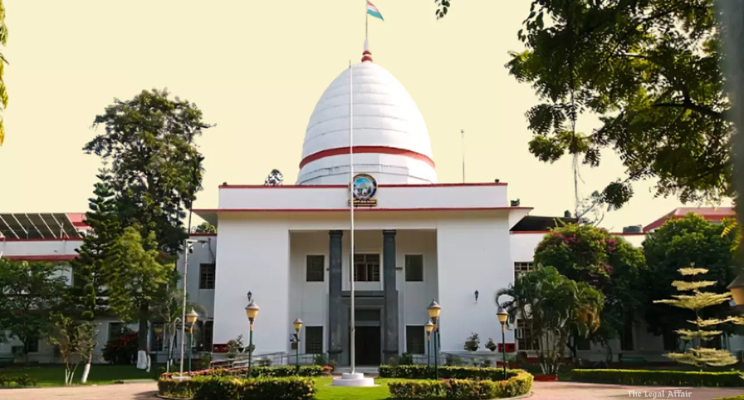
In Basanta Barman v. State of Assam & Ors. [Writ Appeal No. 284/2025], a Division Bench of the Gauhati High Court comprising Justice Michael Zothankhuma and Justice Anjan Moni Kalita reaffirmed the principle that an employee appointed on an honorary basis cannot subsequently claim arrear salary for the period prior to regularization when the terms of appointment were accepted without protest. The Court held that once an employee voluntarily accepts an honorary appointment and serves under those terms for years without challenging the appointment order, they are estopped from seeking retrospective monetary benefits unless the regularization order explicitly provides for it. The Bench ruled that the regularization of service and pay benefits would take effect only prospectively from the date of the regularization order, and that the employee’s claim for arrear salary for over two decades of honorary service was legally untenable.
Arguments of the Appellant:
The appellant, a Subject Teacher of Logic and Philosophy at Barama Higher Secondary School, Barama, argued that he had rendered continuous and valuable service to the institution for over twenty years since his appointment on 12 July 2000. Despite his long and dedicated contribution to the school’s academic functioning, he was not paid any salary during this period, having been designated as an “honorary teacher.” The appellant contended that such prolonged unpaid service was contrary to the principles of fairness, equity, and natural justice. He maintained that once his services were regularized by the authorities through an order dated 31 March 2022, he became entitled to arrear salary for the entire period of his prior service, as he had continuously discharged the same duties and responsibilities as regular teachers who were drawing salaries and benefits.
The appellant’s counsel, Advocates Sehanaz Laskar and S. Abdullah, argued that the learned Single Judge erred in dismissing his writ petition (decided on 3 August 2023) on technical grounds. They contended that the judgment failed to appreciate that the appellant’s long honorary service had directly contributed to the functioning of the school, and denying him arrears would amount to unjust enrichment of the State and the institution at his expense. The appellant further asserted that the doctrine of quantum meruit should apply to his case, meaning that one who performs valuable work for another must be compensated reasonably for it. He also relied on equitable principles, arguing that while his appointment might have been designated “honorary,” in substance, he had performed regular teaching duties for which he was entitled to remuneration.
The appellant further submitted that the mere use of the term “honorary” in the appointment order could not deprive him of his right to fair wages for actual work performed, especially when the State had benefitted from his service for over two decades. It was argued that the denial of salary violated Article 23 of the Constitution, which prohibits forced labour, and Article 14, which guarantees equality before the law. According to the appellant, once his regularization was effected, the State had acknowledged the legitimacy and necessity of his appointment, and therefore the period of honorary service should have been counted for arrears and other benefits such as seniority and pension. He requested the Division Bench to set aside the Single Judge’s decision and direct the State to pay arrear salary from the date of his initial appointment in 2000 till the date of regularization in 2022, with applicable interest.
Arguments of the Respondents:
The respondents, represented by the Standing Counsel for the Bodoland Territorial Council (BTC) and the Finance Department, opposed the appeal, contending that the appellant’s claim was contrary to the explicit terms of his appointment and the regularization order. They submitted that the appellant was appointed purely on an honorary basis by the Principal of Barama Higher Secondary School through an order dated 12 July 2000, issued in pursuance of the Governing Body’s Resolution No. 6 dated 3 March 2000. The appointment order clearly stated that the post carried no salary or monetary benefits and was purely voluntary. The respondents argued that the appellant had knowingly accepted those terms and served under them without raising any objection or challenge for more than twenty years.
The respondents further contended that the regularization of the appellant’s services by order dated 31 March 2022 was an independent administrative act based on the availability of a sanctioned post—specifically, a conversion of the post of Post Graduate Teacher (PGT) in Assamese to PGT in Logic and Philosophy. The order expressly stated that the regularization, along with pay scale, grade pay, and allowances, would take effect prospectively from the date of issuance of the order. Hence, it was argued that the appellant could not retrospectively claim salary for the period prior to regularization when the administrative order itself confined benefits to the future.
It was also contended that the appellant’s claim for arrears was untenable in law, as he had never challenged either the appointment order of 2000 or the regularization order of 2022. Both orders had attained finality. Having accepted the terms of honorary service and the prospective regularization without demur, the appellant was estopped by conduct from seeking retrospective monetary relief. The respondents emphasized that the writ jurisdiction of the High Court under Article 226 could not be invoked to rewrite the contractual or administrative terms of appointment that the appellant had freely accepted.
In conclusion, the respondents maintained that the Single Judge had correctly dismissed the writ petition, as the appellant’s service prior to 31 March 2022 did not create any enforceable right to salary. The appeal, they argued, was devoid of merit and liable to be dismissed with costs.
Court’s Observations and Findings:
After hearing both sides and examining the record, the Division Bench observed that the facts were undisputed: the appellant was appointed as a Subject Teacher on an honorary basis in July 2000; he accepted and continued in that position for over two decades without challenging the appointment conditions; and his services were regularized only in March 2022, with benefits explicitly made effective prospectively. The Court noted that the appellant’s entire claim for arrear salary hinged on the assumption that his long honorary service created an implied right to remuneration, an argument that the Bench categorically rejected.
The Court held that when an individual accepts an honorary appointment with full knowledge that the position carries no salary or allowances, they are bound by those terms. Any subsequent claim for arrears would effectively amount to rewriting the conditions of appointment, which is impermissible. The Bench stressed that legal rights must emanate from the terms of the appointment and applicable service rules—not from sympathy or equitable considerations alone. Since the appellant had voluntarily served under an honorary appointment and had never challenged the appointment order, he could not now seek to alter its fundamental nature retroactively.
The Bench further held that the regularization order dated 31 March 2022 had clearly provided that the regularization and all attendant financial benefits would be effective only prospectively. The appellant had not challenged this order either, and therefore, its terms had become final and binding. In such a situation, the High Court could not grant arrears contrary to the express stipulation of prospective effect. The Court cited established precedents holding that regularization does not automatically confer retrospective benefits unless explicitly provided by the government order or statute.
Rejecting the appellant’s plea for arrears based on equity and long service, the Court observed that judicial sympathy cannot override statutory and administrative constraints. The law requires employees to work under known terms and conditions; hence, once those are accepted, they cannot later be questioned after decades of acquiescence. The Court also noted that the principle of “no work, no pay” would not apply here since the appellant did work; however, his work was rendered on a voluntary basis under the agreed condition of non-remuneration. Therefore, the claim for arrears was legally unsustainable.
Importantly, the Bench underscored that regularization is not a right but a policy decision made by the employer subject to administrative considerations. Once the employer grants regularization prospectively, it cannot be converted into a retrospective benefit merely because the employee had served earlier in an honorary capacity. The appellant’s failure to challenge either of the two key orders—the appointment order of 12 July 2000 or the regularization order of 31 March 2022—proved fatal to his case.
The Court concluded that the Single Judge’s reasoning was sound and required no interference. The appellant’s acceptance of honorary service and subsequent acquiescence to the prospective regularization precluded any claim for arrear salary for the period between 2000 and 2022. Consequently, the Division Bench dismissed the appeal, affirming that there was no illegality or perversity in the Single Judge’s decision.
Court’s Judgment:
The Division Bench of the Gauhati High Court dismissed the appeal, upholding the judgment of the Single Judge dated 3 August 2023. It held that the appellant was not entitled to arrear salary for the period of honorary service preceding the regularization of his post. The Court reiterated that the appellant’s appointment order of 12 July 2000 and regularization order of 31 March 2022 had both attained finality, and since the latter expressly provided for prospective effect, no retrospective financial benefits could be claimed. The Court further held that an employee who has accepted and worked under the conditions of honorary service cannot later retract and demand salary unless those conditions are first legally challenged and set aside. The Bench concluded that there were no grounds for interference, and accordingly, the appeal stood dismissed.