


Introduction:
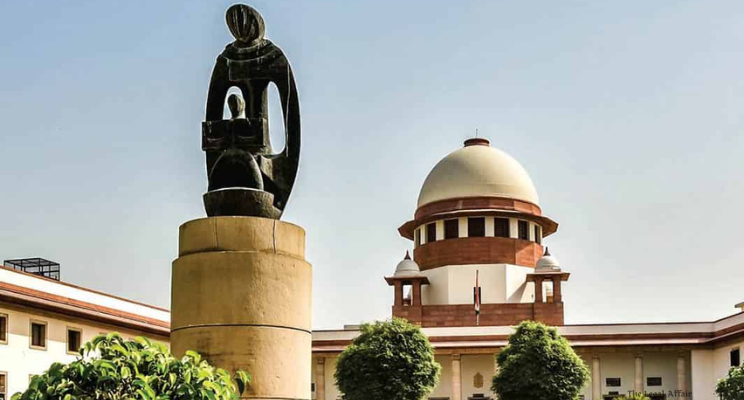
The Supreme Court of India recently adjudicated the case Mahesh Singh Banzara v. State of Madhya Pradesh [2025 LiveLaw (SC) 28], highlighting the interplay between the statutory right to appeal under Section 374 of the Criminal Procedure Code (Cr.P.C.) and the expansive interpretation of Article 21 of the Constitution, which guarantees the right to life and personal liberty. The appeal arose from the Madhya Pradesh High Court’s dismissal of the appellant’s challenge to his conviction due to a delay of 1637 days. The High Court interpreted the appellant’s reasons for the delay—financial constraints and seeking livelihood out of station—as tantamount to absconding. Aggrieved by this decision, the appellant approached the Supreme Court, which underscored that an appeal affecting personal liberty constitutes a fundamental right under Article 21 and emphasized the necessity of substantively evaluating reasons for delay before dismissing such appeals.
Arguments of Both Sides:
The appellant, Mahesh Singh Banzara, argued through counsel that his delay in filing the appeal was neither deliberate nor indicative of disregard for the judicial process. He cited a lack of monetary resources and the compulsion to seek livelihood in distant locations as legitimate reasons for the delay. Accompanying the appeal was a delay condonation application detailing these circumstances. The appellant contended that his inability to access the legal system promptly should not result in the forfeiture of his statutory right to appeal, particularly when it pertains to his liberty. He further emphasized that dismissing his appeal solely on technical grounds of delay, without substantive consideration, violated his fundamental rights under Article 21.
Conversely, the respondent State of Madhya Pradesh defended the High Court’s decision, asserting that the appellant’s prolonged delay indicated a lack of seriousness and respect for the judicial process. The State argued that by being absent and failing to appeal within the stipulated period, the appellant had, in effect, absconded after the trial court’s judgment. This, the State contended, justified the High Court’s refusal to condone the delay and validated the dismissal of the appeal.
Court’s Judgment:
The Supreme Court, comprising a bench of Justice BV Nagarathna and Justice N Kotiswar Singh, disagreed with the High Court’s approach. The bench observed that the right to appeal under Section 374 of the Cr.P.C. is a statutory right and an extension of the fundamental right to life and liberty guaranteed under Article 21. The Court referred to its precedents in Dilip S. Dahanukar v. Kotak Mahindra Co. Ltd. (2007) 6 SCC 528 and Rajendra v. State of Rajasthan (1982) 3 SCC 382, affirming that an appeal against a conviction directly impacts an individual’s liberty and, therefore, requires careful judicial scrutiny. The bench criticized the High Court for dismissing the appeal solely on technical grounds of delay without examining the substantive reasons provided by the appellant.
The Supreme Court emphasized that financial hardships and livelihood constraints are legitimate and valid explanations for the delay, especially when raised by individuals from disadvantaged backgrounds. The Court clarified that interpreting such reasons as absconding was erroneous and unjustified. It further reiterated that procedural technicalities should not overshadow substantive justice, particularly in criminal matters where personal liberty is at stake. The bench asserted that the judiciary must adopt a liberal approach while considering delay condonation applications in cases involving convictions, to uphold the principles of fairness and equity.
The Supreme Court set aside the High Court’s order and condoned the 1637-day delay, restoring the appellant’s appeal for reconsideration. The bench directed the High Court to hear and decide the criminal appeal on its merits in accordance with the law. By doing so, the Court reinforced the paramount importance of protecting an individual’s liberty through robust judicial processes and emphasized that procedural lapses should not deny substantive justice.