


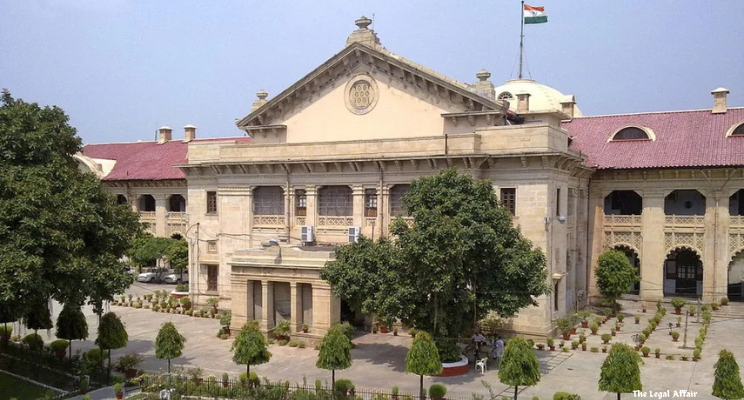
Introduction:
In the case titled Mayank Chaudhary v. State of UP and 3 Others [Special Appeal Defective No. 434 of 2025], the Allahabad High Court, in a significant judgment rendered by a Division Bench comprising Justice Manoj Kumar Gupta and Justice Ram Manohar Narayan Mishra, reaffirmed the finality of medical assessments conducted under the Uttar Pradesh Police Constable and Head Constable Service Rules, 2015. The Court held that once a candidate’s appeal before the Divisional Medical Board is dismissed, there exists no legal provision for a subsequent re-medical examination. The ruling was passed in response to a writ appeal filed by a candidate who had cleared the preliminary stages of the recruitment process for the post of constable in the civil police, including the written and physical tests, but was later declared medically unfit during the mandatory medical examination. His appeal before the Divisional Medical Board also ended in rejection. Thereafter, he approached the High Court invoking Article 226 of the Constitution of India, challenging the denial of a further re-examination on medical grounds. The writ petition was dismissed, prompting the candidate to file a special appeal which the High Court also ultimately dismissed, reiterating that Rule 15(6)(e) of the Service Rules makes the Divisional Medical Board’s decision final and binding, precluding any further re-medical reviews.
Arguments from the Petitioner’s Side:
The petitioner, an aspiring candidate for recruitment to the post of constable in Uttar Pradesh’s civil police cadre, approached the High Court aggrieved by the denial of a re-medical examination after having been declared unfit during the official medical assessment process. He contended that he had successfully cleared the preliminary written test as well as the physical efficiency and measurement examinations, indicating his fitness and commitment for the position. Upon qualifying the main written examination, he underwent a medical test, which surprisingly declared him unfit for reasons that were not elaborately conveyed to him. The petitioner subsequently exercised his right under the service rules and filed an appeal to the Divisional Medical Board. However, his appeal was also rejected, reaffirming his medical unfitness. Undeterred, the petitioner moved another application seeking a fresh medical examination by a different or higher medical authority, arguing that the initial assessment and appeal process had significant procedural gaps or misdiagnoses that adversely impacted his candidature. His plea for re-medical examination was not entertained by the authorities, prompting him to file a writ petition under Article 226 of the Constitution. He argued that the recruitment process must adhere not only to the letter of the law but also to principles of natural justice, including fair opportunity, transparency, and the right to contest potentially erroneous assessments. Counsel for the petitioner further submitted that the denial of a re-medical examination effectively closed the doors of employment on the petitioner without affording him a complete and impartial re-evaluation. It was argued that the principles of judicial review should be broad enough to encompass relief against unjust medical findings in government recruitment, especially where such findings are not subjected to any higher-level verification beyond the Divisional Medical Board. It was emphasized that Rule 15(6)(e) of the 2015 Rules, though providing finality to the Divisional Medical Board’s decision, should not be construed in a rigid or mechanical manner when significant rights like employment are at stake.
Arguments from the Respondents’ Side:
On behalf of the State of Uttar Pradesh and the police recruitment board, it was argued that the medical examination of candidates and the appeals therefrom are governed strictly by the provisions laid down under the Uttar Pradesh Police Constable and Head Constable Service Rules, 2015. The respondents emphasized that Rule 15(6)(e) of the said Rules explicitly states that the decision rendered by the Divisional Medical Board on appeal shall be final and binding and that no further appeal or application will be entertained thereafter. This clause ensures finality in the recruitment process and prevents an unending loop of re-medical assessments which could paralyze the timely appointment of candidates and cause unjustified delays in filling up vital positions in the police force. The respondents submitted that the entire recruitment process is designed with sufficient checks and balances and includes an opportunity for medical appeal, which the petitioner duly exercised but failed. It was contended that permitting another round of re-medical examinations without a statutory basis would lead to administrative chaos, unpredictability, and delay the selection process indefinitely. The State further submitted that the High Court in its writ jurisdiction cannot direct the authorities to act contrary to statutory rules or to read into them provisions that do not exist. Additionally, the respondents contended that the petitioner had not demonstrated any illegality, arbitrariness, or mala fide intent in the conduct of the medical board or the appellate Divisional Medical Board to warrant judicial interference. The respondents thus prayed for the dismissal of the appeal and urged the Court to uphold the sanctity and finality of the existing rules governing recruitment and medical fitness.
Court’s Judgment:
The Division Bench of the Allahabad High Court, after considering the contentions raised by both sides and perusing the relevant statutory provisions, dismissed the special appeal filed by the petitioner. The Court noted that under Rule 15(6) of the Uttar Pradesh Police Constable and Head Constable Service Rules, 2015, a candidate is subjected to a medical examination after clearing the written and physical tests. Sub-rule (e) specifically provides that in the event of an appeal against the medical finding, the decision of the Divisional Medical Board shall be final and binding, and no further appeal or review would lie against it. The Court categorically held that there is no provision in the Service Rules for a second re-medical examination after the appeal has been disposed of by the Divisional Medical Board. Addressing the petitioner’s argument based on principles of natural justice, the Court acknowledged that while administrative processes must be fair and transparent, the rule-making authority had, through Rule 15(6)(e), consciously inserted a provision that ensures conclusiveness of medical findings at the appellate stage to bring closure and finality to the selection process. The Bench warned that if a re-medical examination were to be permitted beyond the statutory framework, it would create a legal precedent enabling endless applications for re-evaluation, thereby frustrating the entire selection scheme and delaying recruitment. The Court observed, “Under the Service Rules, no doubt, a candidate is made to undergo medical examination by Medical Board after he has cleared the written examination, however, there is no provision for re-examination after the appeal before the Divisional Medical Board was also dismissed. If that is permitted, the process would be unending and selection would never attain finality.” The judges further clarified that the absence of a provision for second medical reassessment after the appellate medical board’s decision was deliberate and integral to the discipline and finality of the recruitment scheme. The Court thus affirmed the earlier judgment of the Single Judge dismissing the petitioner’s writ petition and held that the authorities had acted in accordance with the Rules. Emphasizing the limited scope of judicial review in such matters, the Court concluded that it cannot create rights or procedures where the statutory framework is silent, particularly in a regimented recruitment process such as that of the police services. Consequently, the special appeal was dismissed.