


Introduction:
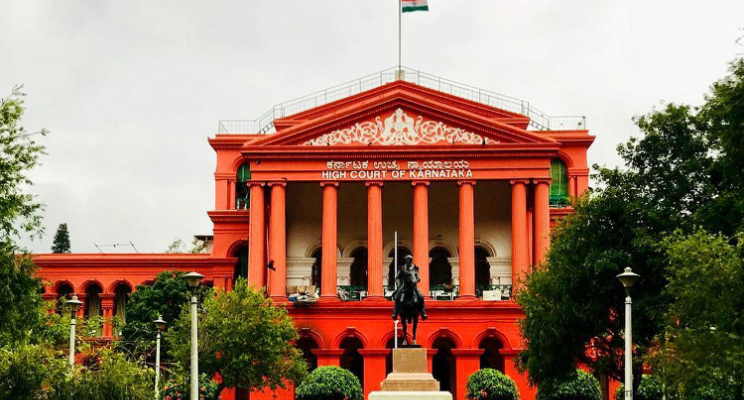
In Charan H.V. v. State of Karnataka & Anr. [Criminal Appeal No. 2056 of 2025; 2025 LiveLaw (Kar) 426], the Karnataka High Court, speaking through Justice G. Basavaraja, delivered a significant ruling reaffirming the primacy of procedural safeguards and personal liberty even in prosecutions under stringent statutes like the Scheduled Castes and the Scheduled Tribes (Prevention of Atrocities) Act, 1989. The case arose from the arrest of the appellant on September 15, 2025, for alleged offences under Sections 69, 89, and 351(2) of the Bharatiya Nyaya Sanhita, 2023 (BNSS) and Section 3(2)(v) of the SC/ST (POA) Act. The accused was remanded to judicial custody the following day until September 30, 2025. However, on the remand expiry date, the accused was not produced before the Trial Court, either physically or through video conferencing, nor was any application filed by the Investigating Officer seeking extension of judicial custody. Despite this, the Trial Court mechanically adjourned the matter to October 10, 2025, without recording reasons. Challenging the legality of his continued detention, the accused approached the High Court seeking bail, contending that non-production before the court vitiated the remand itself. The High Court, relying upon constitutional principles and binding Supreme Court precedent, held that such detention was unlawful and granted bail, underscoring that statutory rigor cannot eclipse mandatory procedural compliance.
Arguments on Behalf of the Accused:
The petitioner, represented by Advocates Nikhil Sai M. and Yuktha N., advanced a forceful challenge to the legality of the continued detention. It was contended that production of the accused before the court at the time of seeking remand or its extension is mandatory, and any failure in this regard strikes at the root of lawful custody. Strong reliance was placed on the judgment of the Supreme Court in Jigar Alias Jimmy Pravinchandra Adatiya v. State of Gujarat [(2023) 6 SCC 484], wherein it was categorically held that no Magistrate shall authorize detention unless the accused is produced before the court in person, save and except in situations expressly recognized by law. The petitioner argued that the newly enacted Section 187(4) of the BNSS, 2023, which governs remand procedures, mandates strict compliance, and the Investigating Officer’s failure to produce the accused or even to file a remand application rendered the continued custody illegal and unconstitutional. It was further submitted that the Trial Court compounded the illegality by adjourning the matter without recording reasons, thereby authorizing detention by default rather than by judicial application of mind. Additionally, the petitioner emphasized that the alleged offences were not punishable with death or imprisonment for life, and that the accused was no longer required for custodial interrogation, making continued incarceration wholly unjustified. On these cumulative grounds, it was urged that the accused had acquired an indefeasible right to bail, independent of the merits of the allegations.
Arguments on Behalf of the Prosecution:
Opposing the appeal, Additional Special Public Prosecutor Asma Kauser, appearing for the State, argued that the allegations disclosed prima facie involvement of the accused in serious offences, including those attracting the rigours of the SC/ST (Prevention of Atrocities) Act, which is a special statute enacted to protect vulnerable communities. The prosecution contended that at this stage, release on bail could result in tampering with evidence or intimidation of prosecution witnesses, particularly given the social dynamics often present in atrocity cases. It was argued that procedural lapses, if any, should not automatically result in bail when the allegations themselves are grave and supported by material on record. The State urged the Court to adopt a cautious approach, stressing that public interest and the rights of victims must also be balanced against the accused’s liberty. The prosecution thus prayed for dismissal of the bail plea, asserting that the seriousness of the offence and the potential impact on the investigation warranted continued custody.
Court’s Analysis and Reasoning:
Justice G. Basavaraja undertook a meticulous examination of the record and the applicable legal framework. The Court first noted the undisputed factual position that on September 30, 2025, the date on which the judicial remand expired, the accused was not produced before the Trial Court, either physically or through video conferencing. Equally significant was the fact that the Investigating Officer had not filed any application seeking extension of remand, nor placed on record any material demonstrating compliance with the mandatory requirements of Section 187(4) of the BNSS, 2023. The High Court found it troubling that, despite these deficiencies, the Trial Court merely adjourned the matter to a later date without assigning any reasons, thereby allowing the accused to remain in custody without judicial authorization. Relying squarely on the Supreme Court’s decision in Jigar Alias Jimmy Pravinchandra Adatiya, the Court reiterated that production of the accused is a sine qua non for a valid remand, and that custody without such production is illegal. The Court emphasized that procedural safeguards governing remand are not empty formalities but are integral to the protection of personal liberty under Article 21 of the Constitution. The Bench further observed that the offences alleged, though serious, were not punishable with death or life imprisonment, and that the accused was not required for further investigation, thereby weakening the prosecution’s plea for continued detention. Importantly, the Court clarified that while the SC/ST (POA) Act is a stringent statute, its application does not dilute fundamental procedural protections, and any deprivation of liberty must strictly conform to law.
Court’s Judgment:
On an overall assessment, the Karnataka High Court held that the continued detention of the accused after September 30, 2025, was illegal, as it was not supported by a valid remand order passed upon production of the accused. The Court categorically ruled that the failure of the Investigating Officer to comply with Section 187(4) of the BNSS, 2023, coupled with the Trial Court’s non-speaking adjournment order, entitled the accused to bail. Observing that the accused was not required for further investigation and that the alleged offences did not carry the punishment of death or life imprisonment, the Court allowed the criminal appeal and granted bail, subject to appropriate conditions. In doing so, the Court reinforced the principle that liberty cannot be sacrificed at the altar of administrative convenience or prosecutorial lapse, and that judicial oversight over remand must be real, reasoned, and in strict compliance with statutory mandates.