


Introduction:
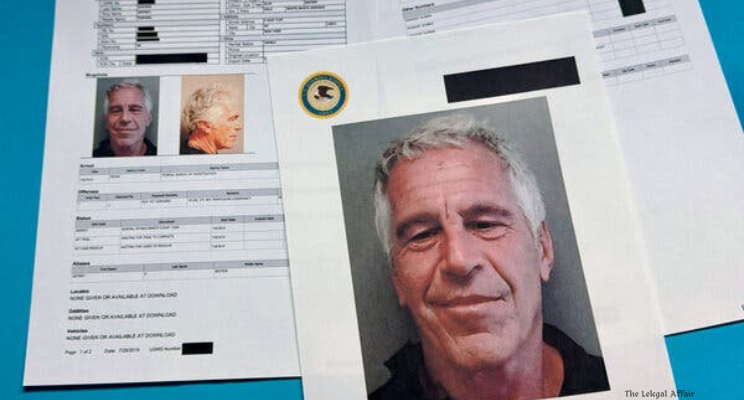
In Kunal Shukla v. Himayani Puri & Ors., the Delhi High Court is seized of a significant constitutional and legal controversy that sits at the intersection of defamation law, freedom of speech, and the evolving role of digital platforms in shaping public discourse. The case arises from an appeal filed by Kunal Shukla, a Raipur-based social activist, challenging an ad-interim injunction granted by a learned Single Judge of the Delhi High Court. The impugned order directed Shukla, along with several other individuals and online platforms, to take down social media posts that allegedly linked Himayani Puri, daughter of a Union Cabinet Minister, to the disgraced American financier Jeffrey Epstein, a convicted sex offender. The injunction was granted at the threshold stage of the proceedings, without issuing prior notice to Shukla or affording him an opportunity to present his case. Aggrieved by what he terms a “blanket pre-trial gag order,” Shukla has approached a Division Bench comprising Justice Vivek Chaudhary and Justice Renu Bhatnagar, seeking to set aside the order on grounds of violation of his fundamental right to freedom of speech under Article 19(1)(a) of the Constitution. The matter raises profound questions about the permissible limits of judicial intervention in defamation cases, particularly in the context of journalistic and investigative expression, and whether courts can impose sweeping restrictions on speech at a preliminary stage without a detailed examination of facts and defenses.
Arguments:
The case presents a complex legal debate between the right to reputation and the right to free expression, with both sides advancing compelling arguments rooted in constitutional principles and established jurisprudence.
Kunal Shukla, through his counsel, has mounted a robust challenge to the injunction order, characterizing it as a disproportionate and unconstitutional restriction on free speech. At the heart of his argument is the contention that the Single Judge’s order amounts to a prior restraint on expression, which is generally disfavored in constitutional law.
Shukla argues that his posts were not defamatory but were in the nature of interrogative content based on publicly available information. He asserts that the material relied upon in his publications included documents such as filings with the U.S. Securities and Exchange Commission (SEC), international reports, and other officially released records. According to him, these sources are credible and form a legitimate basis for raising questions of public interest.
A key plank of his argument is that the injunction was granted ex parte, without notice or hearing, thereby violating the principles of natural justice. He contends that the learned Single Judge failed to properly evaluate the three essential elements required for granting an interim injunction—prima facie case, balance of convenience, and irreparable harm. Instead, these elements were allegedly recorded in a mechanical manner, without any substantive analysis of the facts or the legal standards applicable to defamation cases.
Shukla further submits that the law is well-settled that pre-trial injunctions in defamation matters should be granted sparingly, particularly when the defendant raises a plausible defense of truth, fair comment, or justification. He argues that his content falls squarely within these defenses, as it is based on verifiable public records and pertains to matters of public importance.
Another significant argument advanced by Shukla is that the impugned order has a chilling effect on free speech and investigative journalism. By imposing a blanket takedown of content at the threshold stage, the order discourages individuals from engaging in critical or investigative discourse, especially when it involves persons connected to public office.
He also challenges the proportionality of the relief granted, arguing that the court failed to consider less restrictive alternatives. Instead of a blanket takedown, the court could have directed the modification or clarification of specific content, thereby balancing the competing interests of reputation and free speech.
In sum, Shukla’s case is that the injunction order is not only procedurally flawed but also substantively unconstitutional, as it unduly restricts his fundamental right to freedom of expression.
On the other hand, Himayani Puri, the plaintiff in the original suit, has defended the injunction order as a necessary measure to protect her reputation from a coordinated and malicious online campaign.
She contends that the content circulated by Shukla and others falsely links her to Jeffrey Epstein and his criminal activities, thereby causing severe and irreparable harm to her reputation. According to her, these allegations are not only baseless but also highly damaging, given the nature of Epstein’s crimes.
The respondent argues that the widespread circulation of such content on social media platforms has amplified its impact, making it accessible to a vast audience and resulting in sustained reputational injury. She submits that in the digital age, defamatory content can spread rapidly and cause harm that is difficult to undo, thereby justifying the need for immediate judicial intervention.
It is further contended that the injunction order was passed after due consideration of the material placed on record, and that the court was satisfied that a prima facie case of defamation was made out. The balance of convenience, according to the respondent, lies in preventing further dissemination of the content, as the harm caused to her reputation outweighs any inconvenience to the defendants.
The respondent also argues that the defense of truth or fair comment cannot be accepted at face value without a detailed examination of evidence, which can only take place during trial. Therefore, the court was justified in granting interim relief to prevent further damage until the matter is fully adjudicated.
Additionally, she emphasizes that the right to freedom of speech is not absolute and is subject to reasonable restrictions, including those relating to defamation. She submits that the impugned order falls within the permissible limits of such restrictions and is necessary to uphold her right to dignity and reputation under Article 21 of the Constitution.
Judgment:
At the present stage, the Division Bench of the Delhi High Court has not yet delivered a final judgment but is scheduled to hear the matter. However, the issues raised in the appeal provide a clear framework for the Court’s eventual determination.
The core question before the Court is whether the Single Judge’s order granting a blanket ex parte injunction meets the legal standards governing such relief in defamation cases. This involves an examination of whether the order strikes an appropriate balance between the competing rights of free speech and reputation.
The Court is likely to consider the established principle that prior restraint on speech is an exceptional measure and must be justified by compelling reasons. In defamation cases, courts have generally been cautious in granting pre-trial injunctions, particularly when the defendant raises a credible defense.
Another key aspect that the Court may examine is the procedural fairness of the impugned order. The absence of notice and hearing before granting the injunction raises concerns about adherence to natural justice, which is a fundamental component of judicial decision-making.
The Court may also assess whether the Single Judge adequately applied the tests of prima facie case, balance of convenience, and irreparable harm. A detailed and reasoned analysis of these factors is essential to justify the grant of interim relief, especially when it involves restricting fundamental rights.
The issue of proportionality is also likely to be central to the Court’s deliberations. The blanket nature of the takedown order may be scrutinized to determine whether it is excessive or whether a more tailored approach could have achieved the same objective with less impact on free speech.
Furthermore, the Court may consider the broader implications of the case for digital expression and investigative journalism. In an era where information is widely disseminated through online platforms, the balance between preventing harm and preserving free discourse becomes increasingly complex.
Ultimately, the Division Bench’s decision will have significant ramifications for the jurisprudence on defamation and free speech in India. It will clarify the extent to which courts can intervene at a preliminary stage to restrain allegedly defamatory content and the safeguards that must be observed in doing so.