


Introduction:
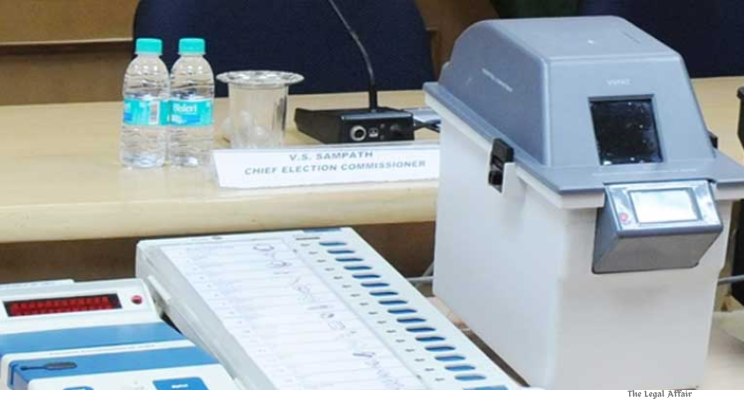
In the case of Association of Democratic Reforms v. Election Commission of India & Anr., the Supreme Court heard pleas regarding the integrity of Electronic Voting Machines (EVMs) and the cross-checking of data with Voter-Verifiable Paper Audit Trail (VVPAT) records. The Election Commission of India (ECI) presented crucial arguments affirming the security and integrity of EVMs.
Arguments of Both Sides:
The ECI emphasized that the micro-controllers installed in EVMs, including those in the Control Unit, Ballot Unit, and VVPAT, are one-time programmable and cannot be physically accessed or changed. Additionally, the ECI provided insights into the storage procedures of EVMs post-election, ensuring their integrity during the critical period after polling.
Advocate Prashant Bhushan, representing the petitioner, raised doubts about the re-programmability of the microcontrollers, citing evidence suggesting the presence of re-programmable flash memory. However, the court leaned towards the ECI’s technical expertise, emphasizing the lack of concrete evidence to challenge the ECI’s assertions.
Court’s Decision:
The court’s focus remained on maintaining trust in the electoral process, highlighting the absence of identified incidents of hacking or tampering with EVMs. Justices Khanna and Datta reiterated the court’s role in upholding election integrity while acknowledging the mechanisms in place to address concerns, including the verification of VVPATs.
In conclusion, the court reserved judgment after considering the arguments presented by both parties, reaffirming its commitment to ensuring the sanctity of election.