


Introduction:
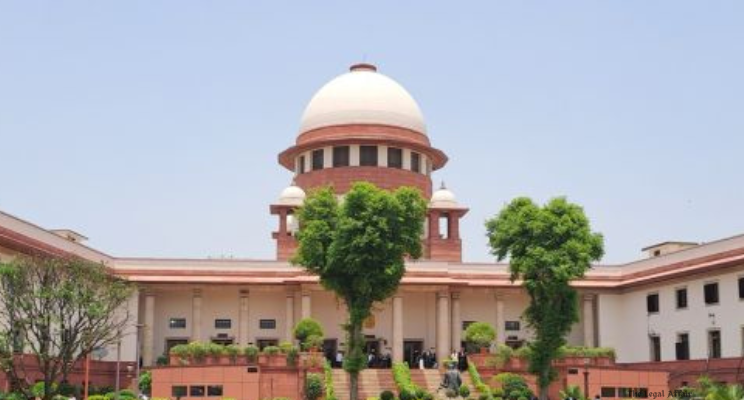
The Supreme Court Constitution Bench recently reserved its verdict on a matter of profound constitutional and judicial significance regarding the eligibility of judicial officers, who have already completed seven years of practice at the Bar, for appointment as District Judges against vacancies meant for advocates under Article 233 of the Constitution. The case, Rejanish K.V. vs. K. Deepa [Civil Appeal No(s). 3947/2020] and connected matters, brought before the Court a constitutional conundrum stemming from conflicting interpretations of Article 233(2) and the precedent set by the judgment in Dheeraj Mor v. High Court of Delhi. The five-judge Bench comprised Chief Justice of India B.R. Gavai, and Justices M.M. Sundresh, Aravind Kumar, S.C. Sharma, and K. Vinod Chandran. The reference was necessitated after a three-judge Bench of the Supreme Court, also led by CJI B.R. Gavai with Justices K. Vinod Chandran and N.V. Anjaria, referred the issue to a larger bench on August 12. The case originated from an appeal against a Kerala High Court ruling that set aside the appointment of Rejanish K.V., who had initially been a practising advocate with over seven years’ experience, later appointed as a Munsiff-Magistrate while his selection process for District Judge was still underway. He was eventually appointed as District Judge in 2019, but his appointment was challenged by another candidate, K. Deepa, on the grounds that at the time of his appointment he was no longer a practising advocate but in judicial service.
The central questions before the Constitution Bench revolved around four key issues: whether a judicial officer who has already completed seven years in the Bar could be appointed against the Bar quota; whether eligibility for District Judge appointment must be assessed at the time of application, appointment, or both; whether Article 233(2) prescribes eligibility for those already in judicial service; and whether a combination of Bar and judicial service experience amounting to seven years or more suffices for eligibility under Article 233. The case thus placed under scrutiny the interplay between the independence of the judiciary, the right of advocates to enter judicial service, and the principle of separation of streams in judicial appointments.
Arguments:
The petitioners, represented by a battery of senior advocates including Jayant Bhushan, Arvind Datar, P.S. Patwalia, Gopal Sankarnarayanan, V. Giri, Vibha Makhija, Jaideep Gupta, Seshadri Naidu, Manish Singhvi, and Menaka Guruswamy, advanced strong arguments urging the Court to revisit the decision in Dheeraj Mor. They submitted that the interpretation in that case—that judicial officers cannot compete for District Judge appointments under the Bar quota—was flawed. They argued that the constitutional phrase “a person not already in the service of the Union or of the State” under Article 233(2) should not be construed to mean an absolute exclusion of civil judges from applying against the Bar quota if they had prior Bar experience. The petitioners emphasized that Article 233(2) prescribes eligibility on the basis of seven years’ practice at the Bar, but nowhere does it mandate seven continuous years of practice immediately preceding appointment. According to them, a judicial officer who had accumulated the requisite Bar experience before entering judicial service should not be denied eligibility for District Judge recruitment. They pointed out that such an interpretation better served the constitutional goal of broadening the pool of eligible candidates and allowed meritorious advocates-turned-judges to rise in judicial hierarchy through both avenues—service quota and Bar quota.
The petitioners further argued that the judgment in Dheeraj Mor placed an artificial restriction by mandating continuous practice till the date of appointment. They contended that such a view creates absurd situations: an advocate who practiced for decades and then joined judicial service as a junior civil judge would be barred from competing in the Bar quota, despite having more than sufficient legal experience. This, they argued, undermines the spirit of Article 233 and narrows the judiciary’s recruitment base. Moreover, they urged that the constitutional provision should be interpreted purposively to ensure inclusivity rather than rigid exclusion, especially since judicial officers with prior advocacy experience bring a wealth of practical and adjudicatory knowledge.
On the other hand, the respondents, represented by senior advocates including C.U. Singh, Nidhesh Gupta, Vijay Hansaria, and Rajiv Shakdher, staunchly opposed the petitioners’ position. They maintained that Article 233(2) clearly distinguishes between two categories of eligibility for District Judge appointments: those from the service of the Union or State, and those who are practising advocates. According to them, the constitutional text “a person not already in the service of the Union or the State shall only be eligible” clearly excludes serving judicial officers from seeking appointment through the Bar quota. They submitted that the framers of the Constitution consciously created two distinct channels of entry—promotion from subordinate judicial service and direct recruitment from the Bar—and allowing overlap would blur this distinction.
The respondents further stressed the principle of stare decisis, arguing that for over six decades Article 233(2) had been consistently interpreted to mean that only practising advocates with seven continuous years of practice are eligible for direct appointment as District Judges. They asserted that Dheeraj Mor reaffirmed this settled position, and disturbing it now would unsettle thousands of appointments made under this framework across states. They also pointed out that the seven-year requirement should necessarily mean continuous practice, as intermittent or past practice cannot reflect the current competence of an advocate to handle the responsibilities of a District Judge. According to them, a person in judicial service cannot simultaneously claim to be practising as an advocate, since once enrolled in service, he or she ceases to be an advocate under the Advocates Act. Thus, eligibility must be assessed at the time of appointment, not merely at the time of application.
Judgement:
The controversy arose particularly from the case of appellant Rejanish K.V., who had been an advocate for over seven years when he applied for the post of District Judge. However, during the pendency of his application, he was appointed as a Munsiff-Magistrate. Later, when his District Judge appointment materialized, he resigned from the lower judiciary and took charge as District Judge. His eligibility was challenged by another candidate, K. Deepa, who argued that since he was in judicial service at the time of appointment, he no longer satisfied the requirement of being a practising advocate. The Kerala High Court upheld this argument, relying on Dheeraj Mor, and set aside his appointment. However, recognizing that the issue had far-reaching consequences for judicial appointments across the country, the Division Bench granted a certificate of appeal to the Supreme Court. The apex court stayed the High Court judgment in 2021, allowing Rejanish K.V. to continue as District Judge, but referred the broader constitutional questions to a larger Bench.
The Constitution Bench, after three days of extensive hearings, reserved judgment. The Bench examined in depth whether the term “seven years of practice” must mean continuous practice until the date of appointment, or whether prior practice suffices. It also deliberated whether combining years of practice as advocate and years as judicial officer could satisfy the seven-year threshold. The petitioners emphasized a liberal, purposive interpretation, while the respondents warned against judicial overreach in altering a long-standing settled principle.
The Court’s judgment, once delivered, is expected to have sweeping implications on the future of judicial appointments under Article 233. If the Bench rules in favor of the petitioners, judicial officers with substantial Bar experience before joining service could compete in the Bar quota, expanding opportunities and broadening eligibility. Conversely, if the Court upholds Dheeraj Mor, the strict separation of streams will continue, limiting Bar quota appointments strictly to those who remain practising advocates till appointment. The case thus presents a constitutional crossroad between tradition and reform in judicial appointments.