


Introduction:
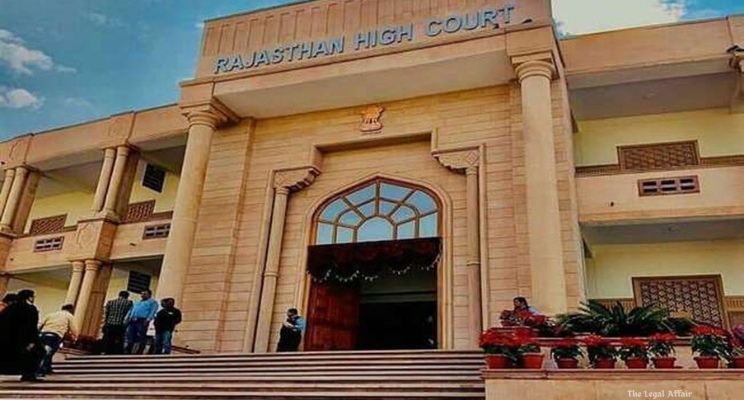
The Rajasthan High Court recently addressed the issue of the eligibility of a woman to claim benefits under the Economically Weaker Section (EWS) category after relocating from Haryana to Rajasthan. The case arose when Anita Devi, a woman who had been issued an EWS certificate by the Government of Haryana, sought to apply for the post of Nursing Officer in Rajasthan under the EWS category. However, the authorities insisted that she submit her application under the unreserved category due to her status as a migrant candidate. Despite exceeding the cut-off marks for the EWS category, her exclusion from the recruitment process led her to file a petition challenging the decision. The primary legal question before the Rajasthan High Court was whether the change of location from Haryana to Rajasthan rendered Anita Devi ineligible to benefit from the EWS certificate issued by the Haryana Government.
Arguments of Both Sides:
The petitioner, Anita Devi, argued that the EWS certificate issued by the Haryana Government was valid, and her eligibility for the benefits under the EWS category should not be affected by her relocation to Rajasthan after marriage. She contended that the refusal to allow her to apply under the EWS category in Rajasthan, despite fulfilling all eligibility criteria, amounted to discrimination and was unjust. The petitioner emphasised that her status as an EWS candidate was not in dispute and that her certificate from Haryana should be honoured in Rajasthan as well. Furthermore, she highlighted the inconsistency in the state’s approach, pointing out that there was no legal or administrative reason for disqualifying her from applying under the EWS category.
On the other hand, the State of Rajasthan argued that since Anita Devi had obtained her EWS certificate from Haryana, she was not entitled to its benefits in Rajasthan. The state claimed that as per their policies, only candidates who were residents of Rajasthan or had received their certificates within the state were eligible to claim benefits under the EWS category. The State also argued that the petitioner’s change of location from Haryana to Rajasthan should disqualify her from seeking the benefits associated with the certificate issued by a different state. The state raised concerns about the integrity of the EWS scheme and its consistency across different jurisdictions.
Court’s Judgment:
Justice Arun Monga, presiding over the case, firmly rejected the argument raised by the State of Rajasthan. The Court clarified that a change in location from Haryana to Rajasthan did not render the petitioner ineligible to seek the benefits associated with the EWS certificate issued by the competent authority in Haryana. The Court observed that the petitioner’s eligibility under the EWS category was not contested, and therefore, her claim should not be dismissed based on her relocation.
The Court also referred to a previous decision in Aman Kumari v. State of Rajasthan, where a coordinate bench had ruled that restrictions placed on candidates married into the state were “ex facie contrary” to the very scheme of EWS reservation. The Court, in that case, had held that a circular issued by the State of Rajasthan mandated the issuance of EWS certificates to eligible women married within the state, and any stipulation in advertisements to the contrary could not override the state’s directive. Justice Monga noted that the ruling in Aman Kumari had attained finality, as it had not been challenged, and used this precedent to bolster the petitioner’s position in this case.
Furthermore, Justice Monga expressed concern over the fact that the petitioner’s request for a change in category had been left pending without any decision being made. He described this as a tacit acknowledgement by the State that her request for category change had been effectively rejected due to inaction. The Court found that the absence of a formal denial and the delay in addressing the petitioner’s grievance amounted to a failure on the part of the State to provide a clear and timely response to her request.
In light of these observations, the Court directed the State of Rajasthan to reconsider Anita Devi’s candidature in the EWS category and to complete the process within 30 days. The Court emphasised that the petitioner’s rights should be respected and that she should not be penalised for circumstances beyond her control, such as her change of residence after marriage. The judgment further reinforced the principle that administrative decisions should be consistent with the law and the broader objectives of social justice.
Conclusion:
In conclusion, the Rajasthan High Court’s ruling in this case offers important clarity regarding the eligibility of candidates for EWS benefits across state lines. It underscores the principle that a change in location, such as moving from one state to another, does not automatically invalidate a person’s eligibility for benefits under the EWS category. The Court’s decision in favour of Anita Devi highlights the importance of respecting certificates issued by competent authorities and ensuring that candidates are not unfairly excluded from opportunities based on arbitrary jurisdictional rules. The Court’s reliance on the precedent set in Aman Kumari further solidifies the importance of consistency and fairness in the implementation of reservation policies. The decision also stresses the need for prompt and fair responses to grievances raised by applicants, emphasising that inaction or delay can be viewed as a tacit acknowledgement of a claim.