


Introduction:
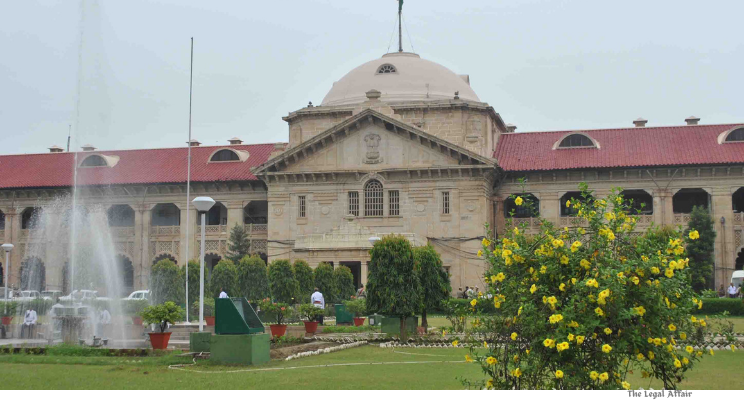
The Allahabad High Court recently examined a significant public interest litigation that touches upon the transparency of elections and the responsibility of institutions in upholding the Supreme Court’s directions. The case was filed by Lok Prahari, a non-governmental organization devoted to electoral reforms, through its General Secretary, S.N. Shukla, a retired IAS officer. The petition was filed against the Election Commission of India (ECI) and the Central Board of Direct Taxes (CBDT), raising a critical issue regarding the implementation of the Supreme Court’s 2018 judgment in Lok Prahari vs Union of India. In that landmark case, the Supreme Court mandated that candidates contesting elections must disclose their assets in Form 26 and further directed that the verification reports of such disclosures, once examined by the CBDT, should be placed in the public domain for wider scrutiny. However, even after seven years, the implementation of this mandate remained stalled, compelling the petitioner to approach the High Court for directions. A division bench comprising Justice Rajan Roy and Justice Manjive Shukla heard the matter and made crucial prima facie observations about the Election Commission’s responsibility in ensuring transparency. The Court, in its interim order, observed that prima facie the ECI appears to be the statutory body that should publish the asset verification reports received from the CBDT. This case thus reignites the debate about the accountability of electoral institutions and the State in ensuring free and fair elections by making candidates’ financial disclosures transparent and accessible.
Arguments:
The petitioner, Lok Prahari, through S.N. Shukla, argued that the 2018 judgment of the Supreme Court was clear in its mandate and there was no ambiguity about its intent. According to the petitioner, the entire object of directing the disclosure of assets and the verification thereof by the CBDT was to ensure that the electorate was adequately informed about the financial standing and background of candidates contesting elections. The petitioner contended that unless the reports were placed in the public domain, the objective of the Supreme Court’s judgment would be defeated, since only the Election Commission could operationalize this directive in a meaningful manner. The petitioner highlighted that correspondence had indeed taken place between the ECI and CBDT after the Supreme Court’s judgment, but no steps were taken to actually publish the reports. Instead, the responsibility was being shifted from one institution to another, thereby undermining the spirit of the Supreme Court’s ruling. Lok Prahari further argued that the constitutional mandate under Article 324, which vests the ECI with the responsibility of conducting free and fair elections, also encompasses ensuring transparency in candidate disclosures. The petitioner emphasized that voters have a fundamental right to know about the financial integrity of their representatives, as recognized in previous judgments such as Union of India v. Association for Democratic Reforms and PUCL v. Union of India. Therefore, the petitioner urged the Court to direct the ECI to place all such reports in the public domain without further delay.
On the other hand, the Election Commission of India, represented by Senior Advocate O.P. Srivastava, argued that it was not the Commission’s duty to publish these reports. According to the Commission’s stance, the responsibility of making such information public lay with the Income Tax Department, since it was the authority tasked with preparing the verification reports in the first place. The ECI claimed that it had no mechanism in place to publish the reports and that the Government of India had to develop a framework for such publication. Essentially, the ECI shifted the responsibility towards the CBDT and the Union Government, contending that without an established mechanism, it could not unilaterally proceed with the publication of reports.
Judgement:
The Central Board of Direct Taxes, however, denied that it was under any such obligation. The counsel representing the Income Tax Department submitted that the mandate of the CBDT was only to verify the disclosures made by the candidates in their Form 26 affidavits and submit such reports to the Election Commission. It was argued that the CBDT had no responsibility to place such reports in the public domain, and its role ended once it provided the information to the ECI. Thus, a blame-shifting scenario emerged, where each institution pointed to the other as being responsible for the publication of these verification reports, while in reality, the Supreme Court’s mandate remained unfulfilled.
After hearing both sides and considering the documentary evidence placed before it, the division bench of Justice Rajan Roy and Justice Manjive Shukla made crucial prima facie observations. The Court noted that the correspondence between the Election Commission and the CBDT made it clear that the reports were indeed being sent to the Commission. Therefore, if anyone had to place them in the public domain, it was the Election Commission of India. The bench categorically observed, “Prima facie, from the documents on record it appears that if at all this was to be done, it was to be done by the Election Commission of India… Prima facie, the Election Commission of India appears to be the statutory body which should put the verification report as received from the CBDT in the public domain.” The Court expressed concern that despite the Supreme Court’s 2018 judgment, the matter had not been implemented even in 2025, which raised serious questions about compliance with judicial orders.
The Court also addressed the ECI’s contention that a mechanism had to be developed by the Government of India for such publication. The bench considered the issue important enough to warrant the involvement of the Union Government. Consequently, the Court directed that the Union of India, through the Ministry of Home Affairs, be impleaded as a party in the PIL. This was done to ensure that the responsibility for creating an appropriate mechanism for publication did not remain in dispute. The Deputy Solicitor General of India, S.B. Pandey, was directed to seek instructions and file an affidavit in response to the writ petition, taking into account the Supreme Court’s decision and the concerns raised in the present proceedings.
Furthermore, the Court underscored the importance of accountability by directing that responsible officers from both the Election Commission of India and the Ministry of Home Affairs participate in the proceedings through video conferencing. This directive was aimed at ensuring that there was clarity and commitment from both institutions in moving forward with the implementation of the Supreme Court’s order. The case was listed for further hearing on September 15, 2025, with the expectation that clear instructions and affidavits would be filed before that date.
The judgment is particularly significant as it addresses the recurring issue of non-implementation of Supreme Court judgments in matters of electoral reforms. The Supreme Court’s 2018 ruling in Lok Prahari v. Union of India was hailed as a progressive step in ensuring transparency in the electoral process by requiring candidates to disclose their assets and mandating verification by the CBDT. However, the delay in implementation has raised concerns about the seriousness of institutions in executing judicial mandates. The Allahabad High Court’s observations serve as a reminder that the Election Commission, as the constitutional authority for conducting elections, cannot shirk its responsibility by shifting the burden elsewhere. Transparency in the electoral process is a fundamental requirement of democracy, and ensuring that voters have access to reliable information about candidates’ assets is an integral part of free and fair elections.
This case also raises broader questions about institutional accountability and the separation of responsibilities. While the CBDT’s role is limited to verification, the ECI, by virtue of Article 324 of the Constitution, is entrusted with the larger task of ensuring fair electoral practices. The Court’s prima facie view reinforces the principle that electoral transparency is not merely a procedural formality but a substantive right of citizens. If candidates’ disclosures are not verified and made public, voters are deprived of their right to make an informed choice.
Moreover, the impleadment of the Union of India signifies judicial recognition of the need for a systemic framework. Without a clear policy mechanism, disputes between institutions can indefinitely delay the implementation of judicial mandates. By bringing the Ministry of Home Affairs into the proceedings, the Court has ensured that the Union Government cannot remain a bystander in this issue. The directive for responsible officers to appear also underscores the seriousness with which the judiciary views the matter.
In essence, the Allahabad High Court’s prima facie observations mark a significant moment in the continuing struggle for electoral transparency in India. While the final judgment is yet to be delivered, the Court has already made it clear that the Election Commission has a central role in publishing asset verification reports and that excuses about mechanisms or responsibilities will not suffice. The upcoming hearings will likely clarify the Union Government’s role and ensure that concrete steps are taken toward implementation. Until then, the Court’s interim order serves as a powerful reminder of the judiciary’s role in holding institutions accountable and ensuring that democratic principles are upheld in practice, not just in theory.